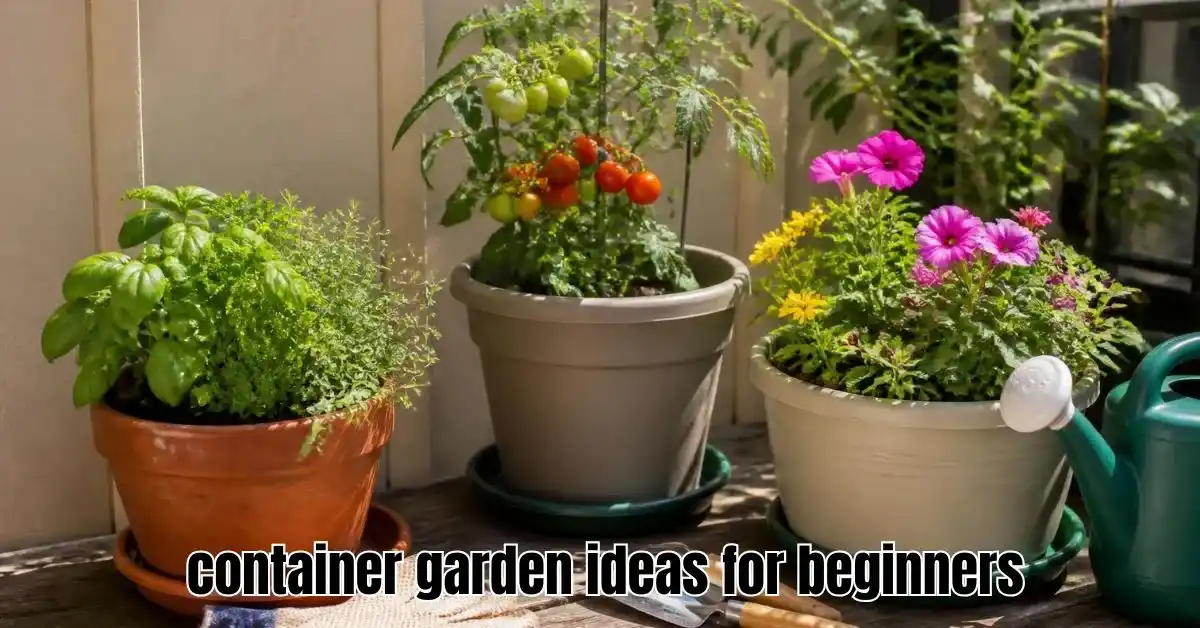
Container garden ideas for beginners work best when they start with pot size, sunlight, and drainage, not plant selection. Pick a pot without a drainage hole or misjudge how much sun a spot actually gets, and even the easiest plant will struggle.
Most beginner container gardens fail in the first month, not because of a black thumb, but because the pot was wrong before the plant ever went in. A gorgeous glazed ceramic pot with no drainage hole drowns roots just as fast as a sunny label on a plant that’s actually sitting in afternoon shade.
The mistake near the end of this guide kills more container plants than pests or bad luck combined, and it’s rarely the one people expect.
Key takeaways:
- Drainage holes matter more than pot material; a plastic pot with holes beats a beautiful ceramic one without them.
- Container plants dry out faster than garden beds, so most need water every one to three days in warm weather.
- Full sun means at least six hours of direct light; anything less needs shade-tolerant plants instead.
- A pot at least 10 to 12 inches wide gives most beginner plants enough room to establish real roots.
- Potting mix, not garden soil, is the right choice for containers, since garden soil compacts and drains poorly.
- Skipping fertilizer for container-bound plants is the most common mistake, even among otherwise careful beginners.
What a beginner container garden actually needs
A beginner container garden needs three things before a single plant goes in: a pot with drainage, potting mix instead of garden soil, and an honest read on the spot’s actual sunlight. Skipping any one of the three is what turns an easy plant into a struggling one.
Containers behave differently than garden beds because their soil volume is limited and exposed on all sides to air and heat. That means faster drying, faster nutrient depletion, and less room for roots to recover from mistakes. A beginner who gets pot size, drainage, and sun right can grow almost anything; skip those basics and even hardy plants underperform.
Eleven container garden ideas that work for beginners
A single herb pot near the kitchen door
One 10-inch pot with basil, thyme, and parsley grouped together gives a beginner an easy win close to where it’s actually used. Keep it near a spot with at least four to six hours of sun, and snip leaves regularly to keep the plants full rather than leggy.
A self-watering planter for forgetful waterers
Self-watering planters hold a water reservoir at the base that wicks moisture up as the soil dries, which forgives a missed watering day or two. They work especially well for beginners still learning how fast containers dry out compared to garden beds.
A shade-tolerant fern and hosta combination
For a spot that gets less than three hours of direct sun, pair a Boston fern with a small hosta in a wide, shallow pot. Both tolerate low light and prefer soil that stays evenly moist rather than drying out between waterings.
A tomato in a five-gallon container
A single cherry tomato variety in a five-gallon pot with a small stake or cage is one of the most rewarding first vegetables for a beginner. It needs at least six hours of direct sun and consistent watering, often daily once temperatures climb.
A window box with trailing annuals
A window box planted with petunias or trailing lobelia gives quick, forgiving color for a beginner who wants results within a few weeks. Water these more often than deeper pots, since window boxes typically hold less soil volume.
A succulent bowl for low-maintenance color
A shallow, wide bowl planted with three or four succulent varieties tolerates missed waterings better than almost any other container option. Use a fast-draining cactus mix rather than standard potting soil to avoid root rot.
A vertical planter for a narrow balcony
A tiered or wall-mounted vertical planter fits herbs or small flowering plants into a balcony too narrow for traditional pots. Check that each tier drains independently; stacked planters that funnel water downward can drown the lowest level.
A pepper plant in a mid-size terracotta pot
A single pepper plant in a 12 to 14-inch terracotta pot rewards a beginner with steady, visible growth over a season. Terracotta’s porous walls help prevent overwatering, since the pot itself absorbs some excess moisture.
A mixed pot using the size-sun-soil method
Combine one upright plant, one bushy filler, and one trailing plant in a single 14-inch pot, matched to the same sun and water needs. This single-pot approach gives a fuller look faster than several small individual pots.
A lettuce and greens container for quick results
A wide, shallow container planted with loose-leaf lettuce or mixed greens is one of the fastest edible options for a beginner, often ready to harvest within a few weeks. Keep the soil consistently moist and harvest outer leaves first so the plant keeps producing.
A pollinator pot with a single flowering variety
One pot planted with a bee-friendly annual like zinnias or marigolds adds color and supports pollinators without requiring any special care beyond regular watering and deadheading spent blooms.
Sizes, soil, and the details that matter
Pro tip: always drill or choose a pot with drainage holes before anything else on this list. A decorative pot without one isn’t a lost cause, just use it as an outer sleeve and keep the actual plant in a properly draining nursery pot inside it.
| Container type | Pot size needed | Sun requirement | Watering frequency |
| Herb pot | 10 inches | 4 to 6 hours | Every 2 to 3 days |
| Tomato in a five-gallon pot | 12 to 16 inches | 6+ hours | Daily in warm weather |
| Shade fern and hosta | 12 to 14 inches | Under 3 hours | Every 2 to 3 days |
| Succulent bowl | 8 to 12 inches | 4 to 6 hours | Every 7 to 10 days |
| Lettuce and greens | 12 inches, shallow | 4 to 6 hours | Every 1 to 2 days |
The size-sun-soil method and a real example
I use what I call the size-sun-soil method on every beginner container project. Size covers whether the pot gives roots enough room, generally at least 10 inches for most plants. Sun covers an honest count of direct light hours in that exact spot, not a guess. Soil covers using potting mix rather than garden soil, since garden soil compacts too densely in a container. Get those three right before picking a single plant and the rest gets much easier.
I set up three containers on a north-facing apartment balcony one spring, working with a modest budget under 50 dollars for pots, potting mix, and starts. I’d assumed the space got enough light for tomatoes and lost that pot within a few weeks. Once I applied the size-sun-soil method honestly, counting actual sun hours instead of guessing, I swapped to a fern and a shade-tolerant begonia, and both were still thriving well into fall.
Won’t containers dry out too fast to keep anything alive? They dry out faster than garden beds, that’s true, but a self-watering planter or a simple daily check solves most of the problem. Beginners who struggle usually aren’t watering too little; they’re using a pot too small to hold enough soil volume in the first place.
Isn’t a container garden too much work for someone with no yard experience? Containers are actually more forgiving for a beginner than an in-ground bed, since you control the soil, drainage, and placement completely. Start with one or two pots rather than a full garden, and the learning curve stays manageable.
Common mistakes that trip up beginner container gardeners
Choosing a pot without drainage
Standing water in a pot with no drainage hole suffocates roots within days, no matter how well you water. Fix: drill holes in any pot that lacks them, or use it as a decorative sleeve around a properly draining nursery pot.
Using garden soil instead of potting mix
Garden soil compacts in a container and drains poorly, unlike the airy, lightweight structure of potting mix. Fix: always use a bagged potting mix labeled for containers, not soil dug from the yard.
Misjudging sun exposure
A spot that looks bright can still fall short of the six hours full-sun plants actually need. Fix: track the light in your chosen spot for a full day before buying plants rated for full sun.
Choosing a pot too small for the plant
A pot that’s too small forces roots to circle and choke themselves, stunting growth even with perfect watering. Fix: size up rather than down, especially for vegetables like tomatoes and peppers that need real root room.
Skipping fertilizer
Container plants exhaust the nutrients in their limited soil faster than in-ground plants do. Fix: feed with a balanced liquid fertilizer every two to four weeks during the growing season, since rain and soil turnover won’t replenish nutrients for you.
Quick checklist before you start
- Confirm the pot has drainage holes, or plan to add them
- Count actual sun hours in your chosen spot before selecting plants
- Use bagged potting mix, never garden soil, in any container
- Size the pot to the mature plant, not the size it is at purchase
- Set a fertilizing reminder every two to four weeks during the growing season
FAQs
What is the easiest container garden for a beginner?
A single herb pot with basil, thyme, and parsley is one of the most forgiving starting points, since herbs tolerate minor watering mistakes and reward you with usable leaves within a few weeks.
Do container plants need special soil?
Yes. Potting mix is lighter and drains better than garden soil, which compacts in a container and can suffocate roots. Look for a bag labeled specifically for containers or potting rather than garden soil.
How often should you water container gardens?
Most containers need water every one to three days in warm weather, since they dry out faster than garden beds. Check by pressing a finger an inch into the soil; water if it feels dry at that depth.
Can you grow vegetables in containers?
Yes, many vegetables do well in containers if the pot is large enough. A five-gallon pot suits a single tomato or pepper plant, while lettuce and greens work in shallower, wider containers with less depth needed.
What size pot do you need for a container garden?
Most beginner plants need at least a 10 to 12-inch pot, while vegetables like tomatoes need closer to 16 inches or a five-gallon container for proper root development. Bigger is generally safer than too small.
Final thoughts
A beginner container garden succeeds or fails on three basics: pot size, real sun exposure, and the right soil, not on finding some rare gift for growing things. Apply the size-sun-soil method to your first pot, and the rest of the garden gets easier from there. For more DIY and small-space project ideas, browse the rest of the Home Decor Ideas guides.