
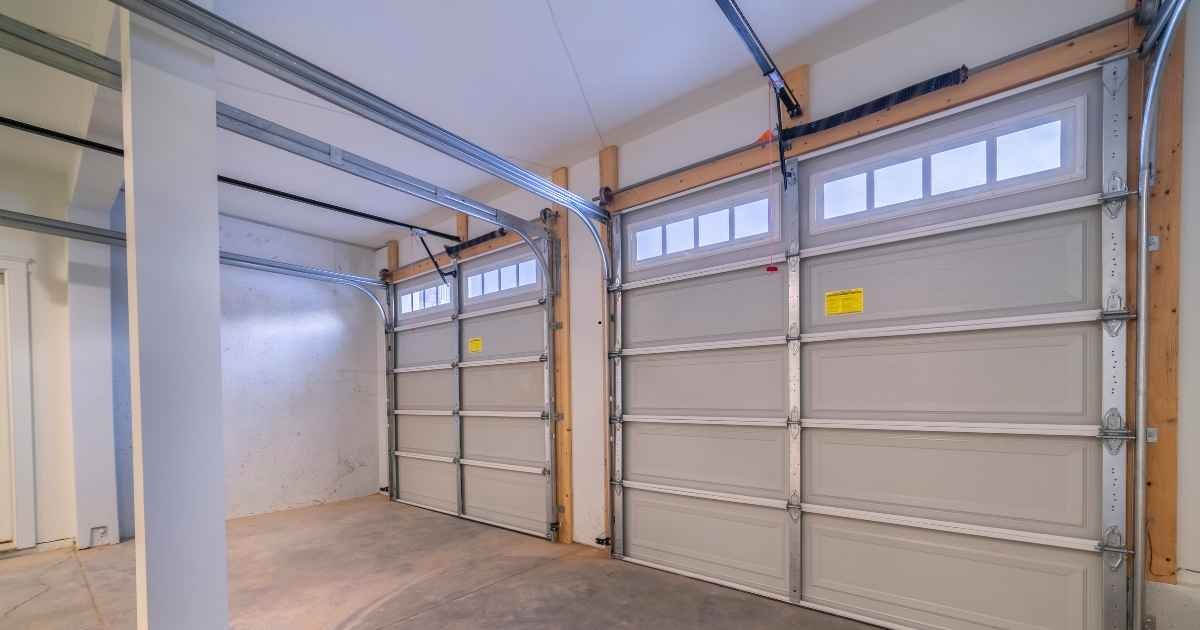
Most garages have the same generic-looking steel roll-up door: flat, beige or white, and completely blank. It’s usually the largest single surface on the front of the house, and it’s doing zero design work.
Garage door magnet decor is the cheapest, fastest fix for that blank slab. Real carriage-house hardware costs $2,000+ to install; a set of magnetic faux hinges and handles costs $30–$60 and takes 5 minutes to apply. Done right, the illusion holds from the street. Done wrong, it looks like exactly what it is — cheap plastic stuck to a door.
This guide covers 9 magnet decor ideas that actually pass the test, plus the placement math that separates convincing installations from amateur-hour mistakes. The mistake in the last section is why 80% of DIY garage door magnet setups look off.
Key takeaways:
- Only works on steel garage doors — test with any fridge magnet first before ordering
- Carriage-house hinge and handle sets are the most convincing upgrade for under $60
- Symmetry is the number one factor: uneven placement is what betrays fake magnets
- Weather-rated magnets last 3–5 years outdoors; cheap ones fade in one summer
- Adhesive-backed versions exist for aluminum, fiberglass, and wood doors
- HOA-controlled neighborhoods sometimes prohibit magnet decor — check first
What garage door magnet decor is
Garage door magnet decor is a decorative accessory (usually molded plastic or vinyl with magnetic backing) designed to attach to a steel garage door and mimic architectural details like hinges, handles, windows, or seasonal accents. The magnet holds it in place without adhesives, drilling, or permanent modification, making it renter-friendly and reversible.
The illusion effect
The goal isn’t to fool up-close inspection. It’s to look convincing from 20–50 feet away, which is where most people view garage doors. Standard suburban houses sit 40+ feet from the street. From that distance, a well-placed magnet set reads as real carriage-house hardware to almost everyone driving past.
Only works on steel doors
Most garage doors installed in the last 30 years are steel, which is magnetic. Older wood, newer aluminum, and fiberglass doors are not. Test with any household magnet before ordering. If it sticks, magnetic decor works. If not, look for adhesive-backed versions instead.
9 garage door magnet decor ideas
These 9 magnet ideas cover the range from year-round curb appeal upgrades to seasonal decor swaps. Every idea assumes a steel door and includes what to buy, where to place it, and where the illusion fails. Combined right, one carriage-house set costs under $60 and shifts the whole front of the house.
1. Carriage-house handle and hinge set
The single most popular garage door magnet decor upgrade. Two long faux hinges near the top of each door section plus a matching centered handle instantly reads as expensive custom hardware. Look for matte black (most common) or oil-rubbed bronze finishes. Sets run $25–$80 for a two-car door. Buy weather-rated only.
Where it fails: placing hinges in the middle of a door section instead of near the top. Real hinges attach at panel joins, not in the middle.
2. Faux window inserts
Rectangular or arched window magnets create the illusion of glass panels in the top row of the garage door. Best on doors that already have a raised-panel look but no real windows. Match the frame color to your existing door hardware or trim. $20–$45 per pair.
Where it fails: on flat, panel-less doors. Real windows always sit within an architectural frame — placing them on a completely blank door reads as stickers, not architecture.
3. Seasonal wreath magnets
Faux wreaths (fall foliage, spring florals, winter greenery) held on with strong neodymium magnets. Cheaper option than real seasonal wreaths and no need for door damage from hooks. $15–$40 per wreath.
Where it fails: thin lightweight wreaths fly off in strong wind. Get wreaths with neodymium magnet backing (not standard ceramic) rated for outdoor use.
4. Sports team decor
NFL, NBA, college team logos and colors as garage magnets. Popular in game-day neighborhoods. Reads as personality without permanent commitment. $10–$30 each.
Where it fails: on formal or historic-style homes. Sports magnets against Colonial or Victorian door styles read as clashing.
5. House number address magnets
Large decorative address numbers held on with magnets. Useful for houses where the actual address plate is hard to see from the street. Creates the illusion of intentional wayfinding design. $20–$50 for a set.
Where it fails: if your municipality requires reflective address numbers at a specific mounting height. Check local code first.
6. Cross or faith-themed magnets
Popular in faith-focused neighborhoods. Simple cross designs, framed scripture verses, or seasonal Advent and Easter designs. $10–$35 per magnet.
Where it fails: if the garage door doesn’t face the street. Personal decor works best when it’s actually visible.
7. Barn-door hardware set
X-brace, star, or barn door “Z” pattern magnets create the illusion of a barn-style garage door. Suits farmhouse, cottage, and rural homes. Larger than hinge and handle sets, typically 20–30 inches. $40–$100 per set.
Where it fails: on modern or contemporary homes. Barn hardware on a suburban colonial reads as themed, not designed.
8. Faux mullioned window grids
Grid patterns that stick to plain door windows or replace them entirely. Divides a single panel into 4 or 6 “panes” for a more traditional look. Under $25 per set. Suits Colonial, Cape Cod, and Craftsman homes.
Where it fails: magnets need to match real garage door frame color exactly. Off-shade whites read wrong immediately.
9. Holiday-themed magnet sets
Halloween pumpkins, Christmas wreaths and lights, Easter eggs, Fourth of July flags. Rotate seasonally without door damage. $10–$40 per set depending on complexity. Perfect for renters who want festive curb appeal.
Where it fails: leaving them up past the holiday season. Faded Halloween decor in March looks worse than no decor at all.
How to choose and place garage door magnets
The right garage door magnet decor depends on three factors: door style compatibility (some magnets suit some door types only), placement math (real hardware sits in specific spots on real doors), and weather rating (cheap magnets fade in one season). Get any wrong and even a good idea looks amateur.
Door style and magnet type pairing
| Door style | Best magnet type | Skip these |
|---|---|---|
| Flat panel steel | Handle-only sets, seasonal wreaths | Faux windows (need panel context) |
| Raised panel steel | Full carriage-house sets, faux windows | Barn hardware (out of place) |
| Windowed sectional | Window frame magnets, address numbers | Anything overlapping a real feature |
| Aluminum or fiberglass | Adhesive-backed decor only | Magnetic options won’t stick |
| Wood or composite | Adhesive-backed decor only | Magnetic options won’t stick |
Weather rating checklist
- UV-resistant coating (prevents fading)
- Rated for -20°F to 150°F temperature range
- Neodymium magnets (not standard ceramic — ceramic weakens in cold)
- Waterproof material (vinyl, molded ABS plastic, or coated metal)
Pro tip: buy magnets from garage-door-specific brands rather than generic import sellers. Companies like Household Magnet, The Magnetic Mike, and dedicated carriage-house hardware makers design for outdoor exposure. Cheap knockoffs fade within one summer.
Size checklist by door width
| Door width | Number of hinge sets | Handle placement |
|---|---|---|
| Single door (8–9 ft) | 1 pair (2 hinges) | Centered horizontally |
| Standard single (10 ft) | 1 or 2 pairs | Centered |
| Double door (16 ft) | 2 pairs (4 hinges total) | Two handles, evenly spaced |
| Extra-wide double (18–20 ft) | 2 pairs, larger scale | Two handles, evenly spaced |
The symmetry-scale-distance rule
Every convincing garage door magnet decor installation follows three placement rules: perfect symmetry (measure twice, place once), correct scale (magnets sized to door, not tacked on tiny), and correct distance (hinges near panel edges, not floating in the middle). Break any one and the eye immediately reads it as fake.
Rule 1 — Symmetry
Real garage door hardware is installed with millimeter precision by professionals. Magnets need the same treatment. Measure the door width, mark center, then place items equidistant from center. Uneven placement is the number one tell of magnet decor.
Rule 2 — Scale
A tiny 4-inch hinge on a 9-foot door looks like a Post-it note. Match magnet size to door size. Handle magnets should be 8–14 inches; hinges should be 6–12 inches. Doubled up on wide doors.
Rule 3 — Distance from edges
Real hinges attach where door panels meet — typically 6–12 inches from top and bottom of each section. Real handles sit centered horizontally, roughly 40–48 inches from the ground on the main pull section. Placing magnets in random middle spots betrays their fake nature instantly.
One garage — full magnet setup in numbers
I helped a friend upgrade her 16-foot double garage door with magnetic carriage-house hardware over one Saturday morning on a $58 budget. The starting point: flat white steel double door, blank as a sheet of paper.
Total install time: 40 minutes including measuring.
Purchased set: 4 matte black wrought-iron-look hinges ($34) and 2 matching centered handles ($24) from a garage-door-specific magnetic decor brand. Ordered pre-sized for standard 16-foot doors.
Applied the symmetry-scale-distance rule: measured door width and marked exact center with painter’s tape. Placed hinges 8 inches from the top edge of the upper panel and 8 inches from the bottom edge of the second panel, mirrored on each side. Handles placed centered horizontally, 44 inches from the ground.
Total: $58, 40 minutes, and a house that reads as $2,000+ worth of custom carriage-house door hardware from the street. Neighbors asked if she’d replaced the door.
Common garage door magnet decor mistakes
Most garage door magnet decor fails from one of five patterns: buying cheap non-weather-rated magnets, ignoring symmetry, wrong scale, mismatched finishes, or leaving seasonal magnets up too long. All five are avoidable in 10 minutes of planning.
1. Buying cheap magnets that fade in one season
$8 magnet sets from generic import sellers usually last one summer before UV damage. Faded, cracked magnets on the garage door look worse than no decor at all. Buy from garage-door-specific brands rated for outdoor use.
2. Ignoring symmetry
Even a $60 premium set looks amateur if the hinges are 3 inches off-center. Use a tape measure, painter’s tape marks, and confirm with the level app on your phone before removing the tape.
3. Wrong scale
Small magnets on large doors look like postage stamps. Large magnets on small doors look overcrowded. Match magnet size to door dimensions using the size chart above.
4. Mismatched finishes
Matte black magnets with silver garage door handles or bronze exterior fixtures look off. Match your magnet color and finish to at least one other fixture on the house exterior: door hardware, house numbers, lantern finish, or gutter color.
5. Leaving seasonal magnets up too long
Halloween decor in March, Christmas magnets in April, faded pumpkins in June. Set calendar reminders to swap or remove seasonal decor within 1–2 weeks of the holiday. That’s how cheap decor still reads expensive — restraint about when to remove things matters as much as when to add them.
Reader objection: won’t they look fake up close?
Up close, yes — most magnets read as decorative under 5 feet of viewing distance. But garage doors are rarely viewed up close. Most people see them from car distance (30–50 feet) as they drive past. From that distance, well-placed, properly-sized carriage-house magnets read as convincing to almost everyone. If you have visitors regularly standing 5 feet from your garage door, magnets aren’t the right solution.
Reader objection: will they damage the door or fall off in wind?
Neodymium-backed magnets hold under 25+ mph winds without falling. Ceramic-backed magnets (cheap versions) fall off in moderate wind. Damage risk to the door itself is zero — magnets attach and remove without residue, paint damage, or mechanical impact. They’re one of the safest ways to decorate a garage door without permanent modification.
FAQs
Do garage door magnets work on all types of garage doors?
No. Magnets only stick to steel garage doors, which cover most builder-installed doors from the last 30 years. Aluminum, fiberglass, and wood doors are not magnetic. Test with any household magnet before ordering. For non-steel doors, look for adhesive-backed decor sets instead, though these are harder to remove cleanly.
How long do garage door decor magnets last outdoors?
Weather-rated magnets from reputable brands last 3–5 years before UV fading becomes noticeable. Cheap generic magnets fade within one summer of direct sun exposure. Look for UV-resistant coatings, neodymium magnetic backing (not ceramic), and molded ABS plastic or vinyl construction for the longest lifespan.
Are magnetic garage door decorations allowed by HOAs?
Rules vary widely. Some HOAs prohibit any exterior decoration; others only restrict seasonal or holiday displays. Check your HOA covenants before ordering. Carriage-house hinge and handle sets are usually treated as approved architectural improvements rather than seasonal decor, so they often bypass stricter rules.
Can I install garage door magnets myself?
Yes, and it’s the whole appeal of the product. Installation takes 15–40 minutes with only a tape measure, painter’s tape, and (optionally) a level app on your phone. No drilling, no adhesive, no permanent modification. Removal is instant if you change your mind or move houses.
What’s the best material for garage door magnets?
Molded ABS plastic with UV-resistant coating and neodymium magnetic backing lasts longest and holds strongest in wind. Vinyl with neodymium backing is lighter but slightly less durable. Avoid ceramic-magnet products (they weaken in cold weather) and thin metal magnets (they rust after 1–2 seasons of rain exposure).
How much do garage door decor magnets cost?
Basic seasonal magnets and wreaths run $10–$30 each. Standard carriage-house hinge and handle sets cost $25–$60 for a single door and $40–$100 for a double door. Premium wrought-iron-look sets from specialty brands run $80–$150. Even the premium tier costs a fraction of real hardware installation, which starts around $2,000.
Bringing it all together
Garage door magnet decor works when three things line up: door compatibility (steel only for magnetic versions), quality materials (weather-rated with neodymium backing), and placement precision (symmetry, scale, and distance from panel edges). Skip any one and the result reads as amateur. Get all three right and $30–$60 of magnets do the visual work of a $2,000+ door upgrade.
Measure your door, buy from a garage-door-specific brand, apply the symmetry-scale-distance rule, and see the front of your house shift in under an hour. The rest of the outdoor decor collection covers the surrounding curb appeal decisions once the garage door is handled.
Ready to achieve extraordinary results? Our exceptional guides show you the way to greatness.