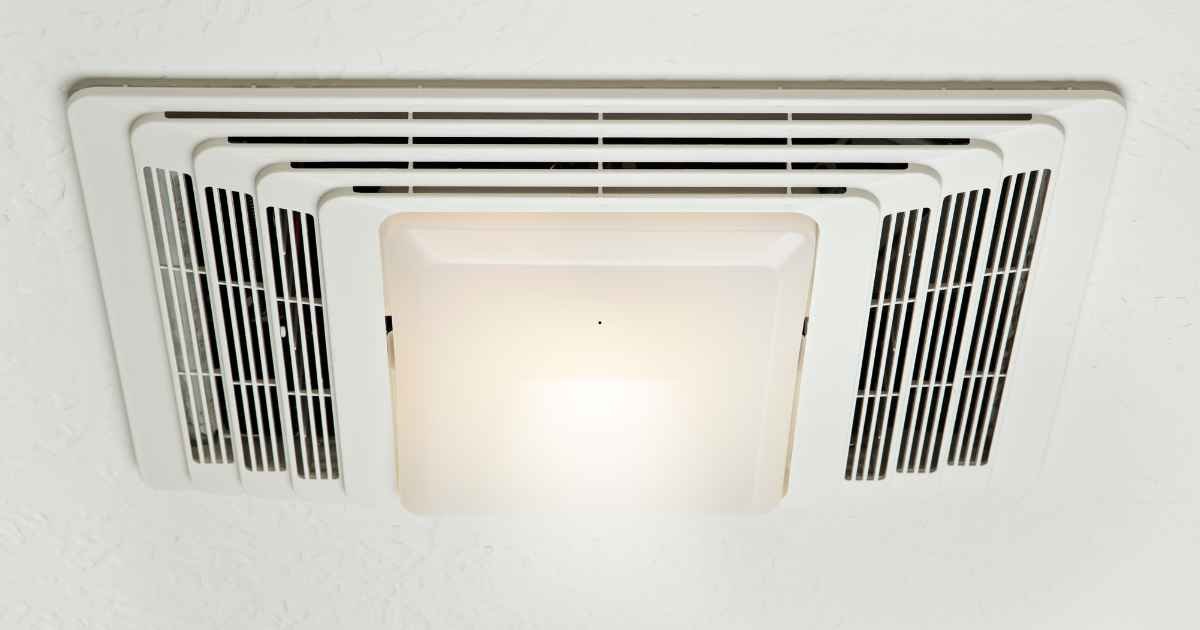
Most bathroom exhaust fans look like builder-grade plastic afterthoughts. White plastic grille, a single harsh bulb, a sound like a small helicopter every morning at 6 a.m. For a room where you actually spend time getting ready, that’s a strange thing to keep staring at.
A decorative bathroom exhaust fan with light does two jobs at once. It vents humidity to protect your walls and paint, and it acts as a design fixture in the ceiling instead of an eyesore. The good ones combine 50–110 CFM ventilation, under 1.5 sones of noise, warm LED lighting, and a finish that suits the rest of the bathroom.
This guide covers nine picks across style, budget, and feature set, plus the sizing formula that decides which one belongs in your bathroom. The mistake in the final section is why most upgraded fans still don’t clear steam properly.
Key takeaways:
- Bathroom fans are sized by CFM: match roughly 1 CFM per square foot of floor space
- Noise is measured in sones — under 1.5 is quiet, under 1.0 is nearly silent
- Warm 2700K–3000K LED lighting beats cool 4000K in every bathroom setting
- Decorative fans cost $80–$400 vs $30–$100 for basic builder-grade models
- Humidity-sensing fans run automatically and prevent mold better than manual switches
- Any bathroom over 100 sq ft or with a separate shower stall needs 100+ CFM
What makes a bathroom exhaust fan “decorative”
A decorative bathroom exhaust fan with light is a ceiling ventilation unit that combines proper CFM airflow, low sone noise, integrated lighting (usually LED), and a designed grille or trim that reads as intentional decor rather than utility. Standard fans hide behind plain white plastic; decorative fans use metal trim, chandelier-style shades, glass panels, or matte black finishes to work as a room fixture.
How decorative differs from standard
Standard bathroom fans focus on function alone — a white plastic grille, one basic bulb socket, and a rotating blade you can hear from two rooms away. Decorative models keep the same ventilation function but wrap it in a shaped housing, better LED integration, quieter motor, and a finish that matches the room. Same mechanical job, completely different visual impact.
Feature standards to expect
Any decorative model worth buying meets these baselines: HVI-certified CFM rating, sone rating listed on the packaging (under 2.0), LED lighting with a stated color temperature, integrated backdraft damper, and Energy Star certification. Anything missing these specs is a builder-grade unit with a paint job.
9 best decorative bathroom exhaust fans with light by style
The nine picks below cover the range from small powder rooms to full family bathrooms, and from budget-friendly upgrades to premium designer fixtures. Each pick includes what it does well and where it falls short, so you can match the fan to the actual bathroom.
1. Best chandelier-style: decorative crystal or beaded shade fan
Chandelier-style fans wrap the exhaust unit inside a beaded, crystal, or glass shade that reads as a small light fixture. Popular in traditional and glam bathrooms. Look for models rated 80–110 CFM under 1.5 sones. Budget: $150–$300. Progress Lighting and Craftmade both make chandelier fan combos worth considering.
Where it fails: in low-ceiling bathrooms under 8 feet. The pendant portion hangs too low and blocks head space.
2. Best flush-mount modern: LED panel with slim grille
The flat panel model — thin grille, integrated LED disc, minimal profile — suits modern and Scandi bathrooms where the ceiling should recede. Panasonic WhisperCeiling and Delta BreezSlim lead this category. 80–110 CFM at 0.3–1.5 sones. Budget: $150–$350.
Where it fails: if you want a visible “fixture” look. The flush mount reads as invisible, which is either the goal or the problem.
3. Best industrial metal cage: exposed bulb style
Metal cage or “Edison bulb” style fans suit industrial, farmhouse, and loft bathrooms. Aged brass, matte black, or brushed nickel cages house the fan mechanism while the bulb hangs visibly. Budget: $120–$280. Look for a real 2700K LED, not a decorative-only unlit socket.
Where it fails: in high-humidity bathrooms without proper CFM. Cages can catch dust and lint faster than smooth grilles, requiring monthly cleaning.
4. Best farmhouse lantern: black or bronze frame
Farmhouse-style bathroom fans wrap the unit in a lantern-style frame — usually matte black or oil-rubbed bronze — that mimics a small hanging lantern. Suits farmhouse, rustic, and cottage bathrooms. Budget: $130–$260.
Where it fails: in modern or minimalist bathrooms where the lantern shape reads out of place.
5. Best matte black minimalist: flat panel with black trim
A flat panel LED fan with matte black trim disappears into dark ceiling paint or reads as a considered feature against white. Suits modern, industrial, and Japandi styles. Broan-NuTone and Homewerks both make matte black variants at $130–$220.
Where it fails: in traditional bathrooms with warm brass or ornate fixtures. The stark black clashes.
6. Best brushed nickel classic: satin metal trim
The safest neutral finish for most bathrooms. Brushed nickel trim on the fan grille matches most existing bathroom hardware (faucets, towel bars, cabinet pulls). Broan and Nutone lead this category. Budget: $100–$200.
Where it fails: in bathrooms where every other fixture is warm brass or matte black. Mixed finishes on the ceiling always look wrong.
7. Best Bluetooth speaker combo: fan + light + audio
Homewerks pioneered the Bluetooth speaker fan combo, and it’s since become a popular category. The fan vents, the light illuminates, and the built-in speaker plays music or podcasts from your phone. 80–110 CFM at 1.5 sones. Budget: $150–$300.
Where it fails: if you want audiophile sound quality. Built-in speakers work for casual listening, not serious audio.
8. Best humidity-sensing smart: auto-run when needed
Smart fans with built-in humidity sensors automatically start when moisture crosses a threshold and shut off when the air clears. Panasonic WhisperSense and Broan SmartSense variants dominate this category. Budget: $180–$400.
Where it fails: in retrofits without proper wiring. Some smart models need dedicated switch legs that older bathrooms don’t have.
9. Best nightlight combo: three-in-one function
Fan plus LED main light plus a soft nightlight built into the same fixture. The nightlight uses under 5W and provides enough glow for late-night bathroom trips without hitting the main switch. Budget: $130–$250. Broan and Air King both make solid options.
Where it fails: if the bathroom has a window with streetlight coming through. The added nightlight becomes redundant.
How to choose a decorative bathroom exhaust fan
The right decorative bathroom exhaust fan depends on three measurements: your bathroom’s square footage (which determines CFM), your noise tolerance (which determines sones), and the existing finish palette (which determines style). Get any of these wrong and even a premium fan feels like a bad purchase.
CFM by bathroom size
| Bathroom size | Minimum CFM needed | Recommended CFM |
|---|---|---|
| Under 50 sq ft (powder room) | 50 | 50–70 |
| 50–75 sq ft | 60 | 70–90 |
| 75–100 sq ft | 80 | 90–110 |
| 100–150 sq ft | 100 | 110–150 |
| Over 150 sq ft | 150+ | Consider two fans |
| Bathroom with jetted tub | Add 50 CFM | Above baseline |
| Enclosed shower stall | Add 50 CFM | Above baseline |
Standard formula: 1 CFM per square foot of floor space, then add for features. Under-spec fans leave humidity behind, which causes paint peeling, drywall damage, and mold growth over years.
Sone ratings — what quiet actually means
| Sone rating | Real-world noise | Best for |
|---|---|---|
| 0.3–1.0 | Nearly silent | Guest bathrooms, powder rooms adjacent to living space |
| 1.0–1.5 | Quiet — audible but easy | Master bathrooms, family bathrooms |
| 1.5–3.0 | Audible — noticeable | Basement bathrooms, remote locations |
| 3.0+ | Loud — original builder-grade | Only when noise doesn’t matter |
Pro tip: always buy under 2.0 sones for any bathroom next to a bedroom. Anything louder wakes people up at 6 a.m. and gets left off when it should be running, which defeats the ventilation purpose entirely.
Style pairing with existing finishes
Match the fan trim to the bathroom’s dominant metal finish. Brushed nickel with brushed nickel. Matte black with matte black. Brass with brass. Mixed metals on the ceiling look accidental. For current bathroom style guidance, start with the finish already in the room rather than picking a fan first and hoping.
The 3-metric bathroom fan selection formula
Every good decorative bathroom fan purchase comes down to three numbers checked in order: CFM (does it vent enough for your bathroom size), sones (is it quiet enough for the room’s location), and style match (does it fit the existing finish palette). Get these three right and the model choice narrows itself.
The three metrics in order
- Metric 1 — CFM: measure your bathroom in square feet, add 50 CFM for a tub or enclosed shower, buy at or above that number
- Metric 2 — Sones: for bathrooms near bedrooms, choose under 1.5 sones; for isolated bathrooms, up to 2.0 is acceptable
- Metric 3 — Style: match the trim finish to the dominant existing metal (brushed nickel, matte black, brass, or brushed bronze)
One bathroom, real numbers
I helped a friend replace a loud builder-grade fan in an 85-square-foot master bathroom with a walk-in shower. Total spend: $215 over one weekend of DIY work (5 hours including waiting for electrical).
Metric 1 answered: 85 sq ft plus 50 for the shower stall = 135 CFM needed. Bought a Panasonic WhisperCeiling at 150 CFM ($185).
Metric 2 answered: located next to the primary bedroom, needed under 1.5 sones. WhisperCeiling runs at 0.3 sones — nearly silent.
Metric 3 answered: existing bathroom had brushed nickel faucet and hardware. Chose the brushed nickel trim variant. Install itself: 3 hours DIY (retrofit into existing housing), plus 2 hours waiting for electrical to cool before final connection.
Result: same ventilation location, 10x better airflow, near-silent operation, and a fixture that reads as a design choice instead of a construction leftover. The three metrics did the work of narrowing 200+ possible fans down to one specific model.
Common mistakes when buying a decorative bathroom fan
Most decorative fan purchases go wrong for one of five reasons: undersizing CFM, ignoring the sone rating, mixing metal finishes, skipping the humidity sensor upgrade, and choosing style over function. All are avoidable with 10 minutes of measurement and planning.
1. Undersizing CFM for the bathroom
The single biggest mistake. A 50 CFM fan in a 100 sq ft bathroom with a tub cannot clear steam properly. Steam sits in the room, condenses on walls, and causes paint damage over years. Always oversize slightly rather than undersize.
2. Ignoring the sone rating
A pretty fan running at 3+ sones will get left off because it wakes people up. A quiet fan running at 0.5 sones stays on for its full 20-minute humidity cycle and actually does its job. Style means nothing if you never use the fan.
3. Mixing metal finishes on the ceiling
Brushed nickel fan next to a matte black light next to a chrome faucet reads as chaos. Commit to one metal family across the entire bathroom. Consistent metals is one of the strongest tricks that make cheap decor look expensive and works the same in bathrooms.
4. Skipping the humidity sensor upgrade
Manual switches get forgotten. Humidity sensors turn on the fan automatically when moisture rises and off when it clears. The extra $30–$50 for the sensor pays back in prevented mold, damaged paint, and warped baseboards within a year.
5. Choosing style over function
A gorgeous chandelier-style fan rated at 60 CFM in a 120-square-foot bathroom is still an undersized fan. Function comes first. Find the CFM and sone you need, then pick from decorative options in that range — not the reverse.
Reader objection: aren’t decorative fans just marketing?
The trim is decorative, but the internal fan mechanism is usually the same as builder-grade — sometimes better because manufacturers know decorative buyers demand quiet motors. The main difference is trim quality, LED integration, and warranty. A $180 Panasonic WhisperCeiling has genuinely better ventilation than a $40 basic fan because the motor is better, not because the trim is prettier.
Reader objection: will DIY install work?
For direct swaps of existing bathroom fans, yes — most homeowners with basic electrical experience can do a like-for-like retrofit in 2–4 hours. Adding a fan where none exists requires new wiring, ducting to the exterior, and sometimes attic access, which is professional-level work. Never wire a fan to a switch shared with the bathroom light unless you specifically want that behavior.
FAQs
How much CFM do I need for my bathroom exhaust fan?
Match 1 CFM per square foot of bathroom floor space, then add 50 CFM for each tub or enclosed shower stall. A 100 sq ft bathroom with a shower needs at least 150 CFM. HVI (Home Ventilating Institute) certifies CFM ratings, so check the packaging for the HVI-certified rating rather than the manufacturer’s marketing claim.
What is a good sone rating for a bathroom fan?
Under 1.5 sones is considered quiet, and under 1.0 is nearly silent. Bathrooms adjacent to bedrooms should stay under 1.5 sones so the fan doesn’t wake sleeping people. Older builder-grade fans run at 3.0–4.0 sones, which is why they get left off despite being needed.
Do decorative bathroom exhaust fans work as well as standard ones?
Yes, often better. Decorative fans from reputable brands (Panasonic, Broan, Delta, Homewerks) use quieter motors and better LED lighting than basic builder-grade fans, at similar or slightly higher CFM ratings. The decorative trim doesn’t affect performance. Only avoid cheap “decorative” imports without HVI certification.
Can I install a decorative bathroom fan myself?
Direct replacement of an existing fan is DIY-friendly for anyone comfortable with basic electrical work. Budget 2–4 hours for a like-for-like swap. New installations requiring ducting, wiring, and attic access should go to a licensed electrician. Always turn off the breaker before starting any electrical work.
How long do decorative bathroom fans last?
A good decorative bathroom exhaust fan lasts 10–15 years with regular cleaning. LED lighting typically outlasts the motor. Motors from Panasonic, Broan, and Delta carry 5–10 year warranties. Cheaper units may fail within 3–5 years due to motor burnout from continuous humidity exposure.
What’s the difference between a bathroom fan with light and one without?
Bathroom fans with light combine ventilation and general room lighting in one ceiling unit, requiring only one electrical box and cutout. Fans without light are cheaper and smaller but need a separate light fixture. For most bathrooms, the combined fan-and-light unit is the cleaner install and better use of ceiling space.
Bringing it all together
A decorative bathroom exhaust fan with light works when it meets three standards at once: proper CFM for the room, sone rating quiet enough to actually stay on, and a finish that matches the rest of the bathroom. Skip any of these and the fan either fails to vent, gets left off, or clashes with everything else on the ceiling.
Measure your bathroom, pick the CFM you need, filter down to models under 1.5 sones, then choose the trim finish that suits your existing hardware. Ten minutes of planning saves years of humid, moldy, or noisy bathroom mornings. The rest of the bathroom decor collection covers the surrounding decisions once the ceiling fixture is chosen.
Get ready to embrace new challenges—our courage-building content prepares you for anything.