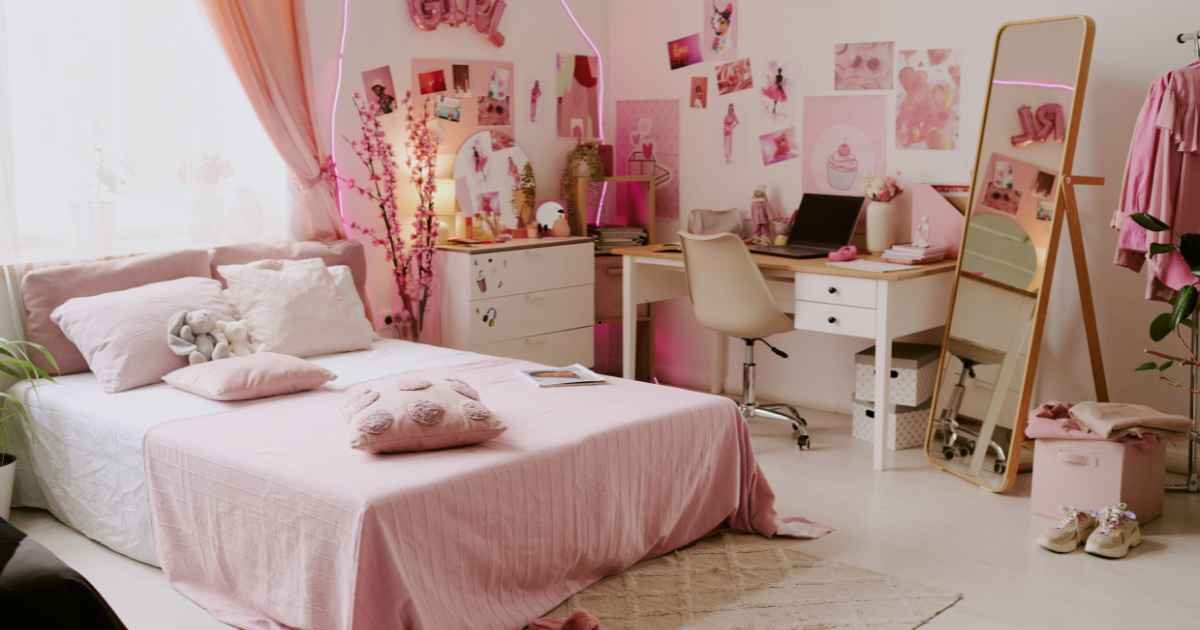
Most bedrooms miss the aesthetic they’re chasing by one or two decisions, not twenty. A warm-toned Pinterest board becomes a cool, echoey room because nobody swapped the harsh overhead bulb. A cottagecore vision falls flat because the rug is three sizes too small. You buy new bedding, and the room still feels like a rental.
A bedroom aesthetic that actually lands is less about buying more and more about layering with intent: light, texture, color, and scale, in that order. Most of the redesign happens in your head, before you touch a shopping cart.
What follows: 9 concrete ideas, a three-layer method that pulls any style together, honest cost ranges, and the mistakes I keep seeing in real rooms. Save the lighting-temperature idea for last. That one small change tends to shift everything.
Key takeaways:
- A working bedroom aesthetic comes from four elements: light, texture, color, and scale, not paint or bedding alone.
- Warm bulbs at 2700K change a room’s mood more than a new duvet does.
- Rugs under a styled bed should extend 18–24 inches past the frame on three sides.
- Pillow arrangements read as styled in odd numbers (3 or 5); even numbers read as untouched.
- Renters can hit most of any aesthetic without paint or nails.
What makes a bedroom aesthetic actually work
A bedroom aesthetic works when four things agree: light temperature, texture mix, a small color palette, and the scale of the anchor pieces. Any style you’ve saved to a mood board (japandi, coastal, boho, dark academia, warm minimal) is really a specific combination of those four. Get the combination right, and the style reads clearly on its own.
The role of a focal point
Every bedroom needs one clear focal point, and in almost every case it’s the bed. So the wall behind the bed carries most of the visual weight: paint color, headboard, art. When a bedroom feels “off,” it usually means the eye doesn’t know where to land. Two competing focal points (a big TV opposite an ornate headboard, say) split the room’s attention and dilute both.
Why texture beats trend
Trends age. Texture doesn’t. A bedroom that mixes three to five textures reads as intentional even when the palette stays quiet: linen bedding, a wool throw, a cane bench, a matte ceramic lamp base, brushed oak nightstands. In three rentals I’ve styled over two years, the rooms that photographed best had cheap bedding paired with expensive-looking texture layering, not the other way around.
9 bedroom aesthetic ideas that hold up
Nine small decisions cover most of the visual work in a bedroom. Each idea below comes with a specific rule, a dimension, or a placement, so it translates to your actual room and not just a photo.
1. Anchor with a statement headboard
The headboard sets the aesthetic more than any other object in the room. Cane or rattan reads boho. A tufted wingback reads traditional. A low, dark walnut slab reads japandi. Renters can fake one with hung fabric or a peel-and-stick wall panel behind the pillows. Pick the headboard first, then let everything else agree with it.
2. Layer three light sources at three heights
Overhead lighting alone flattens a bedroom into a hotel room. You want three sources at three heights: a soft overhead (ideally on a dimmer), two bedside lamps or sconces at pillow height, and one low source, like a floor lamp behind a chair or a table lamp on a dresser. Turn off the overhead at night. The room feels entirely different with the two lower layers doing the work.
3. Size your rug for the bed, not the wall
The most common rug mistake in bedrooms is going too small. Under a queen, an 8×10 should extend 18–24 inches past the sides and foot of the bed, tucking under the top third. Under a king, use a 9×12. If a full rug is out of budget, run two 3×5 runners along each side of the bed instead.
4. Pick a two-plus-one color palette
Two anchor colors plus one accent is enough. Warm greige walls, oatmeal linen bedding, a rust throw. Ivory walls, walnut wood tones, a slate blue art piece. Deep olive walls, cream bedding, antique brass hardware. When you pull in a fourth or fifth color, the room fragments. If you’re stuck, take the two most-used colors already in the room and add one from the opposite side of the color wheel.
5. Layer bedding in odd numbers
Bedding reads as styled in odd pillow counts. For a queen: two sleeping pillows, two euro shams (26×26 inches), one lumbar in front. For a full: two sleepers, one lumbar. Even numbers of decorative pillows tend to read as hotel-generic. Mix textures (linen euro, bouclé lumbar, velvet sham), but keep the color palette tight. Fold the duvet down about a foot so the sheet underneath shows.
6. Hang art low above the headboard
Art above a headboard almost always hangs too high. The bottom edge of the frame should sit 8–10 inches above the top of the headboard, no higher. Most people center art on the whole wall, which puts it near the ceiling and disconnects it from the bed. For a gallery cluster, treat the whole group as one piece and apply the same 8–10 inch rule to its lowest edge.
7. Add a bench at the foot of the bed
A bench or upholstered stool at the foot of the bed adds a horizontal line at knee height that most bedrooms miss. It also gives you a place to sit while putting on shoes and a landing pad for the throw blanket. In rooms under 11 feet wide, skip the bench and use an accent chair in the corner instead. The horizontal weight matters more than the specific piece.
8. Take moody paint to the ceiling
If you’re going with a deep color (forest green, oxblood, ink navy, terracotta), paint the ceiling in the same color rather than white. A colored ceiling in a small bedroom makes the room feel like a cocoon instead of a shrunken box. This backfires only with cool-white lighting and one small window. Then the room reads as dim and cold. Warm bulbs fix that, which brings us to the last idea.
9. Set every bulb to 2700K or lower
More bedrooms are ruined by cool-white bulbs than by any color choice. Bulb temperature is measured in Kelvin: 2700K is warm white, 4000K is cool, 5000K is daylight. Bedrooms want 2700K at most; 2400K if you can find it. Swap every bulb in the room, including the closet. This is the cheapest change with the biggest visual return, usually under $30 for a whole room.
Building your bedroom aesthetic on any budget
A styled bedroom doesn’t need a designer budget, but it does need honesty about where the money goes. The bed frame, mattress, rug, and lighting deserve most of your budget. The decorative pieces (throw pillows, art, plants, small storage) deserve almost none if you shop patiently.
Bedroom aesthetic cost by layer and tier
| Layer | Budget | Mid-range | Premium |
|---|---|---|---|
| Bed frame + headboard | $200–$500 | $600–$1,500 | $2,000–$5,000 |
| Mattress | $400–$800 | $900–$1,800 | $2,000–$5,000+ |
| Lighting (3 sources) | $80–$200 | $250–$600 | $800–$2,500 |
| Rug (8×10 or 9×12) | $150–$400 | $500–$1,200 | $1,500–$4,000 |
| Bedding (full set) | $80–$200 | $250–$550 | $600–$1,500 |
| Nightstands (pair) | $150–$400 | $500–$1,200 | $1,500–$4,000 |
| Art + styling objects | $50–$150 | $200–$500 | $600–$2,000 |
| Paint (walls + ceiling) | $80–$150 | $180–$350 | $400–$800 |
Where to spend, where to save
Spend on the mattress, the bed frame, the primary bedside lamp, and the rug. Those four stay with you through style changes and take daily wear. Save on throw pillows, art (thrift and framing shops beat retail on both), decorative plants, and small storage. One gallon of mid-range interior paint covers most bedrooms with two coats.
Pro tip: Buy the rug last. A rug you love will lock in your color palette in ways bedding never can, and it’s much easier to match walls, art, and cushions to a rug than the other way around. The 18–24 inch clearance rule matters more than the pattern.
The 3-layer bedroom method
A method I use on every bedroom project splits the room into three layers: foundation, function, feeling. Each layer gets its own pass. Skipping ahead is the most common failure mode. People buy feeling-layer items first (art, the throw blanket, the plant) and wonder why the room still feels unfinished after the fourth Amazon order.
Foundation layer
Foundation is what you sleep on and walk on: bed frame, mattress, primary rug, wall color, window treatments. Get this layer right and 60% of the aesthetic is done, even in an empty room. It’s also the expensive layer, so plan it on paper before buying anything.
Function layer
Function is lighting, storage, and one seating piece. Three light sources at three heights. Nightstands with real drawer space. A bench or a chair. This is the layer that separates a room that looks styled in photos from one that lives well. A bedroom that only works with the overhead light on has a broken function layer.
Feeling layer
Feeling is bedding textures, art, plants, ceramics, personal objects. This is where individuality shows up. Most style guides start here, which is why so many bedrooms feel like a collection of nice objects with no bones underneath. Feeling is the last 10%, not the first 60%.
A weekend rental case study
The last time I applied this method on a rental (11×13 room, cool-white overhead, beige carpet, off-white walls), I spent $220 over two days. The moves: 2700K bulbs in every socket ($22), a 5×8 jute rug centered under the bed ($95), a peel-and-stick fluted panel behind the bed ($60), a pair of $20 thrifted brass lamps I rewired. The bedding didn’t change. The paint didn’t change. The room read as a different apartment on Sunday night than it did on Friday. The bulb swap did more visual work than anything else on the list.
Common bedroom aesthetic mistakes and worries
Most bedrooms miss their aesthetic for the same handful of reasons. Each one has a simple fix, and none require starting from scratch.
Relying on the overhead light
The overhead ceiling light in most bedrooms is a cool-white flood fixture that flattens everything under it. You cannot style your way out of bad overhead lighting. Fix: swap the bulb to 2700K, add a dimmer switch (about $15 and 20 minutes), and add two lower light sources. Leave the overhead off after sunset.
A rug that’s too small for the bed
A 5×7 rug centered under a queen bed leaves cold floor showing on all sides and makes the whole room look like a staging mistake. Fix: use a rug that extends 18–24 inches past three sides, or run two runners along the sides if the budget is tight. This is the fix with the biggest visual return per dollar after lighting.
Too many colors, no anchor
A pillow here, an art print there, a lamp in a fourth color. Before long the room reads as chaotic without anyone being able to say why. Fix: pick your two-plus-one palette and remove anything that isn’t in it. Store the removed items for another room or donate them. Restraint reads as intentional design.
“But dark colors will shrink my small bedroom”
Usually the opposite. Deep, matte tones dissolve the corners of a room and push walls visually further away, not closer. Warm-side dark colors work best (forest green, oxblood, dark clay) instead of cool grays or navy. Deep colors backfire only when the lighting stays cool white or when just one wall gets painted.
“But I rent, so I can’t really do this”
You can, with almost no permanent changes. Peel-and-stick wallpaper replaces a painted accent wall. Command strips replace nails. A heavy curtain over the existing rod adds weight to any window. Rugs cover ugly carpet. And the biggest single change, bulb temperature, leaves with you at the end of the lease.
FAQs
Short, honest answers to the bedroom aesthetic questions that come up most.
What aesthetic makes a bedroom feel bigger? Any aesthetic works if you handle the four fundamentals: warm 2700K lighting, a rug larger than you think you need, one clear focal wall behind the bed, and restraint on color count. Small bedrooms feel bigger with more visual weight in the right places, not less.
How many pillows should be on an aesthetic bed? Odd numbers read best. On a queen, five works well: two sleeping pillows, two euro shams (26×26 inches), one lumbar in front. On a full, three: two sleepers and one lumbar. Mix textures but keep the palette tight to two or three colors.
What’s the best paint color for a calming bedroom? Warm neutrals win over cool grays for most people. A warm greige, a soft mushroom, or a muted sage all read as calming under most lighting. Cool grays can feel clinical with LED bulbs, and they age less well than warm neutrals do.
How do I mix vintage and modern in a bedroom? One dominant era, one accent. If the bed frame and lamps are modern, add one or two vintage pieces (a mid-century nightstand, an antique mirror) for character. Matching wood tones across at least two pieces holds the mix together.
Putting it all together
A bedroom aesthetic that lands isn’t really about the styles you’ve saved to Pinterest. It’s about the four fundamentals underneath every one of them: light, texture, color, and scale. Get those right and any style you pick reads clearly. Skip them, and no amount of new bedding will fix it.
Start with the cheapest change first. Swap your bulbs to 2700K tonight, look at the room again tomorrow morning, and decide what still bothers you. That’s usually a shorter list than you thought.
For more room-by-room ideas, real dimensions, and honest budget breakdowns, HomeDecorIdeas keeps building out its bedroom section.