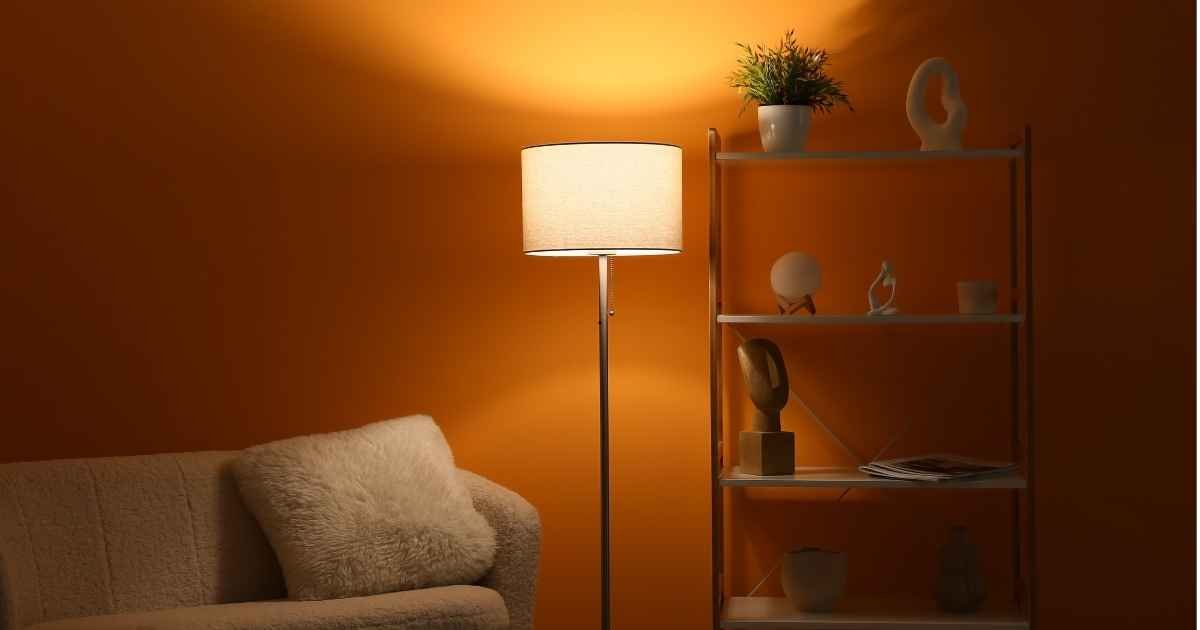
Most budget floor lamps look like budget floor lamps. Thin metal poles, plastic bases that tip when a cat walks past, shades that yellow within a year. That’s the trap. A well-chosen floor lamp under $100 can finish a living room, and the difference comes down to specs most shoppers never check.
The best budget floor lamps for living room use share a few traits: a weighted base at least 10 inches wide, a fabric or metal shade instead of translucent plastic, an LED-rated socket, and dimmer compatibility. Get those right and a $70 lamp can outlast a $300 one that photographs better.
This guide covers seven types worth buying, what to check before you click add-to-cart, and the placement mistake that flattens most living rooms.
Key takeaways:
- A weighted base wider than 10 inches prevents tipping in high-traffic living rooms
- LED-rated sockets and dimmable compatibility matter more than the bulb that ships with the lamp
- Bulbs in the 2700K to 3000K range give warm light; cool white bulbs make budget lamps look industrial
- Fabric or metal shades hide their price better than plastic drum shades
- Cord length under 6 feet limits where a lamp can actually stand in most rooms
- Torchiere lamps replace overhead lighting; arc lamps replace a table lamp behind a sofa
What makes a budget floor lamp worth buying
A budget floor lamp works when its base is heavy, its shade is opaque, and its socket takes a standard LED bulb. Skip lamps with plastic bases, translucent plastic shades, or proprietary bulb fittings. Those three specs cost the manufacturer little and separate a lamp that lasts a decade from one that wobbles by month six.
Build quality signals
Weight is the fastest test. A quality budget floor lamp weighs 8 to 15 pounds, with most of that mass sitting in the base. Anything under 6 pounds tips too easily, especially on carpet or a rug. Poles should be metal, not painted plastic. Check the joint where the pole meets the base; loose threads there mean the lamp will lean within a year.
Shade material matters more than most guides admit. Fabric drum shades, linen conical shades, and enameled metal shades all hide their cost. Translucent plastic shades broadcast “cheap” the moment the bulb turns on, because the plastic tints the light with its own color.
Bulb compatibility that matters
Sockets decide what the lamp can do. Standard E26 sockets (the medium base you already have in most lamps) accept LED bulbs, dimmable LEDs, smart bulbs, and warm white options. Some cheap floor lamps use smaller candelabra sockets or built-in LED strips. Avoid both. When a built-in LED fails, the whole lamp becomes trash.
Look for “LED compatible” and “dimmable” in the product specs. Both are cheap features that low-tier lamps skip.
7 best budget floor lamps for living room
Seven floor lamp styles fit under $100 and work in most living rooms: arc lamps over sofas, tripod lamps in corners, torchiere lamps replacing overhead fixtures, tri-light task lamps for reading chairs, drum-shade traditional lamps, industrial pipe lamps, and slim column lamps for tight walkways. Each solves a different lighting problem.
1. The arc floor lamp for over a sofa
Arc lamps solve the missing-overhead-fixture problem. They curve outward from a weighted base, hanging the shade over the seating area without needing a side table. Budget arc lamps often ship with hollow bases you’re meant to fill with sand or rocks. Do it, or the lamp tips forward within weeks. Look for a 5-foot arc that clears sofa cushions by at least 4 inches. Skip polished chrome shades; they show fingerprints from across the room.
2. The tripod floor lamp for a corner
Tripod lamps fill an empty corner without eating the walkway. The three-leg base gives them a wide footprint, usually 20 to 24 inches diameter, which distributes weight evenly. Wood tripod legs age better than metal ones in this price range, because the finish scratches less obviously. A tripod lamp works best 3 to 4 feet from a corner, angled slightly toward the seating area.
3. The torchiere floor lamp for ambient light
Torchiere lamps point upward, bouncing light off the ceiling to fill a room with soft ambient light. They’re the closest thing to overhead lighting in a rental with a single builder-basic fixture. Budget torchieres under $50 sometimes come with plastic bowls that yellow within two years; metal or thick glass bowls last far longer. Choose a torchiere at least 68 inches tall so the light actually catches the ceiling.
4. The tri-light task lamp for reading
Tri-light lamps have three brightness settings on a rotary switch. They work beside a reading chair because you can dial down for TV and up for reading without swapping bulbs. Check that the tri-light socket accepts standard 3-way LED bulbs (50/100/150 watt equivalents). Some proprietary tri-light lamps lock you into buying the manufacturer’s own bulbs, which cost three to four times more than standard.
5. The traditional drum-shade lamp
A straight pole with a wide drum shade is the workhorse of budget floor lamps. It works next to almost any chair or sofa without competing with the furniture. Drum shades between 14 and 18 inches diameter light the widest area without dominating the room. Cream and off-white shades give warmer light than pure white; charcoal shades create a moodier reading pocket but cut ambient light by half.
6. The industrial pipe floor lamp for eclectic rooms
Exposed metal pipe lamps with Edison-style bulbs pair with darker paint, leather furniture, and unfinished wood. Budget versions use hollow tube steel that dents easily. Check the wall thickness at the joints if you can. These lamps look intentional in loft or industrial-modern rooms and awkward everywhere else. Use warm 2200K bulbs to prevent the harsh dorm-room glow that ruins the aesthetic.
7. The slim column lamp for tight spaces
A narrow column lamp fits behind a sofa or between a chair and a wall where anything wider would block a walkway. Look for a base under 10 inches diameter and a pole under 6 inches wide. These usually stand 55 to 60 inches tall, which lights a seated eye level without glare. The trade-off: the small base tips easily on carpet, so weight matters more here than in any other style.
How to choose the right budget floor lamp
Match the lamp to what the room lacks. A living room without overhead lighting needs a torchiere. A sofa without side tables needs an arc lamp. A dark reading corner needs a tri-light. Then check three specs: base weight over 6 pounds, LED-compatible socket, and cord length that reaches your outlet without a visible extension.
Match the lamp to the room’s real lighting gap
Biggest mistake shoppers make is buying for aesthetics before diagnosing what the room needs. Walk into your living room after sunset with only overhead lights on. Note the dark corners, the seat that’s hard to read in, the wall art that disappears in shadow. Those gaps decide which lamp type fits.
Bulb specs that decide the mood
Color temperature (measured in Kelvin) controls whether the room feels cozy or clinical. 2700K to 3000K bulbs give warm, incandescent-like light that flatters skin tones and softens rooms. 3500K reads neutral. 4000K and up looks cool and industrial. Fine for kitchens, wrong for living rooms.
Lumens tell you brightness. A living room ambient lamp needs 800 to 1,600 lumens. A reading task lamp needs 400 to 800 lumens focused at close range. Wattage on LED bulbs is misleading; a 9-watt LED puts out the light of a 60-watt incandescent.
CRI (Color Rendering Index) above 80 keeps colors looking natural. Cheap bulbs below CRI 80 make wood floors look flat and skin tones grayish. It costs about $2 more per bulb to jump from 80 to 90+ CRI.
The floor lamp buying spec table
| Lamp type | Best for | Budget tier (USD) | Space needed |
|---|---|---|---|
| Arc lamp | Over sofa or sectional | $60–$95 | 24″ clear beside sofa |
| Tripod lamp | Empty corner | $50–$85 | 24″ diameter floor space |
| Torchiere | Ambient (no overhead) | $35–$70 | 12″ from wall |
| Tri-light task | Reading chair | $45–$80 | 8″ beside chair arm |
| Drum-shade | All-purpose | $40–$75 | 12″ diameter |
| Industrial pipe | Eclectic rooms | $55–$90 | 10″ from wall |
| Slim column | Tight walkways | $50–$85 | Under 10″ diameter |
Pro tip: Always buy the bulb separately. Floor lamps sold with bulbs included usually ship with the cheapest LED the manufacturer could source. Swapping to a warm 2700K CRI 90 bulb is the single biggest quality upgrade you can make for under $10.
The 3-zone living room lighting method
A living room needs three lighting zones to feel finished: ambient (fills the room), fill (softens shadows), and task (focused for reading). Most rooms have one, the ceiling fixture, which is why they feel flat. A budget floor lamp can add zone 2 or zone 3 for under $80 without changing anything else.
Zone 1: ambient lighting
Ambient lighting is your overhead fixture or a torchiere bouncing light off the ceiling. It fills the room evenly. Without overhead lighting, a torchiere at 400+ lumens covers this zone in most rooms under 200 square feet.
Zone 2: fill lighting
Fill sits between ambient and task. An arc lamp over the sofa or a tripod lamp in a corner adds soft directional light that softens the contrast of a single overhead fixture. This is the zone budget floor lamps handle best.
Zone 3: task lighting
Task lighting is focused light for a specific activity. Reading, needlework, working on a laptop. A tri-light lamp beside a reading chair handles this at any budget.
The 3-zone method in a $150 living room
I applied this in a 12×15 foot rental with one weak overhead fixture. Added a torchiere in the far corner ($55) and an arc lamp behind the sofa ($95). Total: $150 including bulbs. Within a single evening the room stopped feeling like a hotel lobby. Shadows softened, wall art became visible from the doorway, and the reading chair finally worked without eye strain. That’s what three zones do. No paint, no furniture, no rug swap.
Common mistakes to avoid
Most budget floor lamp regrets trace back to five mistakes: buying for looks over function, ignoring cord length, trusting wattage ratings, choosing a base too light for the room, and skipping the bulb spec check. Each has a fix that costs nothing extra at purchase.
Ignoring the cord length
Product listings bury cord length in the specs. Under 6 feet is common and problematic, because most living room outlets aren’t near where a floor lamp needs to stand. Fix: Measure the distance from your intended lamp spot to the nearest outlet before buying. Add 2 feet for slack.
Trusting wattage instead of lumens
A lamp rated “60 watts max” tells you nothing about brightness, because LED bulbs use a fraction of that wattage. Fix: Buy the bulb by lumens, not watts. Ambient: 800–1,600 lumens. Task: 400–800 lumens.
A base too light for the room
Lamps under 6 pounds tip when kids, pets, or vacuum cords touch them. Fix: Fill hollow bases with sand or aquarium gravel if the design allows. Otherwise, buy heavier. Weight is listed on any decent product page.
Buying a lamp with a built-in LED
Fixed LED strips or panels fail eventually, and when they do the whole lamp becomes decorative junk. Fix: Buy lamps with standard replaceable bulbs (E26 socket) even if the LED-integrated version costs less upfront.
Ignoring the shade material
Translucent plastic shades tint the light with their own color, which is why some cheap lamps make the room look slightly yellow or blue. Fix: Choose fabric, linen, opaque metal, or thick glass shades.
Won’t budget floor lamps break within a year? Not if you check three things before buying. Base weight (over 6 pounds), socket type (standard E26 with replaceable bulb, not built-in LED), and shade material (not plastic). Cheap floor lamps that break usually fail on one of those three. Lamps that get all three right often outlast furniture that cost ten times as much.
Won’t LED bulbs be too harsh for a living room? Older LEDs deserved that reputation. Modern warm white LEDs at 2700K with a CRI above 90 render skin tones and wood floors identically to old incandescent bulbs. Trick is buying the bulb by spec, not by the “warm white” label. Some cheap warm-labeled bulbs actually run cooler than 3000K.
FAQs
What’s the best bulb type for a floor lamp in a living room?
A 2700K or 3000K LED bulb with a CRI above 90 works in almost any living room floor lamp. For ambient use, target 800 to 1,600 lumens. For a reading lamp, 400 to 800 lumens is enough. Buy dimmable if your lamp supports it. You’ll use the low setting more than you expect.
Are LED floor lamps worth it on a budget?
LED bulbs are worth it. LED-integrated lamps usually aren’t. Buy a lamp with a standard E26 socket and put a good LED bulb in it. That combination gives you the energy savings of LED with the ability to replace the bulb when it eventually fails.
How tall should a floor lamp be next to a sofa?
A floor lamp beside a sofa or chair should place the bottom of the shade at seated eye level. Usually 58 to 64 inches from the floor. Taller and the bulb shines directly in your eyes when you sit down. Shorter and the light pools on your lap instead of spreading across the room.
What’s the difference between torchiere and arc floor lamps?
Torchiere lamps point light upward and bounce it off the ceiling for ambient fill. Arc lamps hang a shade horizontally over a seating area, replacing an overhead fixture. Torchieres work in rooms that need overall brightness. Arc lamps work over sofas and sectionals without a side table beside them.
Do budget floor lamps really last?
Good ones do. A $70 lamp with a metal pole, a heavy base, and a standard socket outlasts a $300 lamp with built-in LEDs and a plastic base. Longevity comes from specs, not the price tag.
Final thoughts
Best budget floor lamps for living room use aren’t the ones that photograph best. They’re the ones with heavy bases, opaque shades, and standard sockets that accept a good bulb. Pick the type that fills your room’s actual lighting gap. Check the specs before you buy. Skip anything with built-in LEDs. Spend the $10 you save on a warm 2700K CRI 90 bulb. That swap does more for a room than the lamp itself.
For more room-by-room lighting guides and honest picks that hold up over time, keep exploring HomeDecorIdeas.