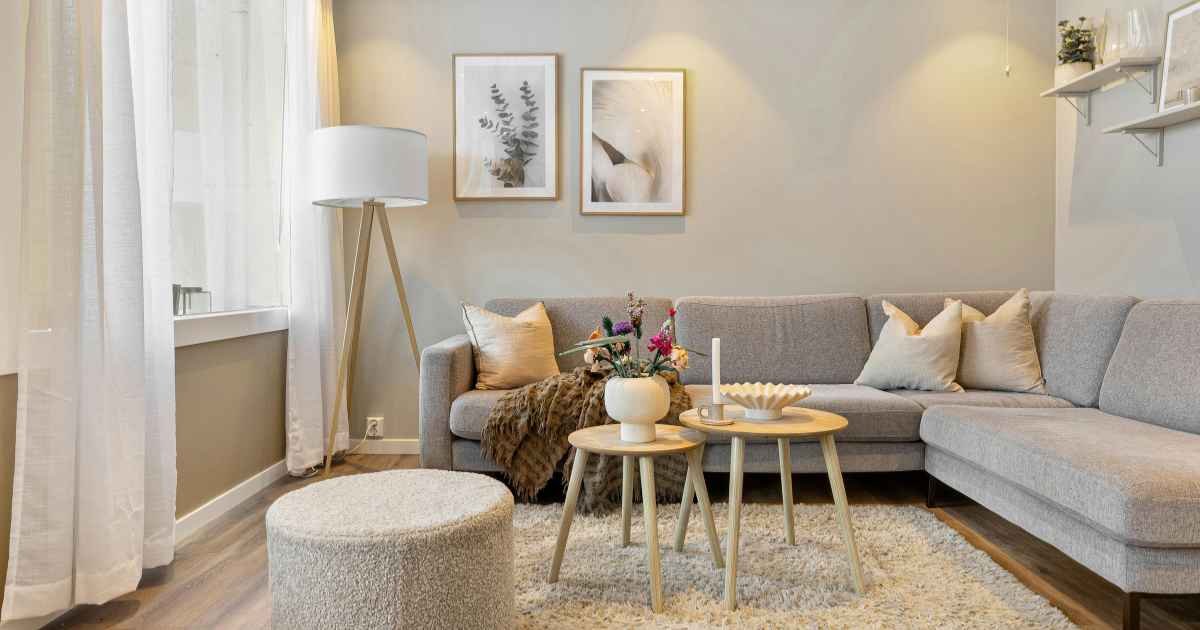
A beige sofa should be the easiest thing in a room to style. It rarely is.
The problem isn’t the sofa. It’s the instinct to pile on more beige. Cream cushions on a beige sofa don’t add calm — they erase the sofa entirely. Decorative pillow combinations for beige sofas work when they bring contrast, not more of the same tone. The right anchor color deepens the sofa; the wrong one makes it disappear into the wall.
This guide covers 9 specific combinations with exact colors, textures, and sizes, plus the mistake in the last section that makes most beige sofas look flat rather than finished.
Key takeaways:
- Beige sofas need contrast, not more neutrals — all-cream arrangements flatten the sofa into the background
- Identify whether your sofa has warm or cool undertones before choosing any color
- Rust, terracotta, sage green, and dusty blue all work on warm-toned beige sofas
- Mix at least two different fabrics — velvet with linen, or bouclé with cotton
- Odd numbers work best: 3 pillows on a loveseat, 5 on a standard three-seater
- One anchor color plus one texture variation is enough — adding more rarely improves things
Why beige sofas are harder to style than they look
Beige has a specific undertone that determines which other colors sit well next to it. Most pillow mistakes happen before a single pillow is bought, because the sofa’s undertone was never checked. Get this right and the combinations below will work naturally; skip it and even a good color will look slightly off without a clear reason why.
Warm beige vs. cool beige: the undertone difference
Warm beige carries yellow, peachy, or golden undertones — it reads as honey or sand in direct light. Cool beige leans toward gray or pink, often described as greige. Most beige sofas are warm-toned. Rust, terracotta, olive, mustard, sage green, and warm navy all sit naturally beside warm beige. Cool-toned beige works better with blush, warm charcoal, and dusty blue. Placing a cool-toned pillow against a warm beige sofa creates a subtle clash that most people can sense but struggle to identify.
Why cream and ivory pillows tend to fail
A cream pillow on a beige sofa adds nothing. It doesn’t create contrast or depth — it makes the sofa read as one large, undifferentiated surface. Any arrangement needs at least one anchor color with enough contrast to separate the sofa visually from the cushions, the wall, and the floor.
9 decorative pillow combinations for beige sofa
Each combination below includes specific colors, textures, and at least one size note so you can apply it directly. Most work on warm-toned beige sofas — the most common type — with notes where a combination suits cool-toned versions instead.
1. Rust velvet and oatmeal bouclé
Two rust velvet squares (20×20 inches) and one large oatmeal bouclé (22×22) give a warm, grounded arrangement with real contrast. Rust sits directly adjacent to beige on the warm spectrum — it deepens rather than clashes. The tactile difference between velvet and bouclé does the visual layering without any need for pattern. This is the combination I’d recommend to anyone who wants impact with minimal risk.
2. Sage green and warm white
Sage green has enough depth to contrast a beige sofa without reading as a bold color statement. Pair two sage linen squares (18×18) with one oversized warm white bouclé (22×22) and a sage lumbar (12×20). This works particularly well on pale beige sofas where stronger colors feel heavy. Sage green on beige holds its quality under both natural daylight and warm artificial light — most color pairings shift noticeably at dusk; this one doesn’t.
3. Dusty blue and caramel
Dusty blue — closer to worn denim than cobalt — reads as muted enough to sit comfortably against warm beige. Pair two dusty blue velvet squares (20×20) with one caramel linen square (18×18) and a natural-textured lumbar. The caramel bridges the warm sofa to the cooler blue and keeps the arrangement cohesive. Without that bridge, the dusty blue can pull slightly away from the sofa’s warmth.
4. Terracotta and dark olive
Two terracotta cotton squares (20×20) and one dark olive linen (18×18) create a low-contrast, earthy combination that suits sofas in rooms with warm wood floors or rattan accents. Both colors occupy the same warm family as beige, so the arrangement reads as cohesive rather than busy. Finish with a cream or olive lumbar. The result is stronger than the quiet palette suggests.
5. Navy and off-white with warm gray
Navy is a high-contrast choice against beige, and it works precisely because the contrast is intentional. One navy velvet (22×22), one off-white linen (18×18), and one warm gray square (18×18). The warm gray acts as a bridge — without it, the navy can read as too abrupt. Avoid cool gray here; it pulls the arrangement in two tonal directions at once and the sofa stops holding together.
6. Blush and warm charcoal
A reliable option for cool-toned beige sofas, where warm-palette combinations look slightly wrong. Two blush cushions (18×18 in velvet or linen) and one warm charcoal square (20×20) anchor the arrangement without adding warmth that fights the sofa’s undertone. Blush here isn’t pink — it’s a desaturated, nearly neutral rose that settles quietly against beige without competing.
7. Cognac, cream, and forest green
Three colors in one arrangement work when one of them is a neutral. One large cognac velvet (22×22), one cream bouclé (20×20), and one forest green linen (18×18). The cream sits between the rich cognac and the deep green, preventing the arrangement from reading too dark. This combination performs well in rooms with limited natural light, where the cognac adds a warmth that lighter palettes can’t deliver.
8. Warm white with a single woven or geometric
Stay close to neutral without the flattening effect by using pattern as the contrast element instead of color. Two warm white squares in different fabrics — one smooth cotton, one bouclé or woven — with one 18×18 in a simple geometric or subtle stripe in a warm tone. The pattern substitutes for an anchor color, giving the sofa definition without introducing a new hue to manage.
9. Mustard and dusty sage
In the right tone — a muted, slightly brown mustard rather than a bright yellow — mustard works well against warm beige. Pair two mustard velvet or cotton squares (18×18) with one dusty sage linen (20×20). These two together against beige create an organic, earthy palette that suits Scandinavian and bohemian rooms equally and doesn’t read as trend-dependent.
Pillow sizes and quantities that actually work
Getting the color right matters less if the sizing is off. Two beautiful pillows on a 90-inch sofa look sparse; six small ones on a 72-inch sofa look overcrowded. The arrangement only holds together when sizes match the sofa’s actual length.
Size guide by sofa length
| Sofa length | Arrangement | Recommended sizes |
|---|---|---|
| Under 72 inches (loveseat) | 2 square + 1 lumbar | 20×20 + 12×20 |
| 72–84 inches | 2 large + 2 medium | 22×22 + 18×18 |
| 84–96 inches (standard 3-seater) | 2 large + 2 medium + 1 lumbar | 22×22 + 18×18 + 12×20 |
| Over 96 inches or sectional | 4 large + 2 lumbar | 22×22 + 20×20 + 12×20 |
Pro tip: Always size up your insert by one size. A 22×22 insert inside an 18×18 cover creates a full, professional-looking cushion. Underfilling is the most common reason pillows look limp, regardless of fabric quality.
The odd number rule — and when it breaks down
Odd numbers (3 or 5) work on most sofas because asymmetric arrangements look composed rather than symmetrical. But on a loveseat under 65 inches, two pillows can look more deliberate than three — the extra cushion pushes the sofa toward overstuffed. On sectionals, group even numbers in clusters of two on each section rather than running one long odd-number row across the whole piece.
The Beige Sofa Pillow Formula
The Beige Sofa Pillow Formula is a three-step method for building any pillow arrangement deliberately, without trial and error. It works regardless of room style or exact beige tone, and it produces a result that looks considered rather than accidentally right.
Step 1 — Identify your sofa’s undertone: Hold a white piece of paper next to the sofa fabric in natural daylight. If the sofa reads as golden or sandy against the white, it’s warm-toned. If it reads as slightly gray or pink, it’s cool-toned.
Step 2 — Choose one anchor color: Pick one color with enough contrast to define the sofa. For warm-toned sofas: rust, sage, mustard, or muted navy. For cool-toned sofas: blush, dusty blue, or warm charcoal. This color should appear on at least two pillows.
Step 3 — Add one texture variation: Keep the palette simple but change the fabric. Velvet and linen, bouclé and cotton, or a woven and a smooth are each enough. Texture contrast reads even across a room — it doesn’t require pattern to do the same job.
Before you shop:
- Identify your sofa’s undertone (Step 1 above)
- Choose one anchor color from the combinations in this guide
- Pick two different fabric types (velvet + linen, or bouclé + cotton)
- Measure your sofa length and match it to the size table
- Count: 3 pillows for small sofas, 5 for a standard three-seater
How the formula worked in a real room
I restyled a 90-inch warm beige linen sofa in a north-facing living room in one afternoon, with $85 in new pillows. The original setup was five matching cream cushions — the sofa was invisible in the room. Swapping to two rust velvet lumbars (12×20), one oatmeal bouclé (22×22), and one dusty sage linen (18×18) changed the whole room’s mood. The sofa went from background furniture to the room’s focal point — nothing else moved.
Mistakes that flatten a beige sofa
Three errors account for most failed beige-sofa pillow arrangements: using all neutrals, mismatching undertones, and mixing too many competing colors at once. Each looks like a vague aesthetic problem, but each has a specific fix — identifying the right one in your room is most of the work.
Do vs. don’t
| Do | Don’t |
|---|---|
| Mix at least two different fabrics | Use all the same material |
| Match pillow undertones to the sofa | Mix warm and cool-toned colors |
| Use one anchor color with clear contrast | Use only light neutrals |
| Include a lumbar on sofas 84 inches and over | Use all square pillows on a large sofa |
| Size up inserts by one size | Use inserts the same dimensions as the cover |
Using all neutrals
Cream, ivory, and warm white on a beige sofa flatten instead of finishing. The pillows and the sofa read as one indistinct surface. The fix is one anchor color — just one — with enough contrast to separate the sofa from its cushions visually. I’d rather see two rust velvet pillows on a beige sofa than five careful neutrals that leave the room feeling unresolved.
Mismatching undertones
A cool-toned pillow against a warm-toned beige sofa looks wrong, even when no one can say why. This is the invisible mistake behind most arrangements that feel “off.” The undertone test in Step 1 above takes thirty seconds and fixes it before any money is spent.
Won’t adding color clash with my beige sofa? Only if the undertones conflict. Rust, sage, mustard, and terracotta all sit in the same warm family as most beige sofas — the combination reads as harmonious. What actually clashes is a cool-toned color against a warm-toned sofa. The color itself is rarely the problem; the undertone match is.
Should I just stick to all neutrals to play it safe? All-neutral arrangements are rarely safe — they’re invisible. A beige sofa styled only in creams and off-whites disappears into the room rather than anchoring it. One anchor color, even a quiet one like dusty sage or muted navy, gives the sofa the definition it needs to read as furniture and not just fabric.
FAQs
What color throw pillows look best on a beige sofa? Rust, terracotta, sage green, dusty blue, mustard, and muted navy all work well on warm-toned beige sofas. Blush, warm charcoal, and dusty blue suit cool-toned beige. The specific shade matters more than the color family — go for muted, medium-saturation tones rather than bright versions of the same color.
How many pillows should go on a beige sofa? Three on a loveseat or small two-seater, five on a standard three-seater, and six to eight on a large sectional. Include at least one lumbar pillow on sofas over 84 inches — it fills the center without overcrowding the ends, and it’s the detail that makes an arrangement look finished rather than assembled.
Can you use patterned pillows on a beige sofa? Yes, with one limit: use a maximum of one patterned pillow per arrangement. Place it between two solid-colored pillows so the pattern has visual space to read. Geometric patterns, subtle stripes, and textured weaves work better than large florals or busy prints against a neutral background.
Does gray work with a beige sofa? Warm gray does; cool gray usually doesn’t. Warm gray has yellow or brown undertones and reads comfortably next to beige. Cool gray, with its blue or purple undertones, creates an undertone conflict that makes the arrangement look unresolved — even when both colors appear mild on their own.
What colors should I avoid on a beige sofa? Bright, heavily saturated colors create too stark a contrast against a warm neutral. Cool-toned whites and cool grays on warm-toned beige sofas look dingy rather than crisp. And avoid using more than one strong anchor color in a single arrangement — the combinations that work best use one anchor, one neutral, and one texture variation.
Conclusion
Decorative pillow combinations for beige sofas work when contrast, not matching, is the goal. Check your sofa’s undertone first, choose one anchor color with enough contrast to define the sofa, and add one texture variation. The nine combinations above give you specific starting points, and the Beige Sofa Pillow Formula builds any variation from there with the same deliberate result.
For deeper guides on living room color, fabric layering, and sofa styling by room size, HomeDecorIdeas covers each space in detail. The principles here stay constant; the application shifts by room.
Get inspired by thought-provoking articles—find daily sparks and practical wisdom here.