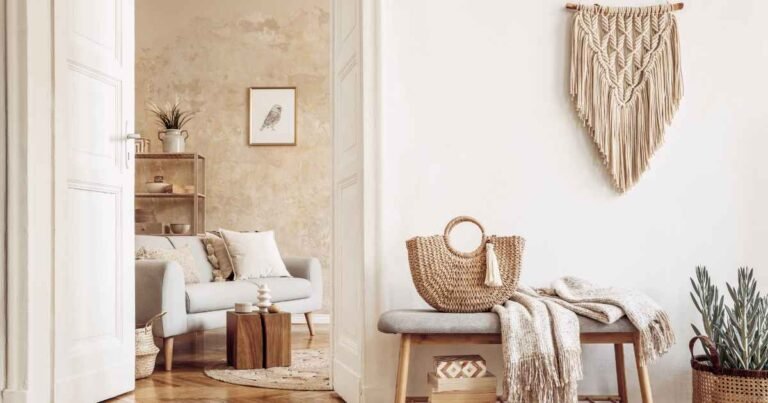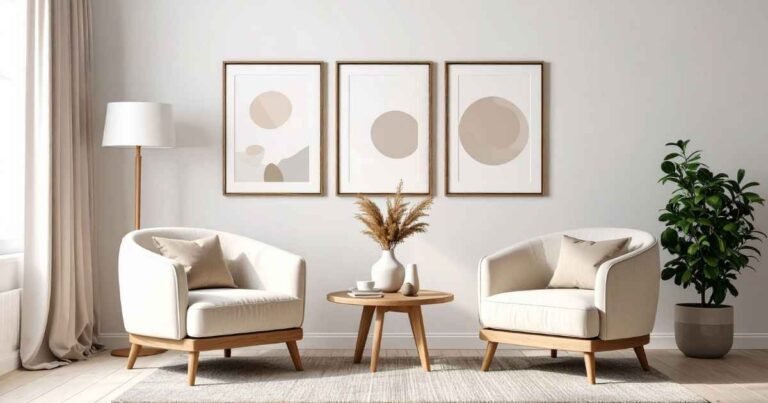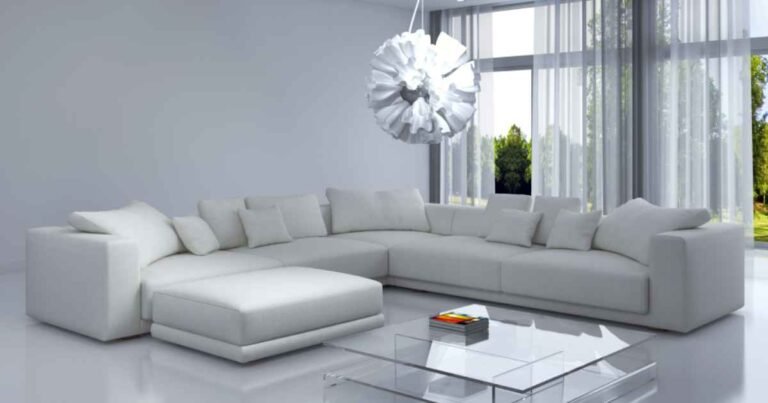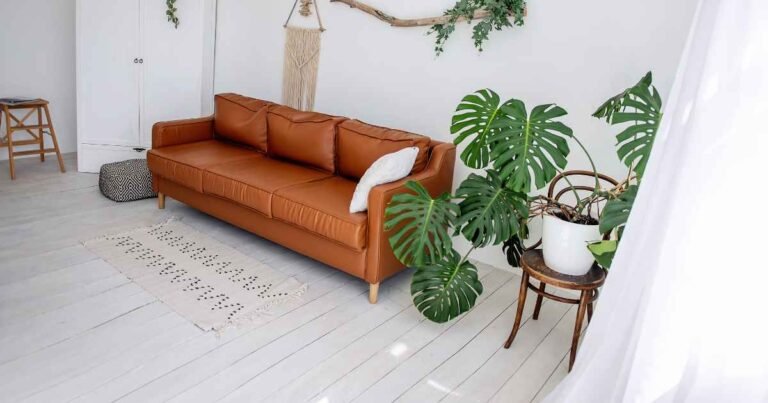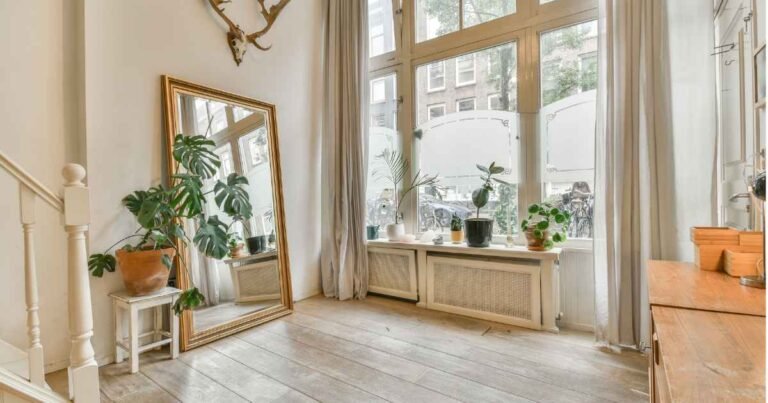
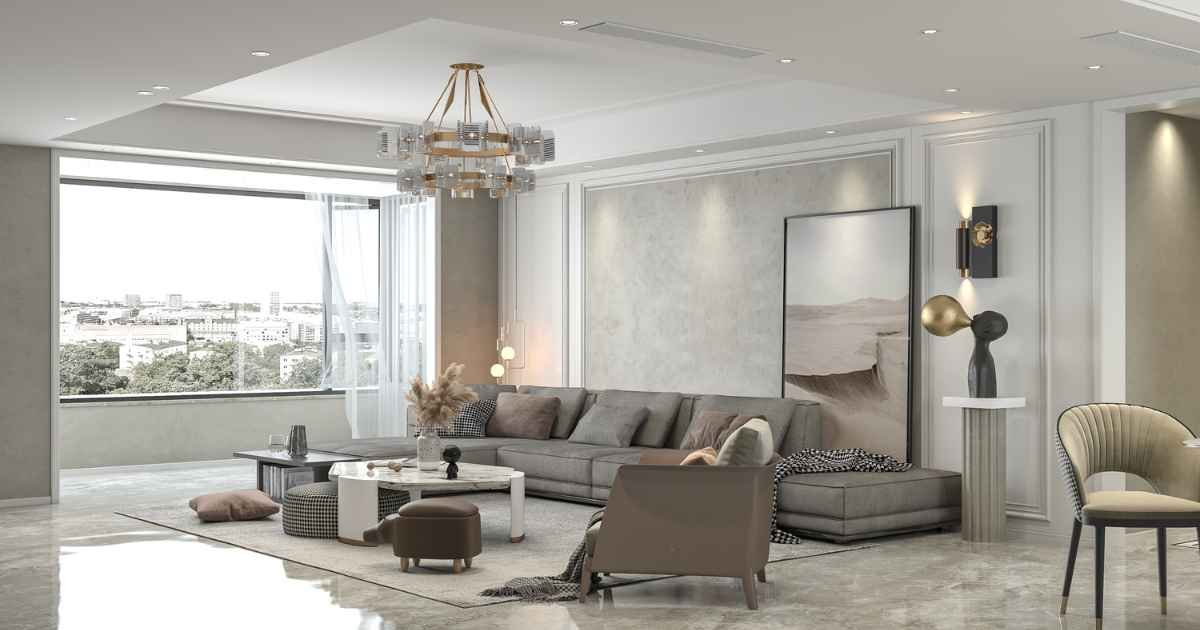
Modern decor gets cold. Rustic decor gets cluttered. Knowing how to mix modern and rustic decor well is one of the most-asked design questions for a reason: done right, the result is warmer than modern alone and cleaner than rustic alone. Both styles become more interesting when they share a room.
Seven rules govern how the mix works. Most reduce to a single idea: let modern own the lines, let rustic own the texture. The error in the last section trips up nearly every room that almost works but doesn’t quite land.
Key takeaways:
- One style should lead; modern base with rustic accents is almost always the right call
- Matte black metal, jute, and linen bridge both styles simultaneously
- Match modern lines with rustic texture, not rustic lines with modern texture
- Warm lighting at 2700K unifies both styles before any furniture change does
- One dominant anchor rustic piece per zone beats five small scattered accents
- Repeat each rustic material at least three times in a room to read as intentional
What modern rustic decor actually means
Modern rustic decor is a deliberate pairing of contemporary clean-lined design with organic, textured, or handcrafted elements. It works because both styles share underlying preferences: modern resists ornament, rustic resists polish, and the overlap between those two positions is where genuinely comfortable, designed rooms live.
The mix shows up as a concrete side table next to a rough-hewn wood shelf, or a linen duvet against a matte black window frame. What makes it hold together is contrast, not similarity. Each style reads more clearly when the other is present.
How modern rustic differs from modern farmhouse
Modern farmhouse leans toward white shiplap, subway tile, and styled barn signage. Modern rustic is more material-focused: raw wood, matte metal, stone, and natural textiles without the branded farmhouse signifiers. Picture the room in a converted industrial space or a pared-back mountain house and it’s modern rustic. Barn doors and apron sinks put it in farmhouse territory.
How to mix modern and rustic decor: 7 rules that work
These rules function as a system rather than a checklist to complete all at once. Apply them in sequence for a new room, or focus on the most relevant one or two to repair a space that’s already a mix but isn’t landing.
1. Decide which style leads before buying anything
Commit to a base style before purchasing anything. Modern should lead in nearly every case: clean-lined furniture forms the foundation at the sofa, bed frame, and dining table level, while rustic elements come in at the shelf, rug, and lighting level. Putting rustic furniture in the leading role almost always skews the room too heavy and too dark to edit back from later.
2. Anchor each zone with one significant rustic piece
Scatter small rustic accents and the room reads as collected, not curated. Give each zone one anchor-scale rustic element instead: a live-edge dining table, a stone fireplace surround, a reclaimed wood shelving unit, or a large handwoven rug. Everything surrounding that anchor can lean modern. The room registers as genuinely mixed because of that one strong presence, and the modern elements look sharper for the contrast.
3. Match modern lines with rustic texture, not style with style
Modern design is defined by clean, geometric lines. Rustic design is defined by organic texture. Successful mixing pairs these in the same object where possible: a concrete side table carries modern lines and industrial texture simultaneously; a linen sofa pairs a contemporary silhouette with a natural material; a matte ceramic vase offers a simple shape with a handmade surface. Look for objects that carry both qualities rather than representing one style purely.
4. Use matte black metal as the bridge finish
Matte black is the one metal finish that reads convincingly as both modern and rustic depending on its surroundings. A matte black pendant above a raw wood dining table looks like a design decision. The same pendant above a chrome-and-glass table looks like a misfit. I’ve swapped chrome and polished brass for matte black hardware in several rooms; it shortens the rest of the styling process every time because the two styles stop competing at the hardware level.
5. Ground the room with a natural textile
Jute, sisal, wool, and coarse linen are the most effective bridge materials in a mixed room. They absorb visual noise, feel warm underfoot, and don’t belong exclusively to either style. A jute rug under a clean-lined sofa does most of the tonal bridge-building before any accent piece is added. In upholstery, plain linen works the same way. Avoid high-sheen synthetics: they push the room firmly toward modern and fight any rustic element nearby.
6. Keep the base palette warm and neutral
Stark white reads as modern by default. Off-white, warm cream, stone, or pale greige give rustic elements room to settle without competing for attention. Use the warmest neutral you can manage on walls and large upholstered pieces, then build contrast through material texture — wood grain, rough linen, hammered metal — rather than through paint. A single wall color across the whole room consistently outperforms two.
7. Fix the light temperature before assessing anything else
Cool-white lighting at 4000K makes rustic materials look dusty and modern materials look stark. Warm 2700K lighting makes both look intentional. I’ve assessed what seemed like styling failures in several rooms; many resolved by swapping the bulbs before changing any furniture. Switch all bulbs to 2700K before evaluating whether placement, accents, or layout need any adjustment.
Pro tip: Replace cool-white recessed downlights before buying any decor. The room often starts working before you’ve added a single new piece.
Quick role assignment: which style owns which element?
Use this to make decisions room by room. Each element has a natural home in one style or the other, or sits in the bridge zone where either works.
| Room element | Modern | Rustic | Either (bridge) |
|---|---|---|---|
| Sofa / bed frame silhouette | ✓ | ||
| Large statement or anchor piece | ✓ | ||
| Rug material and texture | ✓ | ||
| Wall color | ✓ | ||
| Hardware and metal fixtures | ✓ | ||
| Main upholstery fabric | ✓ | ||
| Accent lighting (pendants, lamps) | ✓ | ||
| Throws, cushions, textiles | ✓ | ||
| Open shelving and display pieces | ✓ | ||
| Storage furniture (cabinets, wardrobes) | ✓ |
Which materials bridge both styles naturally?
Some materials exist in the overlap between modern and rustic and do connecting work on their own. Others belong firmly to one style and need deliberate placement to avoid breaking the mix. Knowing which is which saves more time than any other single decision in this process.
Material bridge guide
| Material | Style lean | Works well with | Avoid pairing with |
|---|---|---|---|
| Raw / reclaimed wood | Rustic-primary | Concrete, matte black metal, linen | Chrome, high-gloss lacquer, polished brass |
| Concrete / cement board | Modern-primary | Raw wood, stone, wool | Floral prints, distressed white paint |
| Matte black metal | Bridge | Almost everything | Mixed metal finishes in the same zone |
| Jute or sisal rug | Bridge | Clean-lined sofas, plain wood floors | Velvet upholstery, shag pile |
| Linen upholstery | Bridge | Any wood tone, any base color | High-sheen furniture legs, lacquered surfaces |
| Stone or slate | Rustic-primary | Concrete floors, raw wood, chunky wool | Ultra-sleek glass furniture, chrome |
| Brushed brass | Modern-primary | Warm wood tones, warm neutrals | Very raw or unfinished wood, cool rooms |
Quick checklist before adding any new piece:
- [ ] Does the room have at least one bridge material in a prominent position?
- [ ] Is each rustic material repeated at least three times across the room?
- [ ] Are all metal finishes in the same zone matching?
- [ ] Is there one dominant anchor rustic piece rather than scattered smaller ones?
- [ ] Is the wall color warm-neutral enough for rustic pieces to land without looking accidental?
- [ ] Are the rustic and modern elements competing in the same category, or holding different roles?
The 3-Layer Blend Method
Most rooms that fail at the modern-rustic mix share a structural problem: no element has a clear job. Objects get added piecemeal, each trying to hold the room together on its own. The 3-Layer Blend Method gives every buying decision a specific role and makes the mix easier to manage across a whole home.
Layer 1 — Foundation (modern): The furniture silhouettes, wall color, and flooring that establish the room’s baseline. Clean lines, neutral tones, minimal surface ornament. This layer registers first when someone walks in. If it isn’t clearly modern, the room won’t read as organized.
Layer 2 — Character (rustic): The anchor pieces that introduce the rustic voice. A live-edge table, a stone feature wall, a reclaimed wood shelving unit, a large handwoven rug. Two pieces per zone is a practical ceiling. Each additional rustic anchor reduces the visual impact of the others.
Layer 3 — Connection (bridge materials): The materials that link Layer 1 and Layer 2 without belonging exclusively to either. Matte black hardware, linen cushions, raw-wood trays, ceramic vessels, warm filament bulbs. This layer does the quiet work that makes the first two read as a single decision.
The governing principle: Layer 1 sets the structure, Layer 2 introduces the tension, and Layer 3 resolves it.
A room blended in one afternoon
I styled a living room in a new-build apartment over one Saturday on a $185 budget, with no furniture purchases. The existing room had white walls, a clean-lined gray sofa, and chrome table lamps. Modern, but flat. Three changes: A raw wood floating shelf above the sofa ($55), two matte black lamp replacements for the chrome ones ($70 both), and a jute rug layered over the synthetic one already on the floor ($60). The chrome lamps had been making both styles look uncertain; matte black stopped that. The wood shelf added texture without mass. The jute changed the acoustic quality of the hard floor just enough to feel deliberate. Four hours total.
Common mistakes when mixing modern and rustic styles
Avoiding these errors matters more than following any positive rule. Each one below is common enough that you’ve probably already made at least one of them — and correctable enough that fixing it alone can change how the whole room reads. A single bad pairing can undo a dozen good decisions.
Mistake 1: Scattering small rustic accents instead of anchoring
One strong rustic piece reads as a design decision. Six small ones read as an accumulation. Rustic elements carry high visual weight and fill a room’s visual field faster than modern pieces. Three wooden signs, a vintage crate, and a weathered clock don’t add up to modern rustic; they tip the room fully rustic regardless of what the furniture is doing.
The fix: One anchor rustic piece per zone, then assess before adding anything else.
Mistake 2: Mixing wood tones and finish levels
A smooth lacquered oak sideboard is a modern piece. A raw walnut live-edge slab is a rustic piece. A rough pine shelf sits between them. All three in the same room creates visual competition rather than cohesion.
The fix: Choose one wood tone (warm or cool) and one finish level (raw or treated) and repeat only that combination throughout.
Mistake 3: Evaluating the room under the wrong light
A room assessed under cool-white light (4000K) will look wrong in ways that are hard to name. The problems seem like furniture or layout problems when they’re usually lighting problems.
The fix: Switch all bulbs to 2700K warm white before assessing any styling decision.
Mistake 4: Treating rustic as a synonym for old
Rustic means natural, textured, and organic, not old or secondhand. Raw new wood works perfectly in modern rustic interiors. A room full of antiques and vintage signage is a traditional room, not a modern rustic one.
The fix: When assessing any rustic piece, ask: is this natural and textured? Not: is this old?
FAQs
What is the style called when you mix modern and rustic decor? The most common terms are “modern rustic,” “rustic contemporary,” and “transitional rustic.” “Organic modern” describes rooms that lean heavily on natural materials with a contemporary structure. All four refer to the same balance: clean-lined contemporary forms with natural, textural warmth added over them.
Won’t mixing styles look like I couldn’t decide? Only if the mix is accidental. A room where modern owns the silhouettes and rustic owns the textures reads as deliberate. The confusion starts when both compete in the same category: two furniture styles, two color stories. Separate the roles and the room works.
How do you add modern elements to a fully rustic room? Start with lighting: swap heavy bronze fixtures for matte black. Then edit down: remove the smallest, busiest rustic accents first until remaining pieces have room to register individually. Don’t add modern furniture until the rustic layer has been reduced enough for additions to land clearly.
What paint colors work best for modern rustic interiors? Warm neutrals: off-white, warm cream, stone, pale taupe. Avoid stark bright white (too modern) and dark stained-wood tones on walls (too heavy). Let the color story arrive through materials — wood grain, linen weave, stone texture — rather than through paint.
Does modern rustic work in a small room? Yes, with tighter editing. One anchor rustic piece per zone is the limit in a small space, usually a rug or a single wood shelf. Everything else should be fully modern: clean lines, light colors, minimal objects. A quieter setting makes one strong rustic anchor read more powerfully than it would competing with several others.
Start with one room
How to mix modern and rustic decor works when each style has a clear role: modern sets the structure, rustic adds the tension, bridge materials connect the two. Apply the 3-Layer Blend Method to one room, commit to one anchor rustic piece per zone, and fix the light temperature before evaluating anything else.
For room-specific applications — how the balance shifts in kitchens versus living rooms versus bedrooms — HomeDecorIdeas covers each space with the same level of specificity. Start with the room that feels most unresolved.
Ready to take the next step? Our battle-ready plans guide your boldest moves forward.