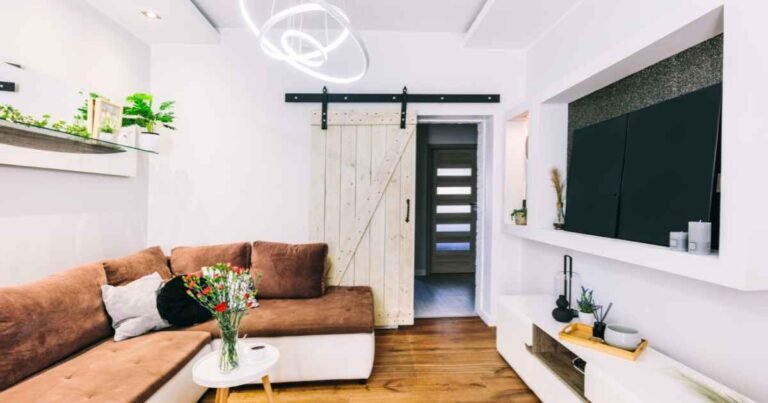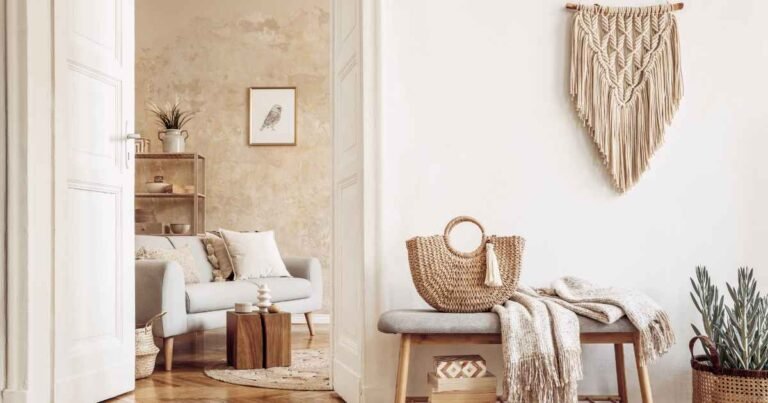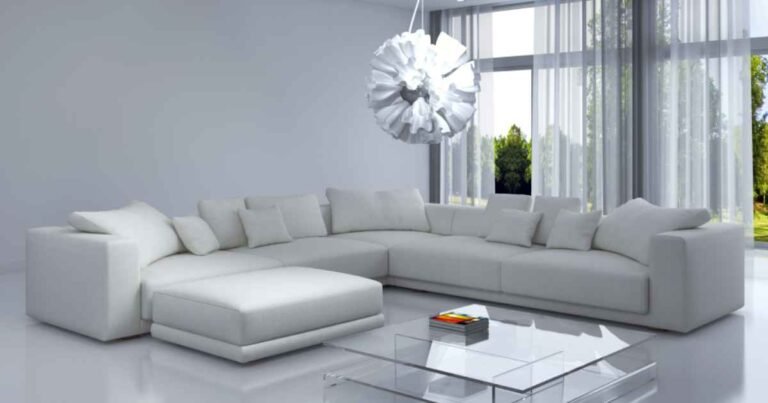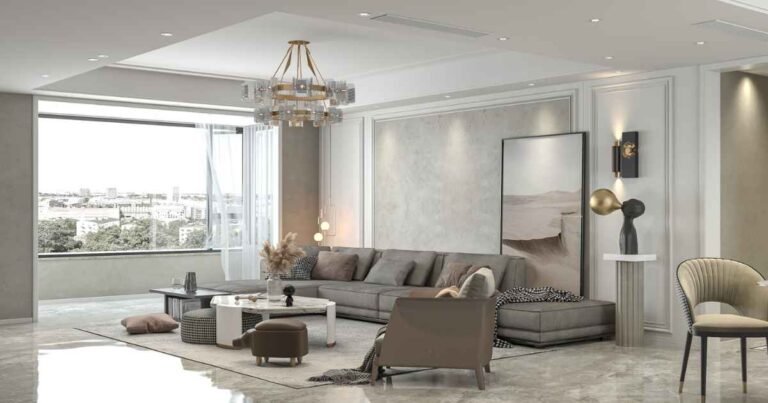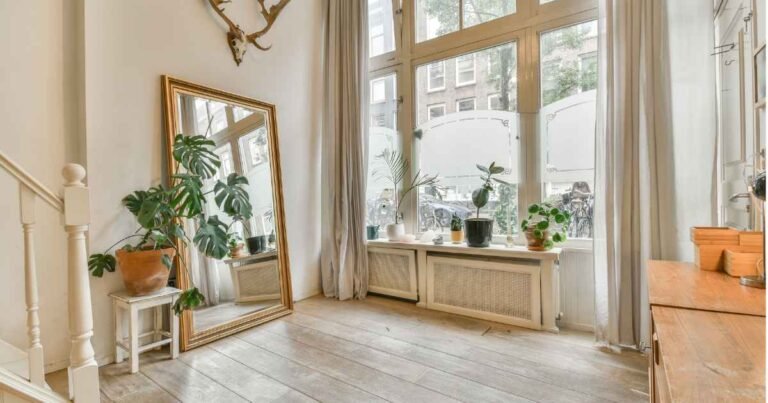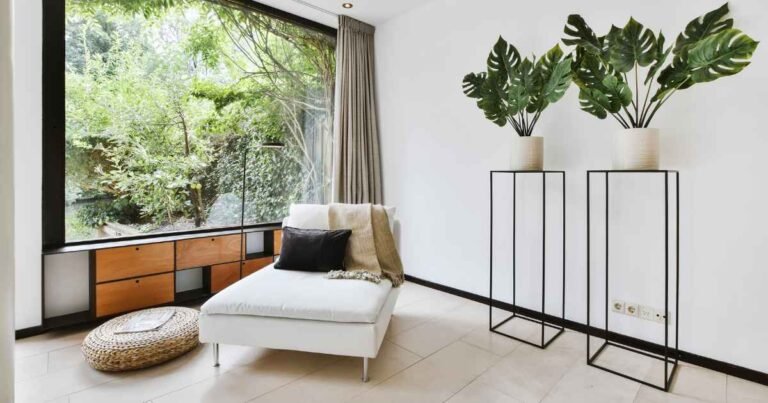
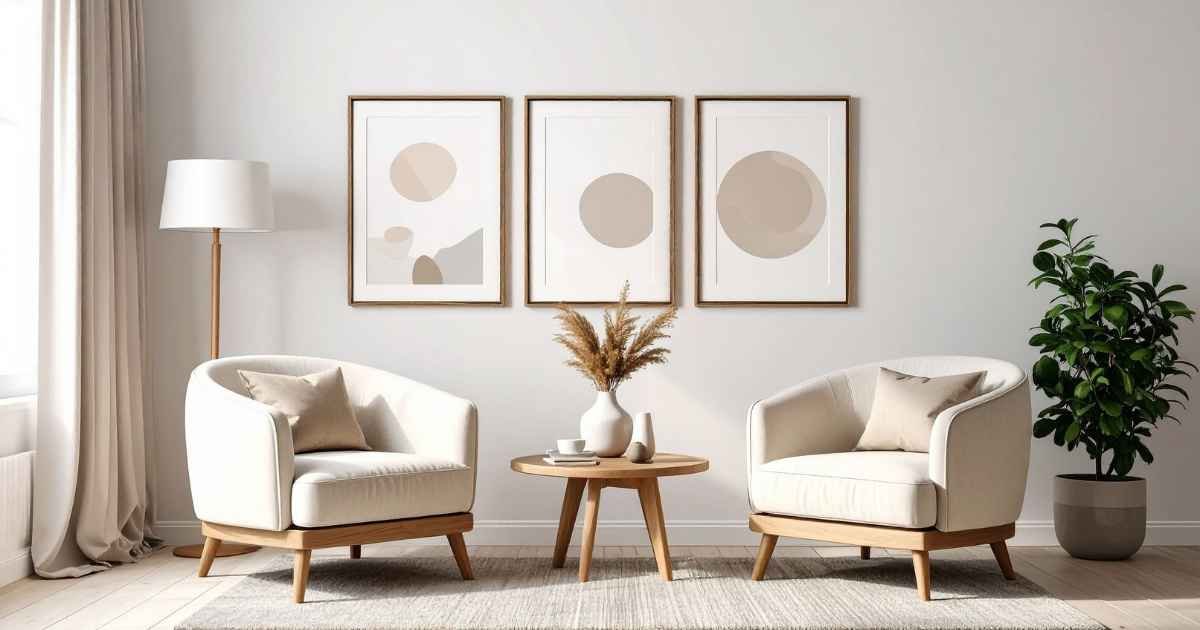
Most minimalist rooms online look staged, cold, and impossible to live in. Yours doesn’t have to. The problem isn’t the style, it’s the advice: throw everything out, paint it white, buy a linen sofa. Real homes have laundry, kids’ shoes, and a coffee table that collects mail. Minimalist home decor ideas only work when they respect how you actually live. This guide gives you a room-by-room system built around a 70/20/10 visual rule, honest budget tiers, and the small styling decisions that separate a calm room from an empty one. The mistake almost everyone makes is buried in the last section, and it’s the reason most attempts fail within three months.
Key takeaways:
- Minimalist decor is a visual system, not a rule about owning less. Aim for around 30% of surfaces empty, not 100%.
- The 70/20/10 palette rule (dominant neutral, secondary tone, one accent) gives any room a calm, cohesive look.
- Texture does the heavy lifting once color is stripped back. Layer at least three different materials in every room.
- Warm lighting under 3000K is the single biggest upgrade. Cool white bulbs make minimalist rooms feel sterile.
- Every piece needs one clear job. If a chair holds laundry more than a person, it isn’t decor, it’s storage in disguise.
- Budget-friendly minimalism is easier than expensive minimalism. Fewer pieces means each one gets a bigger share of your budget.
What minimalist home decor actually means
Minimalist home decor is a design approach that reduces visual noise by keeping only pieces that serve a clear function or bring genuine visual pleasure, arranged with intentional space around them. It isn’t about owning as little as possible. It’s about making sure everything you own has room to breathe.
The confusion happens because Pinterest shows one extreme version: white walls, one chair, a single ceramic vase. That’s a photograph, not a home. A working minimalist room usually has 15 to 25 visible objects, not three. What makes it read as minimalist is the negative space around them, the tight color palette, and the absence of clutter, not the raw item count.
The three principles that hold every minimalist room together
Restraint in color: A minimalist room typically uses three colors at most. One dominant neutral covers roughly 70% of the visual field (walls, large furniture, floor). A secondary tone covers 20% (rugs, curtains, larger accent pieces). A single accent color fills the last 10% (a throw, a plant, artwork). Add a fourth color and the calm breaks.
Restraint in shape: Rounded shapes soften a room, straight lines make it feel structured. Pick a bias and stick with it. Mixing four sharp-edged pieces with four curved ones creates visual friction, which is the opposite of what you want.
Restraint in surface: Roughly 30% of every horizontal surface should stay empty. A console table with three objects reads as styled. The same table with nine objects reads as cluttered, even if all nine are beautiful.
How minimalist decor differs from Scandinavian, Japandi, and modern
People use these words interchangeably, but they aren’t the same. Minimalism is the parent category. The others are stylistic dialects of it.
| Style | Palette | Materials | Warmth level |
|---|---|---|---|
| Pure minimalist | White, black, one accent | Concrete, glass, matte metal | Cool |
| Scandinavian | Warm whites, soft greys, pale wood | Light oak, wool, linen | Medium-warm |
| Japandi | Warm neutrals, muted greens, black | Walnut, oak, ceramic, paper | Warm |
| Modern minimalist | Grey, cream, one bold accent | Leather, brushed metal, velvet | Medium |
Most people who say they want minimalist actually want Scandinavian or Japandi. Both are more livable than the pure version.
15 minimalist home decor ideas that work in real homes
These are the ideas that hold up across small apartments, family houses, and rentals. Each one has a specific measurement, material, or placement rule so you can act on it today.
1. Commit to a three-color palette before buying anything
Pick your three colors and write them down. Every future purchase, from a lamp to a laundry basket, gets checked against this list. This one rule prevents 80% of clutter from ever entering the house. A safe starting palette: warm off-white walls, soft oatmeal upholstery, matte black accents. Add a plant for the green and you’re done.
2. Use warm lighting under 3000K everywhere
Switch every bulb in the house to 2700K to 3000K warm white. The harsh cool-white bulbs that came with your fixtures are the reason minimalist rooms look like dentist offices. Warm light softens neutral walls, flatters wood tones, and makes an empty room feel calm instead of clinical. Aim for three light sources per room at different heights: overhead, mid (lamp), and low (floor lamp or candle).
3. Choose one hero piece per room
Every minimalist room needs a single object that earns the attention: a leather armchair, a large piece of art, a sculptural pendant light, a solid wood dining table. Everything else supports it. If two pieces are competing for the eye, one has to go quieter or leave the room.
4. Leave 30 to 36 inches of walkway around furniture
Cramped walkways destroy the sense of space that minimalism depends on. Measure the distance between your sofa and coffee table, between the bed and the wall, between the dining table and the sideboard. Under 30 inches feels tight. Over 36 inches starts to feel disconnected. This range is the sweet spot in almost every room.
5. Pick rugs that are large enough
The most common minimalist mistake is a rug that’s too small. In a living room, the front legs of every seating piece should sit on the rug at minimum. A 5×7 rug floating in the middle of a 12×15 room makes the room look chopped up, not spacious. Go bigger than you think, usually 8×10 or 9×12 for a standard living room.
6. Layer at least three textures in every room
When color drops away, texture becomes the whole story. In a bedroom that might be linen bedding, a wool throw, and a jute rug. In a living room, a bouclé chair, a leather ottoman, and cotton curtains. Three textures is the minimum. Five is usually the maximum before the room starts to feel busy.
7. Hang artwork in odd numbers, and hang it lower than you think
Galleries hang art with the center at 57 to 60 inches from the floor. Most people hang art too high, which makes rooms feel taller and colder. Bring it down. A single large piece (over 30 inches wide) works better than three small ones in minimalist rooms because it reduces visual points.
8. Choose closed storage over open shelving
Open shelves require constant styling maintenance and photograph better than they live. Closed cabinets, drawers, and doors hide the visual noise of daily life. If you must have open shelving, follow the 70/30 rule: 70% empty space, 30% objects. Not the other way around.
9. Match your metals, don’t mix them
Pick one metal finish per room and stay with it. Matte black door handles, matte black tap, matte black lamp base. Mixing brushed nickel with brass with black creates the visual chaos minimalism is supposed to solve. If you inherit mismatched fixtures, spray paint is cheap.
10. Let one plant do the work of five
A single large plant (a fiddle leaf fig, a bird of paradise, a mature snake plant) reads as intentional and sculptural. Five small plants scattered around read as forgotten. Buy one plant in a container that costs more than the plant. Skip the tiny succulents on every surface.
11. Curtains should skim the floor, not sit above it
Short curtains make ceilings look lower and rooms look smaller. Hang curtain rods 4 to 6 inches above the window frame (or higher, close to the ceiling in most rooms), and let the fabric skim or just kiss the floor. Linen or heavy cotton in an off-white or oatmeal tone works with any minimalist palette.
12. Use trays to corral small essentials
Remotes, keys, hand cream, glasses. These objects will exist in your home no matter how minimalist you go. A single wood or ceramic tray gathers them into one intentional cluster instead of ten scattered items. One tray per room, placed on the surface those items naturally land on.
13. Build a “landing zone” near the front door
A hook rail, a slim console, a basket underneath, one mirror above. That’s the whole entryway. This tiny system prevents shoes, bags, and mail from migrating into the rest of the house, which is where minimalist rooms usually die within the first month.
14. Choose furniture with legs, not skirts
Sofas and chairs that sit on visible legs let light travel underneath, which makes rooms feel larger. Skirted furniture blocks that visual airflow and makes spaces feel heavier. The same rule applies to beds. A bed frame with visible legs beats a solid platform every time in small rooms.
15. Treat empty space as decor
The hardest one. A blank wall is not a problem to solve. An empty corner is not a mistake. Negative space is what makes the objects you kept look valuable. When you feel the urge to fill a gap, wait two weeks. The urge usually fades.
Room-by-room minimalist decor with budgets, sizes, and materials
Different rooms need different priorities. A minimalist bedroom fails for different reasons than a minimalist kitchen.
Living room
The hero piece is usually the sofa or a large piece of art. Everything else steps back. Standard sofa depth: 36 to 40 inches. Coffee table height: within 2 inches of the sofa seat height. Rug: front legs of all seating on the rug, minimum.
Pro tip: In a living room under 12 feet wide, choose a loveseat plus one armchair over a full sofa. The extra breathing room reads as more luxurious than more seating.
Bedroom
The bed is the hero. Everything else supports sleep. Bedside table height: within 2 inches of the mattress top. Bedding in one or two colors, never four. A single piece of art above the bed at 6 to 12 inches above the headboard.
Kitchen
Countertops are the palette. Clear 70% of every counter. Keep only what you use daily on the surface: a kettle, a knife block, a fruit bowl. Everything else goes behind a door. Match your appliance colors (all stainless or all matte black or all white, not a mix).
Bathroom
Coordinated towels in one color across every bathroom. One plant if there’s light. Storage in matching baskets or bins, not the boxes products came in. A single piece of art or a mirror, not both fighting for the same wall.
Home office
One desk, one chair, one lamp, one plant. Cables managed with a single under-desk tray. A closed cabinet for supplies. If you can see three or more separate storage containers from your chair, it isn’t minimalist yet.
Minimalist decor by budget
The paradox of minimalism: fewer items means each one takes a bigger share of the budget. That’s fine, because you’re buying less overall. Here’s what to expect at three tiers, using generic pricing ranges that hold across most markets.
| Budget tier | Total room budget | Sofa | Rug | Lighting | Art |
|---|---|---|---|---|---|
| Entry | Under $1,500 | $400 to $700 | $150 to $300 | $80 to $150 per lamp | Print or DIY |
| Mid-range | $1,500 to $5,000 | $800 to $1,800 | $300 to $700 | $200 to $400 per lamp | Framed print, small original |
| Premium | $5,000+ | $2,000+ | $700+ | $500+ per lamp | Original artwork |
Where to invest first: lighting, then the sofa or bed, then the rug. These three set the tone of the whole room. Save on everything else.
The 70/20/10 method for any minimalist room
Most guides tell you what minimalism looks like without giving you a way to build it. Here’s the framework I use every time I style a room from scratch.
The 70/20/10 method breaks any minimalist room into three visual layers:
70% foundation: The largest surfaces. Walls, floor, ceiling, biggest furniture piece. This layer is your dominant neutral. Warm off-white, soft grey, oatmeal, warm sand. It sets the mood and takes up the most visual space, so it needs to be the calmest.
20% support: Medium pieces. Sofa upholstery, curtains, larger accent chairs, rugs. This layer is your secondary tone, one to two shades away from the foundation. Think oatmeal walls with a slightly darker beige sofa. Enough contrast to define shapes, not enough to compete.
10% accent: The smallest pieces that get the biggest attention. A single black lamp, one earthy ceramic vase, artwork, plants. This is where you add the one color or bold shape that gives the room its personality.
The trick is proportion, not just palette. If your “accent” pieces start creeping up to 30% of the room, it stops reading as minimalist. Count them. If you have more than 5 to 7 accent objects in a standard living room, remove until you’re back at that number.
A real example: styling a 12 by 14 bedroom for under $400
I restyled a 12×14 rental bedroom on a $380 budget over one weekend using nothing but the 70/20/10 method. The room started as beige carpet, off-white walls, a queen bed with a dark grey duvet, and clutter on every surface.
Foundation (existing, no cost): walls and carpet stayed. Bed frame stayed.
Support (spent about $180): swapped the dark grey duvet for warm linen bedding in oatmeal, added floor-length linen curtains in the same tone, and replaced a small rug with a 5×8 wool rug in a slightly darker beige.
Accent (spent about $200): a single matte black table lamp on one side, a warm 2700K bulb, one framed print above the bed, a small ceramic vase on the dresser with a single stem. That was it.
The transformation wasn’t about buying more, it was about pulling everything into one palette and clearing the surfaces. The bedding swap alone did more than the rug. The warm bulb did more than the artwork. If you have a limited budget, start with linens and lighting.
Common minimalist decor mistakes and how to fix them
Most attempts fail for the same handful of reasons. If your room isn’t working, it’s probably one of these.
Mistake 1: Buying “minimalist” pieces from five different palettes
Fix: Return to the three-color rule. If a new piece doesn’t fit your palette, it doesn’t come in the house, no matter how minimalist it looks on its own.
Mistake 2: Confusing empty with sparse
Fix: An empty room isn’t minimalist, it’s unfinished. You still need texture, warmth, and enough objects to feel human. Aim for calm, not bare.
Mistake 3: Cool white lighting
Fix: Change every bulb to 2700K to 3000K warm white. This one change fixes more “why doesn’t my room look right” problems than any furniture purchase.
Mistake 4: Undersized rugs
Fix: If your rug is under 6×9 in a standard living room, it’s likely too small. Size up. The rug should anchor the seating area, not float in front of it.
Mistake 5: Open shelving without discipline
Fix: Either commit to keeping 70% of open shelving empty at all times, or replace with closed storage. Half-styled shelves look worse than any alternative.
Mistake 6: Mixed metal finishes
Fix: Pick one finish per room. Spray paint mismatched hardware if replacing isn’t in the budget.
Mistake 7: Skipping the entryway
Fix: The front door area determines whether the rest of your minimalist work survives. A hook rail, a basket, a tray. Ten minutes of setup, permanent payoff.
The two objections readers always raise
Won’t a minimalist room feel cold and unwelcoming? Only if you skip texture and warm lighting. A room with three natural materials (wood, linen, wool), warm 2700K bulbs, and one large plant reads as calm and inviting, not sterile. Cold minimalist rooms almost always share the same two problems: cool-toned lighting and only one material used throughout.
Doesn’t minimalism cost more? It costs more per item, less overall. A minimalist bedroom might have 30 total objects instead of 100, so each object gets a bigger share of the budget. But the total spend is usually lower, especially long-term, because you stop the constant cycle of small purchases that fill maximalist homes. You buy once, and you buy well.
FAQs
How do I start decorating minimalist if I already own too much stuff?
Start with one surface, not one room. Clear a single coffee table, dresser top, or kitchen counter completely. Live with it empty for a week. Then add back only what earns its place. Repeat surface by surface. Trying to minimize a whole house in a weekend almost always fails because decisions get rushed and things you actually needed end up gone.
What colors are best for minimalist home decor?
Warm neutrals hold up better long-term than cool ones. Warm off-white, oatmeal, soft sand, warm greige, and muted taupe read as calm and welcoming. Cool greys and stark whites can feel clinical, especially in rooms without a lot of natural light. Pick one warm neutral as your dominant color and build outward.
Can minimalist decor work in a small apartment?
Yes, and small apartments actually benefit more from minimalist principles than large homes. Clear sightlines, light-legged furniture, and a tight color palette make small spaces feel bigger. The tricks that matter most in a small space: leg-visible furniture, one mirror opposite a window, curtains hung near the ceiling, and rugs sized generously for the seating area.
How much furniture is too much in a minimalist room?
If you can’t walk a straight line through the room, or if any two pieces are less than 30 inches apart on their sides, you have too much furniture. Measure walkways. Remove or rearrange until every seating piece has at least 30 inches of clear floor around it.
Is minimalist decor good for renters?
Minimalism is one of the best styles for renters because it depends on lighting, textiles, and small hero pieces rather than permanent changes. Renters can transform a rental with just three swaps: warm bulbs in every fixture, floor-length curtains, and one larger rug. None of these damage the property, and all three move with you to the next place.
Does minimalist decor go out of style?
Pure minimalism cycles in and out. Warm, textured, livable minimalism (Scandinavian, Japandi, warm modern) has stayed relevant for decades and shows no sign of leaving. If you build around neutral palettes, natural materials, and quality pieces, the room will still look good ten years from now. Trend-driven “minimalism” (all-white everything, matching sets from one collection) dates faster.
Bringing it together
Minimalist home decor works when you treat it as a set of decisions about proportion, palette, and light, not a rule about owning less. The 70/20/10 method gives you a way to build any room from scratch. Warm bulbs and layered texture keep it from feeling cold. Closed storage and a strong entryway keep it working long-term.
Start with one room, one weekend, one clear surface. Change every bulb in the house before you buy a single new piece of furniture. Pick your three colors and write them down. That’s the foundation of everything else.
For more room-by-room styling breakdowns, budget-tier furniture picks, and rental-friendly decor guides, explore the rest of HomeDecorIdeas. This is the kind of design work that pays back every time you walk into your own home.