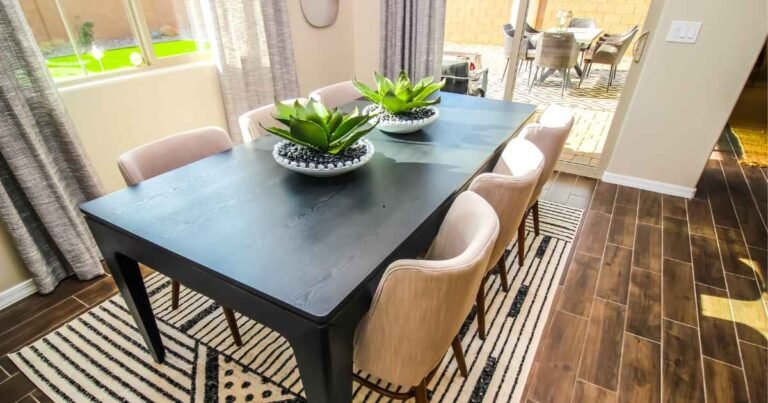

Standard coffee tables measure 48 to 54 inches long and sit in the middle of a room. That’s fine in a house with a 12-foot sofa and 20 feet of floor to spare. In an apartment where the sofa is 72 inches and the walking path between it and the TV wall is 30 inches wide, a full-size coffee table blocks everything. The best affordable coffee tables for small spaces solve this with smaller footprints, multi-function surfaces, and shapes that don’t fight the room.
This guide covers seven types under $150 that actually fit small living rooms, the sizing math that decides whether a table works or dominates, and the height mistake almost every small-space shopper makes.
Key takeaways:
- Coffee table length should be about two-thirds the length of your sofa (36 to 40 inches for a standard 60-inch loveseat)
- Table top should sit 1 to 4 inches below the sofa cushion height for comfortable reach
- Round and oval tables are safer in small rooms because they eliminate sharp corners that pinch walkways
- Lift-top and storage tables add function without adding footprint
- Nesting tables tuck under themselves when not in use, freeing floor space daily
- Skip glass in small spaces; it shows every fingerprint and reflects harsh overhead light
What makes a coffee table work in a small space
A coffee table works in a small space when its footprint is proportional to the sofa (about two-thirds the sofa’s length), its height matches the sofa cushions, and it leaves at least 18 inches of walking clearance around at least three sides. Storage function and lift-top surfaces add value without adding footprint.
Size rules for compact rooms
Standard coffee table length is 48 to 54 inches. That works in rooms where the sofa is at least 84 inches long. For smaller sofas (60 to 78 inches) and studio-sized rooms, drop to 36 to 42 inches of coffee table length.
Depth matters just as much. A 22-inch-deep coffee table takes 4 more inches of clearance than an 18-inch-deep one, which can be the difference between comfortable walking and shin-bumping every time you cross the room.
Height rules most guides skip
Coffee table height should sit 1 to 4 inches below your sofa’s cushion height. Standard sofa cushions sit 17 to 19 inches from the floor, so most coffee tables land at 16 to 18 inches tall. Taller than the cushion and you can’t set down a mug without leaning forward awkwardly. Much shorter (like an 11-inch pouf) and you’re bending every time you reach.
Measure your existing sofa’s cushion height before ordering anything.
7 best affordable coffee tables for small spaces
Seven coffee table types fit under $150 and work in small living rooms: round nesting tables, lift-top storage tables, upholstered ottomans with trays, slim rectangulars with lower shelves, round drum tables, trunk-style tables with storage, and C-shaped hybrids. Each solves a different small-space problem. Nesting is the most flexible. Lift-tops add work function.
1. Round nesting tables
Nesting tables come in sets of two or three that stack under each other. A 24-inch and 20-inch pair takes the space of one 24-inch table until you need the second one for guests. Metal frames with wood tops stay under $100 for a decent pair. Best for studios where the coffee table doubles as an occasional workspace or dining spot for one.
2. Lift-top storage coffee table
Lift-top tables raise the top 6 to 10 inches on a spring-loaded mechanism, turning the coffee table into a laptop desk or dinner surface. Storage underneath hides remotes, blankets, and cables. Budget lift-tops run $100 to $150. Check the hinge mechanism quality; cheap springs sag within a year. Best for renters using the living room as a home office.
3. Upholstered ottoman with tray
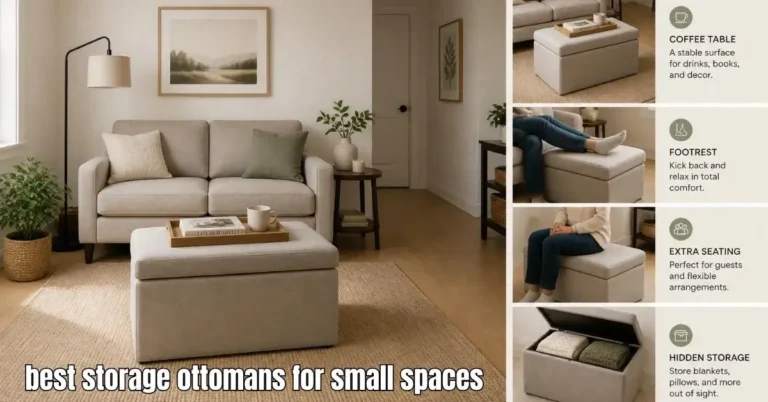
A 30-inch square or round upholstered ottoman with a removable tray on top serves as coffee table, footrest, and extra seating in one piece. Fabric ottomans run $80 to $150 in the affordable tier. Get one with a lift-off lid for interior storage. Best for tight spaces where you need seating flexibility more than a hard surface.
4. Slim rectangular with lower shelf
A 36×18 slim rectangular coffee table with a lower shelf takes less depth than a standard model while doubling storage capacity. Books, magazines, or baskets fit on the lower shelf. Solid wood versions run $120 to $150; MDF-with-veneer runs $70 to $100. Best for sofas against a wall in narrow rooms.
5. Round drum coffee table
Round drum tables (usually 28 to 32 inches diameter) eliminate sharp corners that pinch walkways in small rooms. Enameled metal, painted MDF, and rattan drums all sit under $130 in budget lines. Curved sides let chairs and sofas pull closer without leg conflict. Best for rooms where kids or pets bump into every corner.
6. Trunk-style coffee table with storage
Trunk coffee tables hide substantial storage inside a rectangular chest form. A 36×20 trunk holds 3 to 4 cubic feet of blankets, board games, or seasonal items. Woven rattan, painted wood, and metal-cornered wood trunks run $90 to $150 in affordable lines. Best for small apartments without a linen closet.
7. C-shaped side/coffee hybrid
C-shaped tables slide under a sofa with the top extending over the seating area. Perfect for eating on the couch or working with a laptop. Takes zero floor space between the sofa and the walking area. Metal C-tables run $50 to $100. Best as a supplement to a small ottoman or as the only surface in truly tiny spaces.
How to size a coffee table for a small space
Coffee table length should equal about two-thirds of your sofa’s length. Height should sit within 4 inches of the sofa cushion height. Clearance from the table edge to any other furniture or wall should be at least 18 inches for walking, 14 inches for tight passages. Depth should stay under 22 inches in rooms narrower than 12 feet.
The two-thirds rule
Sofa length divided by 1.5 equals your ideal coffee table length. For a 78-inch three-seater sofa, that’s a 52-inch table. For a 60-inch loveseat, that’s a 40-inch table. For a 90-inch sectional segment, that’s a 60-inch table.
The rule prevents the two most common mistakes: a coffee table too small (which looks like a joke in front of a normal sofa) and one too large (which dominates the room).
Clearance and height matching
Sit on your sofa, arm extended to where a mug would sit. Measure from the sofa cushion to your fingertips. That’s the coffee table height that fits your body. Most people land at 16 to 18 inches, but taller users need 18 to 20 inches for comfort.
Then check clearance: coffee table edge should sit 12 to 18 inches from the sofa front. Closer than 12 inches and legs bump the table every time you get up. Farther than 18 inches and you can’t reach your drink without standing.
The compact coffee table size chart
| Sofa length | Coffee table length | Ideal shape | Height |
|---|---|---|---|
| 60″ loveseat | 36–40″ | Round or square | 16–18″ |
| 72″ 2-seater | 42–48″ | Rectangle or oval | 16–18″ |
| 78″ 3-seater | 48–54″ | Rectangle preferred | 16–18″ |
| 90″ sofa | 54–60″ | Rectangle | 17–19″ |
| L-shaped sectional | 36″ square or round | Ottoman or drum | 16–18″ |
| Chaise sectional | 30″ round | Drum or nesting | 15–17″ |
Pro tip: Cardboard-test the table size before buying. Cut a piece of cardboard to the exact footprint of the table you’re considering, lay it in your living room, and walk around it, sit on the sofa with feet up, reach for a mug. If it feels tight in cardboard, it’ll feel worse in wood.
The 18-inch clearance method
The 18-inch clearance method is the fastest test for a coffee table in a small space. Every side of the coffee table should have at least 18 inches of open floor for walking or seating access. If any side sits closer than 18 inches from a wall, TV stand, chair, or door swing, the table is too big for the room.
The rule explained
Draw a rectangle around your coffee table’s exact footprint. Add 18 inches on every side. That’s the total floor area your table actually needs.
For a 42-inch rectangle at 22-inch depth (a common budget model), total footprint including clearance is 78 inches by 58 inches (6.5 feet by 4.8 feet). If your open living room floor is less than that, the table blocks something.
For a 30-inch round drum table, total footprint is a 66-inch diameter circle. That’s 5.5 feet across including walking room. Round tables save clearance because the 18 inches applies to the entire perimeter uniformly, not corner-to-corner.
The 18-inch rule in a 12×14 studio living room
I fit a proper living room seating area into a 12×14 studio using a 30-inch round drum coffee table between a 72-inch loveseat and a wall-mounted TV. Path from the front door to the kitchen ran along the loveseat’s back. Between the loveseat front and the TV wall: 44 inches, minus the 30-inch coffee table, leaving 14 inches on each side for standing and walking.
Previous tenant had used a 48-inch rectangular table in the same layout. That left 8 inches on each side, which failed the walkway test. Guests had to squeeze past. Same room, same TV setup, different coffee table. Switch cost $89 and took an hour.
Common mistakes to avoid
Most small-space coffee table regrets come from five mistakes: buying too big, wrong height for the sofa, ignoring storage needs, choosing glass in a small room, and skipping the walkway test. Each has a fix that costs nothing but attention before ordering.
Buying too big
Most common small-space furniture mistake: buying a coffee table sized for the sofa alone, without considering the room. A 54-inch table under a 78-inch sofa looks correct in a showroom but crowds a 12×14 room. Fix: Apply the two-thirds rule with a real measurement of your available floor area, not just the sofa.
Wrong height for the sofa
A 21-inch coffee table under a 17-inch sofa cushion means your drink sits above your knees. Fix: Match table height to sofa cushion within 4 inches. Measure both before ordering.
Ignoring storage needs
Small living rooms need storage more than large ones. A minimal-looking coffee table with no shelf or drawer wastes prime storage real estate. Fix: Choose a lift-top, trunk, or ottoman-with-tray if you don’t have a separate storage piece in the room.
Choosing glass in small spaces
Glass tables look bigger because you can see through them, but they show every fingerprint, water ring, and speck of dust. In a small room where the table sits 4 feet from your face all the time, the maintenance drives you crazy. Fix: Solid wood, painted MDF, or upholstered ottoman surfaces hide daily wear better.
Skipping the walkway test
Buying a table that fits between the sofa and TV mathematically doesn’t mean you can walk around it comfortably. Fix: Cardboard-test the footprint before ordering. Walk around it three times. If you have to shuffle sideways past it, it’s too big.
Do I even need a coffee table in a small space? Not necessarily. Two side tables, a C-shaped end table, or a wall-mounted shelf can replace a coffee table in truly tiny rooms. Side tables give you drink surfaces without eating floor space, and they move to where you need them. But most small living rooms feel unanchored without a central coffee table, and side tables alone don’t give you the shared surface for magazines, remotes, or a coffee tray. If you host or eat on the couch, a small coffee table adds function you’ll miss.
Aren’t ottoman coffee tables too soft to actually use? Only if you skip the tray. A firm-cushion ottoman with a 20-inch or 24-inch tray on top functions like any hardtop coffee table. Trays turn ottomans into stable surfaces for drinks, laptops, and dinner plates. Choose a wooden or metal tray with raised edges (about half an inch) so cups don’t slide off. Softer ottomans like poufs fail the tray test; buy firm-cushion models with structured tops.
FAQs
What size coffee table works in a small living room?
Coffee table length should equal about two-thirds of your sofa length. For a 60-inch loveseat, aim for a 36 to 40-inch coffee table. For a 72-inch sofa, aim for 42 to 48 inches. Depth should stay under 22 inches in narrow rooms. Height should sit within 4 inches of your sofa cushion height.
Are round coffee tables better in small rooms?
Often yes. Round tables eliminate corners that pinch walkways and let people walk closer without banging shins. A 30-inch round table takes less clearance than a 36×24 rectangle in most small rooms. Round tables also visually calm small spaces because they don’t compete with the rectangular sofa and walls.
How much should I spend on a coffee table for a small apartment?
$80 to $150 gets you a solid affordable coffee table for most small apartments. Budget lift-tops and ottomans run $100 to $150. Simple metal-frame nesting tables and C-tables run $50 to $100. Spending more than $200 rarely pays off unless you want solid hardwood or a specific designer piece.
Can a coffee table double as a dining table in a studio?
Yes, if the height works. Standard coffee tables at 16 to 18 inches tall are too low for real meals. Lift-top coffee tables that rise to 24 to 27 inches work as occasional dining surfaces for one or two people. Otherwise, use a bar-height C-table pulled up to the sofa for meals.
Should a small coffee table have storage?
Yes, if you don’t have other storage furniture in the room. Small apartments benefit hugely from lift-tops, trunk-style tables, and ottomans-with-storage. If you already have a media console, sideboard, or storage bench in the room, a shelf-only table might be enough. Match the storage type to what you actually need to hide.
Final thoughts
Best affordable coffee tables for small spaces work when their size fits the sofa, their height matches the cushions, and their function earns their footprint. Round drums, lift-top storage tables, and ottoman-with-tray options solve the most small-space problems for under $150. Cardboard-test the footprint before ordering. Skip glass. Match sofa height. A well-sized coffee table adds function to a small living room. A wrong-sized one steals it.
For more small-space furniture guides that respect apartment reality, keep exploring HomeDecorIdeas.