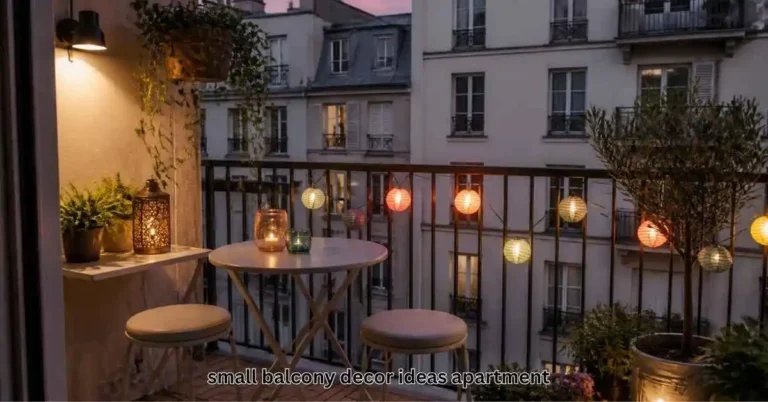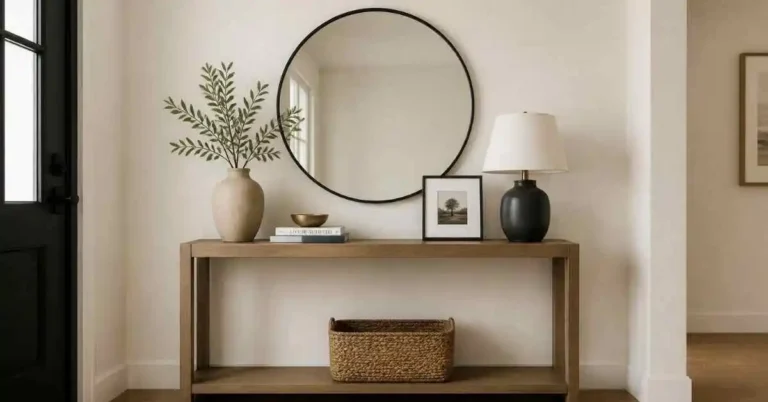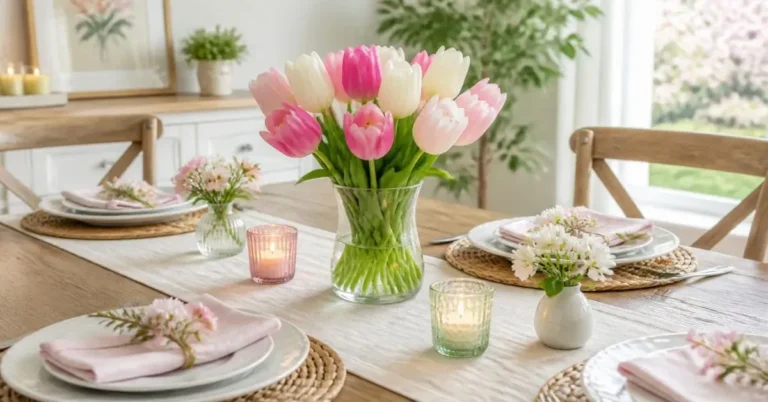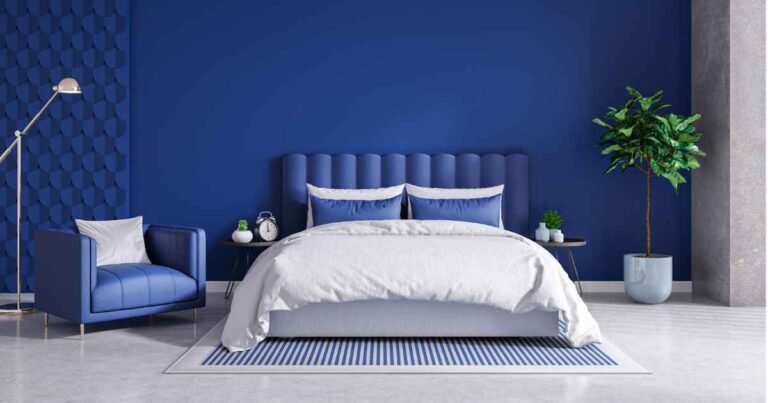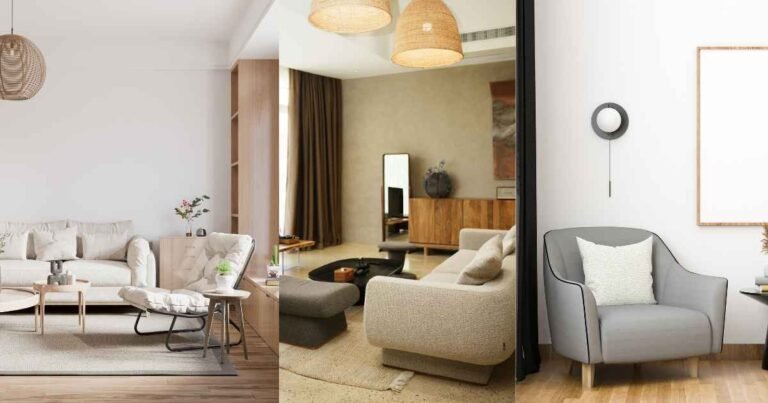

You save 300 pins. You buy the bouclé bench, the dried pampas, the arched mirror. Two weeks later, the bench is stained, the pampas is shedding all over the floor, and the mirror sits on a wall that looks nothing like the image you saved. This is what happens when Pinterest style meets real life.
Here’s the direct answer: home decor ideas Pinterest inspired only work in real homes when you strip away the styled emptiness and add back the layers Pinterest edits out. That means realistic storage, wear-resistant fabrics, warm layered lighting, and one focal moment per room instead of five competing ones. Get those four right and a real home can look as good as any pinned image, without the compromises.
I’ve translated Pinterest pins into real rooms across several rentals and small homes, and the failure rate the first time around is high. There’s one mistake in the last section that I see in almost every “I copied a Pinterest photo” story, and it’s not the one people think.
Key takeaways:
- Pinterest images are photographed empty. Real homes need storage and wear-resistant materials layered back in.
- Warm 2700K lighting is what makes pinned rooms glow — swap bulbs before anything else.
- One Pinterest signal per room (arch, texture, palette) works. Copying five signals from five pins doesn’t.
- Bouclé, linen, and matte ceramics photograph beautifully but need honest care planning at home.
- The Pin-to-Room Translation Method (below) shows how to convert any pin into a livable version.
- Neutral tonal palettes with one saturated accent read as Pinterest-worthy in almost any real space.
Why Pinterest rooms look different from real rooms
Pinterest rooms look different because they are photographed after being emptied, styled, and shot in perfect light. Real homes hold laundry baskets, remote controls, half-drunk water glasses, and pet beds. The gap between the pin and your room isn’t budget or taste. It’s the layer of livability that photographers deliberately remove before the shutter clicks.
Every pinned image is essentially a still life. It shows a room’s best fifteen minutes of the year. That’s fine for inspiration, but copying it literally leads to rooms that look empty when styled and cluttered the moment life resumes. The trick is borrowing the signals that survive daily use.
The three signals that translate well from pin to home:
- Warm layered lighting at multiple heights
- Consistent metal finishes across visible hardware
- One clear focal element (art, mirror, wall treatment)
The three signals that don’t translate:
- Perfectly empty surfaces (real homes have stuff)
- Impractical fabrics on high-use pieces (bouclé sofa, white linen dining chairs)
- Trendy single-piece statements that date fast (a specific viral chair, a fad color)
Keep those two lists in mind before every purchase. Half of the pins you save will fall into the second category once you’re honest about your daily life.
15 Pinterest-inspired ideas that actually work in real homes
These are ranked by how well they survive real-life wear, not by how photogenic they look on first glance. Every one has been tested in an actual lived-in room. Pick three or four per space; a room copying all fifteen will look like a Pinterest board, not a home.
1. Fluted or reeded wood panels behind a bed or console
Vertical fluted panels give a room instant architectural weight. Use MDF or pine slats (roughly 1/2 to 3/4 inch wide, spaced 1/4 inch apart) glued to a plywood backer and mounted as a headboard or accent panel. Total cost for a queen-bed-width panel: $60 to $110 depending on wood grade. Paint or stain to match trim.
2. Layered lighting with sconces plus table lamps
Almost every Pinterest bedroom has wall sconces flanking the bed. Battery-powered plug-in sconces (no wiring needed) cost $30 to $60 a pair and mount with adhesive strips. Combine with two matching table lamps on nightstands, all bulbs 2700K, and the bedroom instantly reads like a pinned image.
3. Arched mirrors above consoles or vanities
The arched mirror is the single most-pinned decor object of the last few years. Discount and secondhand versions run $40 to $90 for a 24×36 inch size. Hang so the arch peak sits 5 to 8 inches above the top of the console. Skip ornate frames; thin brass or black rings age best.
4. Curved or scalloped headboards in linen or bouclé
Curved headboards soften angular rooms. Slipcovered versions in washable linen (roughly $150 to $300 for a queen) survive real-life sweat, spills, and pets far better than fixed upholstery. Skip pure bouclé on the headboard’s edge — it pills fast where hands rest.
5. Open shelving styled with ceramics, books, and one plant
Pinterest-styled shelves follow a strict formula: horizontal book stacks (spines out or turned inward for a neutral look), one stoneware or matte ceramic object per shelf, one trailing plant, and one third of each shelf left empty. Do this on existing shelves for $0 by editing what you own.
6. Terracotta, matte black, or unlacquered brass bathroom fixtures
Swap chrome fixtures for warmer finishes. A matte black or unlacquered brass tap set runs $60 to $180. If you’re renting, spray-on faucet finish kits (roughly $18 to $25) work for a few years on existing fixtures. Combined with warm bulbs, the bathroom photographs as a designer space.
7. Floor-length linen curtains hung ceiling to floor
Ceiling-mounted rods with floor-length linen curtains stretch rooms visually. Real linen or heavy linen-blend panels run $30 to $80 per panel at discount home stores. Skip polyester “linen-look” — the sheen photographs poorly and doesn’t diffuse light the same way. Curtains should just kiss the floor, not puddle heavily.
8. Warm wood tones as the grounding element
Every Pinterest room has one strong warm wood note (walnut, teak, warm oak). If you don’t have wood floors, add wood through a coffee table, a side table, a picture frame, or a bowl. Even a walnut cutting board on a stone counter grounds a cool-toned kitchen. Thrifted wood pieces beat new engineered wood every time.
9. Vintage or thrifted brass accents
Aged brass (not the shiny lacquered kind) is a Pinterest and boho signature. Trays, candlesticks, small vases, and picture frames in unlacquered brass patina beautifully over years. Thrift stores stock them for $3 to $15 each. Group in odd numbers on a tray, coffee table, or bookshelf.
10. Statement pendant light over a dining table
A single oversized pendant (rattan, paper, or matte metal) hung 30 to 36 inches above the dining table becomes the room’s focal point. Rattan pendants run $50 to $120. Rentals with plug-in cord kits work fine; run the cord to a hook near the ceiling and down to an outlet. Best paired with a warm bulb.
11. Grasscloth or textured wallpaper on one wall
Grasscloth, linen-textured, or plaster-effect wallpaper on a single accent wall adds Pinterest-level depth. Peel-and-stick versions run $30 to $60 per 20-square-foot roll. Best in dining rooms, bedrooms, and behind open shelving. Small patterns read better in real homes than large graphic prints.
12. Oversized art in a slim frame
One 30×40 inch print in a thin black or natural wood frame reads as gallery-styled. Free public-domain art from museum sites, printed on matte paper, framed in a discount or thrifted frame, costs $30 to $60 total. Hang so the center is 57 to 60 inches from the floor.
13. Layered rugs (natural fiber base plus patterned top)
Layered rugs read as intentional design. Start with a jute, sisal, or seagrass base (5×8 or 6×9 feet, roughly $60 to $130) and layer a smaller wool or cotton patterned rug at an angle on top. The layering hides wear on the top rug over time.
14. Neutral tonal palette with one saturated accent
Pinterest neutrals aren’t cold. They’re warm greige, cream, oat, and stone, with one saturated accent color (deep green, terracotta, mustard, ink blue) used sparingly. Pick two neutrals as the base of the room, then repeat the accent three times: a cushion, a book cover, a ceramic. That’s it.
15. Real plants sized for the space (or one high-quality faux)
Pinterest rooms almost always have one tall plant. A fiddle-leaf fig, snake plant, olive tree, or bird of paradise in a plain terracotta or matte black pot fills empty corners and softens hard angles. Real plants from local nurseries run $25 to $70. Skip small faux plants; they always read plastic.
Which Pinterest ideas survive real life (and which don’t)
Not every pinned idea survives daily use. This is the honest table of what actually holds up when a real family moves in, versus what looks amazing for six weeks and then falls apart.
| Pinterest signal | Survives real life? | Why / what to do instead |
|---|---|---|
| Warm 2700K lighting | Yes | Zero maintenance, instant impact |
| Arched mirror | Yes | Wipes clean, no wear surface |
| Fluted wood panels | Yes | Occasional dusting only |
| Bouclé sofa | Mixed | Pills fast; choose bouclé chairs, not sofas |
| White linen dining chairs | No | Stains within a month; use washable slipcovers |
| Dried pampas grass | Mixed | Sheds particles; skip if pets or asthma |
| Open kitchen shelving | Mixed | Needs weekly wipe-down; not for busy cooks |
| Floor-length linen curtains | Yes | Wash on gentle, hang damp; last years |
| All-white bedding | No | Impractical with kids or pets; use warm cream |
| Marble countertops | Mixed | Etches easily; use quartz that mimics marble |
| Vintage brass hardware | Yes | Patinas beautifully with time |
| Wall-mounted plants | Mixed | Water damage risk; use faux for high walls |
| Layered rugs | Yes | Top rug hides floor rug wear |
| Grasscloth wallpaper | Yes | Durable; skip in bathrooms (moisture) |
| Trendy viral single chair | No | Dates within two years; skip fad furniture |
Pro tip: Before buying anything from a saved pin, ask three questions. Will this survive a spilled drink? Will it still look right in three years? Does it require me to keep an empty surface? If any answer is no, that pin is inspiration only, not a shopping list.
The Pin-to-Room Translation Method
This is the three-step system I use to convert any pinned image into something that works in a real home. Every pin can be broken down and translated. Most people try to copy the whole image, which never works. Translate one layer at a time.
Step 1 — Identify the actual signal
Look at the pin and name the ONE thing that makes it feel special. Usually it’s lighting, one focal object, or a texture combination. That single element is 80 percent of what you’re responding to. Buy that one element for your own room, not the whole scene.
Step 2 — Test at quarter scale first
Before committing to a full accent wall or a large furniture piece, test the idea at a small scale. Paint a 2×2 foot sample board in the pin’s color and live with it against your wall for a week. Buy one thrifted brass tray before ordering three brass frames. Real light in your room changes everything.
Step 3 — Add the livability layers Pinterest edits out
Pinterest photos hide storage, cords, and daily objects. Real rooms need those things. For every pinned idea you copy, add: one storage solution (basket, drawer, cabinet), one wear-tolerant surface (washable slipcover, wipe-clean tabletop), and one clear “landing zone” for daily objects (a tray, a bowl, a hook).
Case study: a Pinterest bedroom translated over three weeks
I translated a saved bedroom pin into my own 11×13 bedroom on a $220 budget over three weeks. The pin showed a curved bouclé headboard, wall sconces, floor-length linen curtains, dried pampas in a floor vase, and moody lighting. I applied the three-step method: identified the actual signals (moody warm light, curved headboard shape, floor-to-ceiling curtains), tested a sample of the paint color for a week, and added livability (a hidden storage bench at the foot of the bed instead of a decorative one, washable linen curtain panels instead of pure linen, and no pampas).
Total spend: $210 on 2700K bulbs and battery-powered sconces ($52), a curved thrifted headboard reupholstered in $28 of washable linen, curtains and a ceiling-height rod ($75), and a warm greige sample-to-full-wall paint job ($55). What survived after two months of actual use: the lighting and the curtains. What I changed: the reupholstered headboard’s fabric to a darker tone because the original showed every hair from my cat.
Common mistakes when copying Pinterest ideas
Every one of these mistakes is fixable, and every one comes from copying the pin literally instead of translating it. These are the traps I’ve seen the most.
Mistake 1: Copying five pins into one room
Each Pinterest room is a single coherent moodboard. Copying five different pins into one room stacks five conflicting moods. The fix: Pick one anchor pin per room. Every other pin can only contribute one detail (a color, a texture, or a single object), never a full scene. If two pins compete, save the second for a different room.
Mistake 2: Buying the impractical fabrics
White linen dining chairs, pure bouclé sofas, silk cushions on kids’ beds. Pinterest rooms are photographed before real life happens. The fix: Check every fabric against three tests. Washable? Wear-tolerant on the specific piece? Realistic for your household? If not, swap to a performance fabric that looks similar. Slipcovered linen beats fixed linen for real homes.
Mistake 3: Overlooking scale and room size
A pin showing a 12-foot arched doorway won’t translate to your 8-foot rental ceiling. The fix: Measure the ceiling height and wall width in any pin you save, then compare to your own room. If the pin’s proportions are radically different, translate the idea (arches, tall curtains) at your scale, not the pin’s scale. A 7-foot arched mirror in an 8-foot room dominates in the wrong way.
Mistake 4: Ignoring the lighting the photographer used
Every Pinterest room is shot in soft golden-hour light with fill flashes. That’s why the wood glows, the walls feel warm, and the linen catches light beautifully. The fix: Recreate the light before recreating the objects. Warm 2700K bulbs, layered lamps, no cold overheads. Do this first and every other change you make will land better.
Mistake 5: Filling every surface with styling objects
This is the mistake almost every Pinterest-copier makes without realizing it. Pinterest shelves look “styled” because they hold three items. Real Pinterest-copiers usually add seven items to a shelf, then wonder why it doesn’t look right. The fix: The one-third empty rule. Every open surface stays at least one third empty. Fewer, larger objects always win.
Reader objections, answered honestly
Isn’t copying Pinterest just chasing a trend? Some pins are trends, but many are timeless design principles just repackaged with pretty photography. Warm lighting, natural textures, curved shapes, and restraint have been in expensive homes for decades. The question isn’t whether to copy Pinterest, but what to copy. Signals that predate Pinterest (matched metals, oversized art, empty surfaces) will still look good in ten years. A viral single chair won’t.
Won’t my home look like everyone else’s if I copy Pinterest? Only if you copy full scenes. If you translate one pin per room into one small element (the curved shape, the warm palette, the layered rug), your home ends up looking like yours, just informed by good design. Layer in your own books, art, and family objects and the Pinterest influence stays under the surface where it belongs.
FAQs
How do I make my home look like Pinterest? Start with lighting. Warm 2700K bulbs in every fixture cost under $20 and immediately shift how a room reads on camera and in person. Then add one focal element per room (arched mirror, oversized art, or fluted headboard), floor-length curtains hung high and wide, and one large plant. Skip anything impractical for daily life.
What is Pinterest-inspired decor? Pinterest-inspired decor borrows the visual signals of pinned interior images: warm layered lighting, restrained styling, natural textures like linen and rattan, matched metal finishes, and a neutral tonal palette with one saturated accent. It’s less about specific products and more about the habits of styling that make rooms photograph well.
Is Pinterest decor still popular? Pinterest remains one of the biggest sources of home decor inspiration globally. The specific looks that get pinned evolve, but the core signals (warm lighting, restraint, natural materials, matched metals) have stayed consistent for years and are unlikely to date fast. It’s the platform behind more real-home makeovers than any single magazine.
Can renters copy Pinterest decor without damaging the walls? Yes. Peel-and-stick wallpaper, battery-powered sconces, removable adhesive hooks, tension rods for curtains, and unattached headboards leave no permanent marks. Test any adhesive product on a small hidden spot for 48 hours before committing to a full wall, and take dated photos before starting so you can prove the original condition later.
How much does a Pinterest-inspired room cost? A full Pinterest-inspired refresh runs $150 to $400 per room depending on what you already own. Budget breakdown: roughly $30 on lighting, $60 to $100 on textiles (curtains and one rug), $40 to $80 on one focal object (mirror or art), and the rest on accessories. Thrifted and secondhand pieces cut this in half.
What makes a home look like it’s from Pinterest? Six signals combined: warm 2700K lighting throughout, floor-length curtains hung high, one oversized art or mirror per main wall, empty (one-third clear) surfaces on shelves and tables, matched metal finishes across a room, and one large real plant. Hit all six and any room will read as pinned-image quality on camera and in life.
Bringing it all together
Pinterest is a mood board, not a shopping list. The rooms that translate best from pin to real home are the ones where you copied one signal and added back the livability Pinterest edited out. The Pin-to-Room Translation Method above walks you through it, and the mistakes section covers the traps that catch almost every first-time Pinterest-copier.
Pick your favorite saved pin. Name the single thing that makes it feel special. Translate just that one element into your own room this weekend, and add the livability layers around it. Come back to HomeDecorIdeas when you’re ready to work on the next pin, and we’ll walk through the translation together.