Most attempts at modern home decor fall into one of two traps. Either the room ends up cold and gallery-like, all white walls and sharp angles with nothing to soften it. Or it chases whatever went viral last month, so the space dates within a year. You want a home that feels current without feeling try-hard, and most style guides skip the boring truths about why some rooms age well and others don’t.
The best modern home decor ideas start with three principles: clean silhouettes, warm natural materials, and restrained color palettes lit with warm 2700K bulbs. Get those three right and a room reads as modern without needing to be trendy. Everything else is a supporting choice, not a foundation one.
Below are 12 tested ideas, a framework that filters trendy pieces from lasting ones, and one mistake I still see in almost every “just renovated” home I visit.
Key takeaways:
- Modern decor is defined by clean silhouettes, natural materials, and restrained color, not by minimalism alone.
- Warm 2700K lighting is what keeps modern rooms from reading cold and clinical.
- The Timeless Modern Test filters any piece with three questions before you buy.
- Mixing one vintage or handmade item per room keeps the space from feeling mass-produced.
- Matte finishes and natural textures age better than glossy or high-gloss anything.
What actually makes decor read as modern
Modern decor works when three fundamentals line up: clean silhouettes that don’t fight the eye, warm natural materials that add tactile depth, and a restrained color palette lit with warm bulbs. Minimalism alone reads cold. Trendy alone dates fast. Modern lives in the balance between the two.
Modern is a design philosophy, not a decade
Historically, “modern” refers to the design movement of the 1920s through 1960s: clean lines, functional forms, honest materials. In everyday use, modern now means current and considered, with a debt to that older movement. Both meanings share the same core: nothing ornamental, everything intentional.
The line between modern and trendy
Modern pieces stay recognizable across decades. Trendy pieces peak fast, then read as instantly dated. A boxy linen sofa in a warm greige will look right in 15 years. A bouclé mushroom chair in a specific viral shape probably won’t. The difference is whether the design principle is durable or the shape is a fad.
12 modern home decor ideas that actually last
These are the 12 ideas I return to in almost every modern home I style, roughly in the order I apply them. Foundation first, then layer texture, then add personality. Sequence matters more than variety.
Choose furniture with straight, low silhouettes
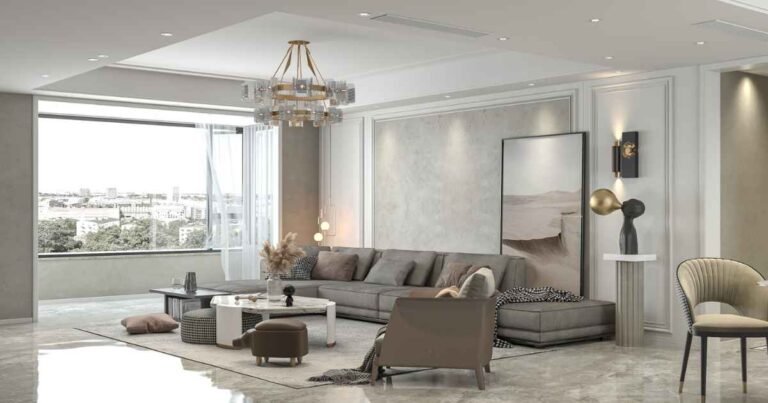
Sofas, sideboards, and coffee tables with clean rectangular forms and 4 to 6 inches of visible leg beneath them read modern instantly. Skip curved rolled arms, deeply tufted backs, and skirted bases entirely. A boxy 84-inch linen sofa on tapered walnut legs will look right for two decades running. Ornate silhouettes date within five years, no matter how expensive the fabric wrapping them.
Layer warm natural materials over synthetics
Oak, walnut, linen, wool, bouclé, jute, rattan, cane, matte ceramic, and natural stone. These read modern because they age visibly and add tactile warmth to any room. Chrome, glossy plastic, and glossy MDF read cold and cheap within a couple of years of daily use. A room with four natural materials layered together will always feel more considered than one built around synthetics alone.
Stick to a three-color palette with one accent
Pick one dominant color (60 percent of the room), one secondary (30 percent), and one accent (10 percent). A warm greige plus creamy white plus olive green reads as modern and considered. A room with six competing colors reads chaotic and dated. Add pattern through texture like weave, grain, and tile instead of through multiple colored surfaces fighting for attention on every wall.
Light every room in warm 2700K bulbs
Cool white 5000K bulbs make modern rooms feel clinical and prematurely dated. Replace every overhead and lamp bulb with 2700K warm bulbs, and layer three light sources per room: overhead, eye-level lamp, floor-level lamp. Consistency of color temperature matters more than raw brightness in every room. This single swap changes how a room feels more than most furniture upgrades ever could, and it costs under 50 dollars.
Add one sculptural piece per room
A ceramic vase with an unusual form, a hand-turned wooden bowl, a large brutalist lamp base, or a single artwork with real presence and weight. Sculptural pieces give the eye something to rest on beyond the furniture itself. Pick one per room and let it stand alone on a surface with breathing space around it. Sculptural clutter cancels out the intended effect completely.
Choose matte finishes over glossy anywhere possible
Matte black hardware, chalk-finish paint, brushed brass fittings, honed stone countertops, and unlacquered wood. Matte reads modern and premium in almost every context. Glossy anything reads cheap or dated fast, especially in kitchens and bathrooms where fingerprints show up under every light. This applies to picture frames too. Matte black or natural wood frames age better than glossy metallic ones every single time.
Invest in one heirloom-quality anchor per room
One well-made piece per room, chosen to last decades: the sofa, the dining table, or the bed frame. Spend real money here and buy budget-tier elsewhere without guilt. A $2,000 solid oak table looks better after 20 years of daily use than an $8,000 lacquered veneer table looks after two. Quality shows in materials and joinery, not in the price tag alone.
Layer plants at varying heights
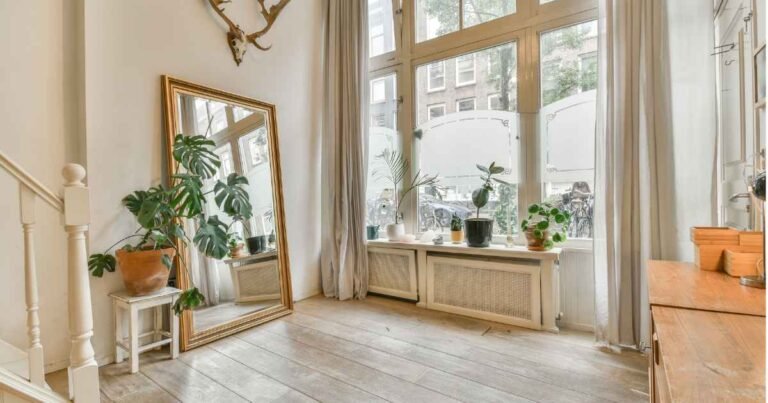
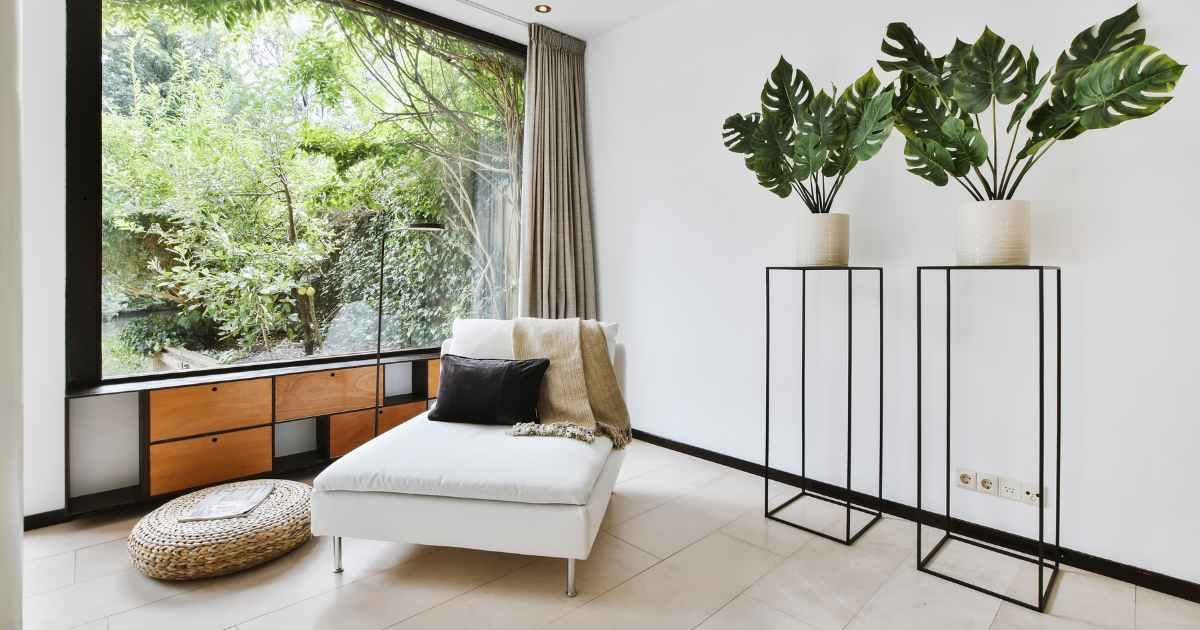
A 5 to 6 foot floor plant in a corner, a mid-height plant on a shelf or side table, and one small trailing plant on a mantel or high shelf. Plants soften modern rooms in a way art cannot, and they signal that the home is lived in. Fiddle leaf figs, kentia palms, olive trees, and pothos all work well in warm rooms.
Choose matte black or warm brass, not chrome or rose gold
Cabinet pulls, faucets, light fixtures, curtain rods, and picture frames. Matte black reads modern and industrial in most rooms. Warm brass reads modern and quietly sophisticated when paired with wood tones. Chrome and rose gold both date fast: chrome reads as builder-grade default from the box, and rose gold reads as a very specific trend moment from a few years back. Pick one metal family and stick to it.
Add one vintage or handmade piece per room
An antique wooden stool, a thrifted mid-century lamp, a handwoven throw, or a piece of pottery from a local maker. One vintage or artisan item per room breaks up the mass-produced feel that plagues most modern homes today. It’s the single easiest way to make a new-build room feel intentional and personally curated instead of showroom-copied. Even one thrifted piece changes the whole room’s feel.
Keep art at museum height with generous negative space
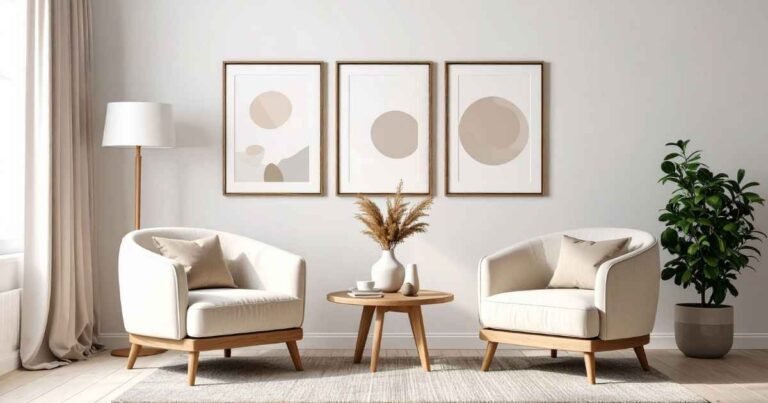
Center art at 57 to 60 inches from the floor, which matches museum-standard hanging height everywhere. Give every piece at least 12 inches of empty wall around it for breathing room. Modern homes fail when every surface competes for attention with something else. One strong piece of wall art per wall, hung at the right height, does more than five smaller pieces crowded together. Let the walls breathe visually.
Layer texture instead of adding pattern
Bouclé sofa, linen curtains, wool rug, cane sideboard, matte ceramic vases, and oak coffee table. That’s six textures inside a tight neutral palette, and it reads as modern and layered together. Adding busy patterns like florals, geometrics, or stripes to that mix would break the modern feel instantly. Texture creates depth without visual noise anywhere in the room. Pattern in a modern room should be rare and intentional when used.
Modern materials, budgets, and the numbers that matter
Most modern home decor mistakes come down to material choices, not style choices. Pick materials that age gracefully and the room stays modern for a decade. Pick materials that date fast and no styling can save it. These two tables give the numbers I check before recommending anything.
Materials that age gracefully vs. materials that date fast
| Ages gracefully | Dates fast |
|---|---|
| Solid oak, walnut, ash | High-gloss lacquer, MDF veneer |
| Linen, wool, bouclé, cotton | Glossy synthetic velvet, faux leather |
| Matte ceramic, honed stone | Polished chrome, mirror-finish anything |
| Natural jute, wool rugs | Shag rugs, high-pile synthetic rugs |
| Warm brass, matte black | Rose gold, brushed nickel, chrome |
| Unfinished or oiled wood | Distressed painted wood, faux weathered finishes |
Where your budget lands
| Budget tier | Prioritize | Realistic impact | Time to install |
|---|---|---|---|
| Under $100 | 2700K bulbs, matte hardware swaps, plant | Warmer light, modern hardware | One evening |
| $100 to $500 | New throw pillows, one sculptural piece, wool rug | Textural depth, focal points | One weekend |
| $500 to $1,500 | Quality lamps, matte-finish coffee table, art | Anchor pieces, layered light | One weekend |
| $1,500 to $5,000 | Heirloom sofa or dining table, wall paneling | Foundation-level modernization | Two weekends |
Pro tip: Change every bulb in your home to 2700K warm before buying anything else. Most people spend hundreds on decor while lighting the room in 5000K blue light that cancels out every warm material choice. A room lit in cool white cannot read as modern-warm, no matter what furniture sits in it.
The Timeless Modern Test
Every piece I recommend passes three questions. Miss any one and the piece will date fast, no matter how good it looks in the showroom. Use this filter before buying furniture, art, or decor. It saves money and prevents the “why does my new sofa already look tired?” feeling most people get within 18 months.
Question 1: Would this piece work if the current trend keyword disappeared?
Trend keywords (Japandi, coastal grandmother, dark academia, cottagecore) fade within a few years. A piece that only works because it’s on-trend right now will look dated when the trend moves on. A piece that would still look right if the trend keyword vanished entirely is a keeper. Test every purchase against this.
Question 2: Is the silhouette simple enough to work with different accents?
A boxy linen sofa works with modern accents, Japanese accents, warm Mediterranean accents, or Scandinavian accents. A tufted velvet mushroom sofa in a specific viral shape works with almost nothing else. Simple silhouettes are versatile. Distinctive silhouettes lock you in. Buy simple foundations and use accents to shift the style.
Question 3: Is the material one that ages visibly and gracefully?
Solid wood develops patina. Linen softens with age. Wool rugs get better with foot traffic. Bouclé holds up if the fibers are wool or cotton. In contrast, MDF veneer chips, lacquer scratches, faux leather peels, and synthetic velvet mats down. Buy materials that improve with time, not ones that visibly degrade.
Case study: modernizing a 900-square-foot living room for $650
I updated a 900-square-foot living room over two weekends on a $650 budget. Foundation swaps: replaced a tufted velvet sofa with a $380 boxy linen one, added a $95 oak coffee table with visible grain, swapped every 5000K overhead bulb for 2700K warm at $8 per bulb.. Texture layer: added a $75 wool throw and two $30 boucle pillows. The room went from reading as trendy-2019 to reading as considered-and-lasting. The linen and oak did the heavy lifting. The lighting swap was the multiplier that made every other choice work.
Weekend one checklist:
- Change every bulb in the main room to 2700K warm
- Swap chrome or rose gold hardware for matte black or warm brass
- Add one vintage or handmade piece per main room
- Remove anything glossy that photographs cheap
- Layer three natural materials that weren’t already present
Common modern home decor mistakes (and how to fix them)
Some mistakes come up in almost every modern-home consult I do. Most aren’t about taste. They’re about chasing what’s viral instead of building a foundation that survives the next trend cycle.
Mistake 1: Chasing micro-trends that date fast
Fix: apply the Timeless Modern Test before buying. If a piece only works because it’s popular right now, skip it. Buy the boring foundational pieces (sofa, dining table, bed) as timeless silhouettes in natural materials, and use inexpensive accents to shift with trends when you want.
Mistake 2: Using cool white 5000K bulbs everywhere
Fix: replace overhead and lamp bulbs with 2700K warm bulbs across the whole home. Cool white lighting cancels out every warm material choice and makes modern rooms feel clinical. Consistency of color temperature matters more than raw brightness.
Mistake 3: Overusing one material trend
Fix: layer four to six different natural materials instead of building a whole room around one. A room that’s 80 percent bouclé looks dated within two years. A room with linen, oak, wool, ceramic, cane, and matte brass reads as considered and modern for a decade.
Isn’t modern decor cold and impersonal?
It can be, when it’s minimalism without warmth. But real modern decor combines clean silhouettes with warm natural materials, warm 2700K lighting, and personal vintage or handmade objects. A modern room done right feels calm and warm, not sterile. Cold modern rooms usually have too much white, too little texture, or cool-toned lighting.
Doesn’t modern furniture date faster than traditional?
Actually the opposite, if it’s chosen well. Traditional furniture with heavy ornament always looks like a specific historical period. Modern furniture with clean silhouettes in natural materials looks right across decades. What dates fast is trendy modern (viral shapes, one-season colors), not modern itself. Buy simple foundations in real materials.
FAQs
These are the questions readers ask most often about modern home decor ideas when planning an update.
What defines modern home decor? Clean silhouettes, warm natural materials, restrained color palettes, and warm 2700K lighting. Modern decor rejects heavy ornament and favors form that follows function. It borrows from mid-century modernism but adapts to current living: softer furniture, layered textures, and personal touches instead of pure minimalism.
What’s the difference between modern and contemporary decor? Modern refers to a specific design movement (roughly 1920s to 1960s) plus its ongoing influence. Contemporary refers to whatever is being made and celebrated right now, which shifts over time. A room can be both, but a truly contemporary room may not stay contemporary for long, while modern principles tend to age better.
How do you make modern decor feel warm? Layer natural materials (oak, linen, wool, ceramic), use warm 2700K lighting at three heights, add one vintage or handmade piece per room, and include plants. Skip the all-white minimalist approach. Warm modern homes combine clean silhouettes with tactile warmth, not sharp geometry with cool tones.
Is modern decor still popular? Yes, and unusually so for a design style. Modern principles have stayed relevant for nearly a century because they solve real problems: cleaner sightlines, easier maintenance, more flexible living. The specific execution has shifted (softer furniture, warmer materials) but the underlying rules remain the same.
How do you mix modern with vintage pieces? Aim for one vintage or handmade piece per room, chosen to contrast the modern foundation. A thrifted mid-century lamp on a clean-lined sideboard. A handwoven wool throw across a boxy linen sofa. One antique wooden stool used as a plant stand. The contrast is what makes both pieces feel intentional.
Where to start
Modern home decor ideas come down to principles before purchases. Right materials. Right silhouettes. Right lighting. Once those three line up, individual style choices follow more easily and the room stays current across many seasons instead of one. Start with the Timeless Modern Test, tackle your bulb swap and hardware audit this weekend, then work outward from there. HomeDecorIdeas has room-by-room guides if you want to go deeper on any of these fixes.