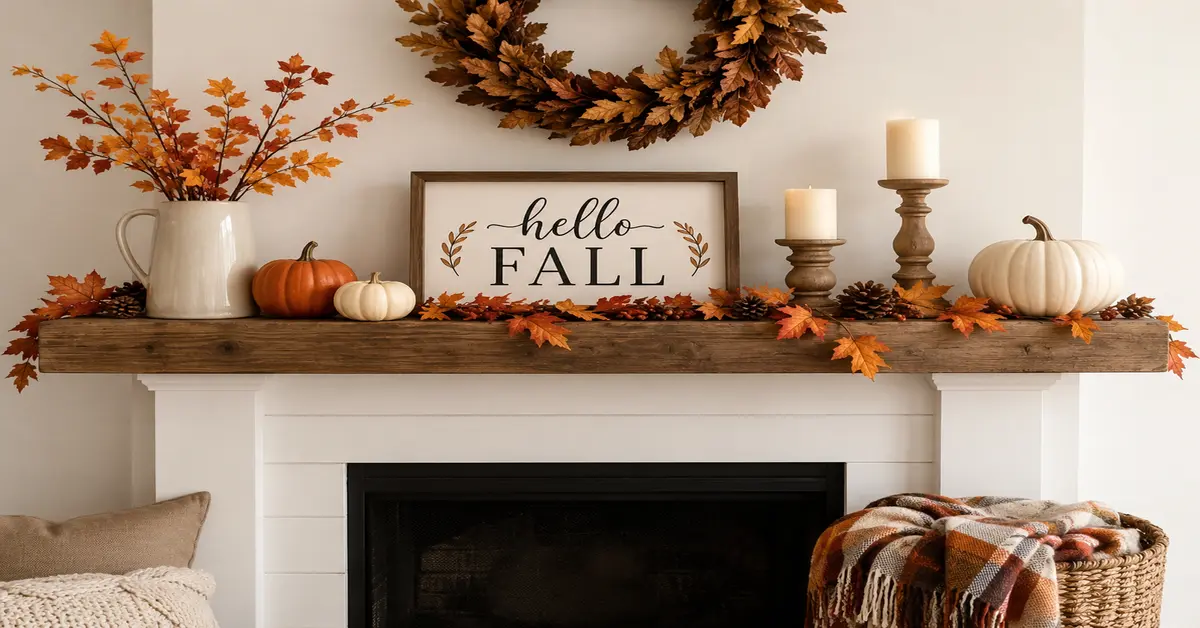
A bare mantel in autumn feels like a missed opportunity. It’s the first thing guests notice when they walk into a living room, and without something intentional on it, even a beautiful fireplace can look neglected. Scrolling through styled mantels online often makes things worse — those elaborate, overflowing arrangements make the whole project feel impossibly complicated.
Here’s the reality: the best fall mantels are simple ones. The right three or four elements, placed with a little intention, outperform an overcrowded shelf every single time. This guide covers fall mantel decor ideas simple enough to execute on a weekday evening, a tight budget, and a shelf of almost any size. The mistake covered in the last section? It’s the one I see on nearly every overly decorated mantel, and it’s easier to fix than you’d think.
Key takeaways:
- A fall mantel needs three things: one tall anchor piece, varied heights, and texture contrast
- Odd numbers of objects — three or five — look more natural than even groupings
- Warm tones like rust, amber, terracotta, and deep burgundy read as seasonal without a single pumpkin required
- Grocery store gourds and craft store stems perform well above their price on any shelf
- The 3-Layer Mantel Method (covered below) works on shelves from narrow 30-inch rentals to wide stone surrounds
What makes fall mantel decor look good
Simple fall mantel decor works because it respects the mantel’s function: to anchor a room’s focal point without competing with everything else. You need contrast in height, variety in texture, and a palette that reads as seasonal without being literal. Get those three things right and almost anything you place up there will look considered.
The mantel’s role as a focal point
A fireplace mantel sits at eye level, centered on a wall, and draws the eye the moment you enter a room. That position means it benefits from restraint more than almost any other surface in a house. A few well-chosen pieces carry more visual weight than fifteen small objects scattered without structure. Think of the mantel shelf the way a good editor thinks about a page: what stays is just as important as what goes.
Why less beats more every time
Overcrowded mantels flatten out. When every inch of shelf space is filled, there’s no negative space to let individual pieces breathe, and the eye doesn’t know where to land. In my experience restyling mantels across a dozen different homes, the ones that got the most compliments had fewer than seven objects total, with at least one stretch of empty shelf left intentionally open.
9 simple fall mantel decor ideas that work in any home
Each of these ideas works as a standalone approach or in combination with one or two others. Every suggestion below includes a specific, usable detail — a measurement, a material, a placement note — because “add some pumpkins” isn’t actually useful advice.
Start with a tall dried botanical anchor
A bundle of dried pampas grass, eucalyptus, or fall wheat stalks in a ceramic vase immediately creates height on one side of the shelf. Aim for a vase at least 14–18 inches tall, with stems that extend another 8–12 inches above the rim. The asymmetry of a tall arrangement on one side, balanced by lower objects on the other, is the fastest way to make a mantel look finished rather than accidental.
Layer in warm candlelight
Pillar candles in three different heights — roughly 4 inches, 6 inches, and 9 inches — grouped in odd numbers read as intentional rather than random. Choose them in warm white, beeswax, or unscented cream. Set them directly on the shelf or on a small wooden tray to protect the surface from wax. Battery-operated flameless versions are worth considering if you have pets or children; the flicker on better models is convincing from a few feet away.
Use pumpkins in three sizes
Three pumpkins — one large, one medium, one small — placed in a loose cluster with the tallest toward the back and the smallest at the front creates natural depth. Matte-finish pumpkins in white, terracotta, or deep sage hold up as longer-season decor better than standard orange ones. For a near-zero-cost option, place one real sugar pumpkin from a grocery store among two faux ones. Most people really can’t tell the difference.
Lean a wreath against the wall
Leaning a wreath against the wall above the shelf, rather than hanging it, avoids putting holes in the wall — useful in rentals. A fall wreath in dried eucalyptus, preserved leaves, and thin ribbon costs a fraction of fresh seasonal options and lasts for years. A leaned mirror works equally well, reflecting the room and the candlelight so any sized space reads as more generous.
Bring in dried branches or bare twigs
A tall vase of bare branches — gathered from a backyard or bought inexpensively from a craft store — costs almost nothing and adds graphic structure to any shelf. Tuck a few faux fall leaves among the branches, or lightly mist the tips of real twigs with matte gold spray for a warmer effect. This works best on wider mantels (48 inches or more) where a single small piece wouldn’t register visually.
Try a loose fall garland
A garland of preserved or faux fall leaves draped loosely across the front of the shelf takes under five minutes to arrange. Let it drape over the edge in two or three places rather than lying flat — the irregular drape reads as natural rather than staged. A pair of pillar candles set behind the garland adds depth and keeps the look from feeling one-dimensional.
Stack books as height-builders
Two or three hardcover books with neutral-toned spines, stacked horizontally, become a free riser for smaller objects. Set a small pumpkin or a single pillar candle on top. Books add an editorial quality to the shelf and cost nothing if you already own them. Wrap the spines in brown kraft paper for a cohesive, neutral look if their colors don’t fit the palette.
Add a seasonal framed print
Lean a single framed print against the wall on the mantel shelf — a botanical illustration, a fall landscape, or a simple typographic piece. No hardware needed. The frame provides a vertical rectangle that anchors the composition, and it swaps out easily when the season changes. A frame around 8×10 inches suits narrow shelves; go 11×14 or larger on anything wider than 48 inches.
Keep it minimal with one statement piece
A single, well-chosen object — a large stoneware crock, a sculptural ceramic bowl filled with walnuts and pinecones, or a hand-thrown vase in a warm earth tone — sometimes does more than a full arrangement. This approach works best on highly decorative fireplace surrounds, like carved wood or ornate marble, where the architecture itself does most of the visual work and the shelf needs very little competition.
How to choose your fall mantel palette and materials
A cohesive palette makes any collection of objects look curated. The most versatile fall groupings center on two or three warm tones with one neutral as a base. The tables below map palette options by interior style and break down what different budget levels can realistically cover.
Fall color palette guide
| Palette | Anchor color | Secondary | Accent | Works best with |
| Classic harvest | Burnt orange | Warm brown | Cream | Traditional, farmhouse |
| Moody autumn | Deep burgundy | Forest green | Matte black | Modern, maximalist |
| Soft neutral | Warm beige | Oatmeal | Terracotta | Minimalist, Scandinavian |
| Earthy organic | Terracotta | Rust | Natural wood | Boho, organic modern |
| Elegant dark | Charcoal | Cream | Matte gold | Contemporary, glam |
Fall mantel budget breakdown
| Budget tier | Estimated spend | What it covers |
| Free to low-cost | $0–$15 | Backyard branches, grocery store gourds, repositioned existing objects |
| Budget-friendly | $15–$40 | Faux garland, pillar candles, small pumpkins, one lantern |
| Mid-range | $40–$80 | Quality faux wreath, ceramic vase, candle set, one or two textural objects |
| Investment | $80–$150+ | Artisan ceramic pieces, high-quality faux botanicals, framed print |
Rough and natural textures — jute, rattan, dried botanicals, unglazed ceramic, raw wood — layer well together because they share similar visual weight. Glossy or reflective materials like polished brass or lacquered ceramics work better as accents than primary objects. Too many shiny surfaces in one grouping tips the overall feel from autumn into holiday.
The 3-Layer Mantel Method
The 3-Layer Mantel Method is a repeatable system for styling any shelf. Most well-styled mantels share the same underlying structure: three distinct layers that create depth, variety, and visual interest regardless of which specific objects you own or how wide your shelf is.
Layer 1: anchors
Anchors are one or two tall objects placed toward the back of the shelf or leaned against the wall. They define the maximum height of the composition. A dried botanical arrangement, a leaned wreath, a framed print, or a tall lantern all qualify. Nothing else in the arrangement should exceed the anchor’s height.
Layer 2: mid-height fillers
Fillers sit in front of the anchors and occupy the middle height range — roughly 6–12 inches off the shelf surface. Candlesticks, medium pumpkins, small ceramic vessels, and stacked books all belong here. They create visual weight without blocking the anchors. Varying heights within this layer matters: two candlesticks of different heights look more natural than two identical ones.
Layer 3: accents and texture
Accents sit at the front of the shelf. These are the smallest pieces: a single gourd, a pinecone cluster, a small dish of acorns, a stub of a pillar candle. They add texture and foreground detail and let the eye travel from front to back across the mantel, creating a sense of depth on what is, in reality, a shallow horizontal surface.
Pro tip: Before placing anything on the shelf, set all your objects on a nearby table and sort them into three height groups. Once you can see what you have at each level, the actual arrangement takes under ten minutes. Most of the styling work happens on the table, not on the shelf.
Autumn mantel styling checklist:
- One anchor piece 14 inches or taller placed first
- Mid-layer objects varied in height (not all the same)
- At least one area of empty shelf left open
- Palette limited to two or three tones plus one neutral
- Clusters of objects in odd numbers (three or five)
- At least two different textures represented
- Everything scaled to the shelf’s width
Mini case study: I restyled a narrow 42-inch rental apartment mantel using $34 of craft store supplies and one grocery run. Three items I already owned formed the base: a ceramic vase, two pillar candles, and a small dark picture frame. I added dried wheat stalks ($8), a faux fall garland ($11), two small orange pumpkins from the produce section ($4), and a bag of walnuts ($11) displayed in a small wooden bowl I already had. Total new spend: $34. Three weeks later, a friend asked whether I’d worked with a decorator. The 3-Layer Method is why it looked finished — the wheat stalks anchored the right side, the candles and frame held the mid-layer, and the pumpkins and walnut bowl grounded the front edge.
Fall mantel mistakes and how to fix them
Getting the ideas right is half the work. These common errors trip up even careful decorators, and every one has a straightforward fix.
Crowding the shelf
The single most common mistake is filling every inch of available surface. A packed mantel reads as busy rather than curated, and the individual pieces you’ve chosen disappear into the noise. Leave at least 20–25% of the shelf surface empty. That negative space is part of the design, not a failure to fill it.
Fix: Remove objects one at a time until the arrangement can breathe. If you’re reluctant to put something away, it probably belongs on a side table or bookshelf instead.
Using objects at uniform heights
When every piece sits at the same height, the arrangement looks flat and static. The eye has nowhere to travel.
Fix: Aim for at least three distinct height levels — tall (15-plus inches), medium (8–14 inches), and low (under 7 inches) — within a single composition.
Ignoring the scale of the mantel
A single small pumpkin on a wide stone surround looks lost. A large wreath on a narrow 30-inch mantel overwhelms everything else.
Fix: Scale your anchor piece to roughly one-third of the mantel’s width. On a 48-inch mantel, that means an anchor around 14–18 inches wide. On a 36-inch mantel, around 10–12 inches wide.
Quick do/don’t reference:
| Do | Don’t |
| Leave 20–25% of the shelf empty | Fill every inch of available surface |
| Use odd numbers in clusters | Pair objects in twos (unless symmetrically bookending) |
| Vary heights across at least three levels | Place everything at the same height |
| Scale the anchor to one-third of the shelf width | Place one tiny object on a wide, grand mantel |
| Limit the palette to two or three colors plus one neutral | Mix five or more colors without a unifying tone |
Objection: Won’t faux pumpkins look cheap? Not if you choose carefully. Matte-finish, hand-painted, or textured faux pumpkins in white, sage, or terracotta read as intentional decor rather than obvious fakes. The ones that look cheap are smooth, shiny, and bright orange. Simple test: if it photographs well in natural light, it’ll look fine in the room.
Objection: My mantel is only 24 inches wide — can this still work? It can. A narrow mantel calls for a tighter, taller arrangement. One tall anchor, one mid-height piece, and one small accent is the right scale. Symmetrical pairs won’t fit on 24 inches, but the 3-Layer Method scales down without any trouble — just use one object per layer rather than multiples.
FAQs
What should I put on my mantel for fall?
Start with one tall anchor — a dried floral arrangement, a leaned wreath, or a tall lantern — then add two or three medium-height objects like candlesticks or pumpkins, and finish with a few small textural accents at the front. Stick to a two- or three-color warm palette and use odd numbers of objects in any cluster.
How do you decorate a simple fall mantel on a budget?
Grocery store gourds and pumpkins, backyard branches, and existing household objects like candles and picture frames cover most of the work for very little. A simple faux garland from a craft store, typically under $15, pulls everything together and reuses year after year.
How many items should be on a mantel?
Five to seven objects is the sweet spot for most mantels. Fewer than five can feel sparse unless the pieces are large and sculptural. More than nine tends to look cluttered. Count each individual object separately — a cluster of three pumpkins counts as three, not one.
Can I decorate a mantel without a fireplace?
A floating shelf or a console table styled the same way gives you nearly the same effect. The 3-Layer Mantel Method applies equally well to any horizontal surface used as a focal point in a room.
How do you make a fall mantel look cohesive?
Limit the palette to two or three colors plus one neutral. Repeat at least one material or texture — dried botanicals, ceramic, or natural wood — in two or three places across the shelf. Leave some empty space. A little breathing room is what makes a grouping of objects look curated rather than simply collected.
Pulling it together
Simple fall mantel decor comes down to a few consistent principles: one strong anchor, layered heights, a restrained palette, and enough empty space for the pieces you’ve chosen to actually register. You don’t need a matching collection or a significant budget. Some of the best autumn mantels I’ve seen used grocery store gourds, a couple of things pulled from a kitchen shelf, and a single good candle.
If you’re not sure where to start, use the 3-Layer Mantel Method, pick one palette from the table above, and work with what you already own. Add only what’s actually missing.
For more ideas on seasonal styling throughout your home, Home Decor Ideas covers autumn tablescapes, entryway decor, and room-by-room approaches that carry you comfortably through the cooler months.