
Living in a studio means every piece of furniture competes for the same floor space. Add a sofa, a bed, a dining table, and a desk, and you’ve filled most rooms before sitting down anywhere. That’s the problem multipurpose furniture for studio apartments is built to solve.
The short answer: the best multipurpose pieces handle at least two distinct functions and leave a clear 30-inch walkway around them at all times. A wall bed with built-in shelving, a storage ottoman doubling as a coffee table, and a drop-leaf dining table can together free more than 40 square feet of usable floor space.
This guide covers 11 furniture types that genuinely earn their place, a cost-and-function matrix, and the one layout mistake I see in almost every studio I walk through.
Key takeaways:
- Multipurpose furniture works best when each piece serves two functions at the same time, not just one followed by another
- Leave 30–36 inches of clear walkway in every configuration a piece can take, not only in its stored position
- Wall beds, daybeds with storage drawers, and drop-leaf tables give the highest space return per dollar spent
- Budget-friendly options exist at every tier; you don’t need to spend over $1,000 to furnish a studio well
- Limit actively convertible pieces to three functional zones; beyond that, the room becomes exhausting to live in daily
- Vertical space above 60 inches is the most consistently underused area in small studios
What makes furniture genuinely multipurpose?
Multipurpose furniture performs two or more distinct tasks without requiring the room to be rearranged each time you switch between them. A pull-out sofa bed qualifies. A sofa with a clip-on tray table does not. True dual-function pieces serve their secondary role without making the primary function unavailable.
The two-function test
Before buying any piece for a studio, ask one question: does this do something useful when you’re not actively triggering its second function? A storage ottoman holds extra bedding while you use it as a coffee table: that’s concurrent function. But a folding chair that only saves space when folded fails the test entirely, because using it means losing the spatial benefit.
Pieces that genuinely work in studios are the ones you stop noticing. They sit there doing two things without asking you to think about it.
Why conversion ease determines daily use
A murphy bed that needs two people to lower, or a dining table that requires a tool to extend, defaults to its stored position within a week. The mechanism — fold-out, pull-out, lift-top, drop-leaf — decides whether you use the second function daily or almost never. Before buying, watch someone operate it solo on video, or test it in a showroom. And if the conversion takes more than 15 seconds alone, assume it won’t happen consistently.
11 best types of multipurpose furniture for studio apartments
These are the furniture categories that consistently deliver the highest space return in a studio. I’ve ordered them from most transformative to most incremental, so you can prioritize based on where your room feels most constrained. Each entry includes a minimum space requirement and a realistic budget range.
1. Wall bed with integrated shelving
A wall bed folds vertically against the wall and recovers 30–50 square feet of floor space during the day. The best configurations pair the sleeping surface with flanking shelves or a fold-down desk that stays accessible whether the bed is up or down. Look for a counterbalance piston system heavy enough to manage the mattress weight solo. A queen-size unit needs roughly a 9-foot-wide wall section; a full or double needs about 7.5 feet. Budget: $800–$2,500 installed.
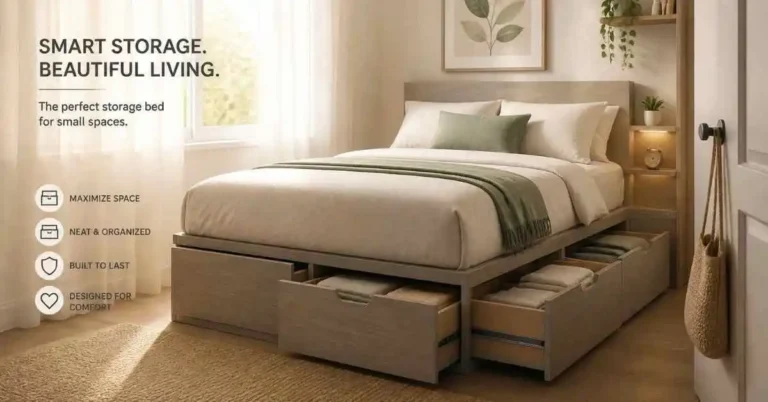
2. Daybed with storage drawers
Without any mechanism to operate, A daybed shifts from sofa to sleeping surface by swapping a few cushions. Style it with back pillows and it reads as a sofa from across the room. Models with two or three built-in drawers replace a full dresser in studios where closet space runs short. Look for frames sitting at standard sofa height, about 17–18 inches from floor to cushion top. Twin and twin XL sizes work in most studios; a full-size can feel heavy in rooms under 250 square feet. Budget: $200–$700.
3. Sleeper sofa with a foam-core pull-out
Modern sleeper sofas have improved substantially. The specific problem in older models: a metal bar running across the middle of the pull-out mattress. Current foam-core and gel-foam versions sit flush with the frame without that issue. For regular sleeping, a 4-inch memory foam topper resolves most comfort complaints. Note that sleeper sofas run 6–8 inches deeper than standard sofas, so measure your floor plan before ordering. Budget: $600–$2,000.
4. Storage ottoman as coffee table
Rectangular storage ottomans in the 48–54 inch range function as a coffee table, footrest, extra seating, and linen storage simultaneously. Set a low tray on top for a more stable surface. Bouclé and performance velvet both handle daily wear better than flat weaves and hide dust between cleaning sessions. Avoid models with a lid that opens in only one direction if the ottoman will sit in front of a sofa: you’ll need full clearance to lift it. Budget: $80–$400.
5. Drop-leaf or extendable dining table
A drop-leaf table folds its sides flush against the base, reducing a 36-inch-wide surface to as little as 12 inches deep, narrow enough to read as a console against the wall. Extended, the same piece seats four. In my view, a drop-leaf outperforms a standard extendable table at the same price point because the stored configuration is narrow enough to genuinely disappear. Extendable butterfly-leaf models store the extra leaf inside the table, with nothing separate to lose. Budget: $150–$600.
6. Loft bed with a workspace or seating area below
Loft beds raise the sleeping surface to ceiling height, freeing the entire floor area below for a desk, small sofa, or wardrobe. They work best in studios with at least 9-foot ceilings; anything lower leaves the occupant within 18 inches of the ceiling, which most adults find claustrophobic over time. Clearance below the loft platform should be at least 6.5 feet for a standing desk setup. Most standard frames support 250–400 lbs, so always verify the spec sheet. Budget: $300–$900.
7. Console-to-dining table
Different from a standard extendable table: a console-to-dining table starts at 12–16 inches deep and expands via a flip-top or drop-down leaf to a full 36-inch dining surface. It lives against the wall as a sideboard and converts for meals. The trade-off is seating: only the long sides fit chairs, capping capacity at four. For a studio where eating at a table is a daily habit, this may be the hardest-working category available. Budget: $300–$800.
8. Modular shelving with a fold-down desk
Wall-mounted modular shelving with an integrated fold-down desk combines storage, display, and a workspace in one wall section. Closed, it looks like ordinary shelving. The fold-down surface is typically 24 by 20 inches, adequate for a laptop but tight for dual monitors. Anchor the system to wall studs: a fully loaded unit can weigh 80–150 lbs before anything goes on the shelves. Budget: $200–$600 depending on configuration and brand.
9. Entryway bench with under-seat storage
In a studio where the front door opens directly into the main room, a bench with a hinged storage lid and hooks above creates a defined entry zone without a hallway. It seats someone putting shoes on, hides seasonal bags and bulky items below, and draws a visual line between the front door and the living area. A bench 36–48 inches wide fits most studio entries without blocking traffic. Choose tight-weave upholstery if you’re storing items that shed. Budget: $100–$400.
10. Nesting side tables
Nesting tables collapse to the footprint of one side table and pull apart when a second surface is needed. Good sets have a height difference of at least 3 inches between pieces, so they slide cleanly in and out. Rattan and cane frames add warmth without visual weight; matte black metal reads less busy than polished chrome in tight spaces, which amplifies reflections and visual noise. A set of three replaces a permanent side table and an occasional table. Budget: $40–$180 per set.
11. Lift-top coffee table with interior storage
A lift-top coffee table tilts its surface up and forward to reach a working or dining height of about 26–28 inches, enough for a laptop or a meal eaten from the sofa. The interior cavity stores remotes, chargers, blankets, and everyday items. Lift mechanisms use gas pistons; check the weight rating before placing anything heavy on the raised surface. Budget: $150–$500.
How to choose by budget, size, and function
Choosing multipurpose furniture for a studio apartment isn’t about buying the most convertible thing available. It’s about identifying the specific gap that limits your daily life, then filling it without shrinking the walkable area. The matrix below maps all 11 types to their functions, minimum space, and cost.
The studio furniture function matrix
| Furniture type | Primary function | Secondary function | Min. space needed | Budget range |
|---|---|---|---|---|
| Wall bed + shelving | Sleeping | Storage / desk | 80 sq ft (bed down) | $800–$2,500 |
| Daybed with drawers | Sleeping | Seating + storage | 40–60 sq ft | $200–$700 |
| Sleeper sofa | Seating | Sleeping | 50–70 sq ft | $600–$2,000 |
| Storage ottoman | Coffee table / seating | Storage | 6–9 sq ft | $80–$400 |
| Drop-leaf dining table | Dining | Console / workspace | 12 sq ft folded | $150–$600 |
| Loft bed + workspace | Sleeping | Desk / wardrobe area | 40 sq ft footprint | $300–$900 |
| Console-to-dining table | Console | Dining (seats 4) | 8 sq ft as console | $300–$800 |
| Modular shelving + desk | Storage / display | Workspace | Wall space only | $200–$600 |
| Entryway bench | Seating | Storage | 6–8 sq ft | $100–$400 |
| Nesting side tables | Side table | Occasional table | 2–4 sq ft nested | $40–$180 |
| Lift-top coffee table | Coffee table | Work / dining + storage | 12–18 sq ft | $150–$500 |
Budget allocation by priority
| Budget tier | Best allocation | What to skip at this stage |
|---|---|---|
| Under $500 | Daybed with drawers + storage ottoman + nesting tables | Wall beds, sleeper sofas |
| $500–$1,000 | Sleeper sofa + drop-leaf table + lift-top coffee table | Custom wall bed units |
| $1,000–$2,000 | Wall bed unit + drop-leaf table + storage ottoman | Premium custom cabinetry |
| $2,000+ | Wall bed with cabinetry + extendable dining table + modular shelving | Nothing excluded |
Size check before you buy
Pro tip: Before ordering any piece, tape out its footprint in both configurations — stored and in active use — directly on your floor with painter’s tape, then walk around it. A sleeper sofa that sits neatly closed can block a kitchen entrance entirely when the mattress is extended. Many floor plan problems only reveal themselves after delivery.
Quick checklist before purchasing:
- [ ] Footprint taped out in both stored and in-use positions
- [ ] 30–36 inches of clear walkway confirmed in both configurations
- [ ] Weight capacity verified for any sleeping surface or loft platform
- [ ] Conversion mechanism reviewed via video, not just product photos or star ratings
- [ ] Delivery method confirmed: flat-pack requiring assembly, pre-assembled, or freight
The three-function rule for studio apartments
Most small-space guides say to buy multipurpose furniture. Fewer address how many convertible pieces a studio can absorb before it starts feeling like a puzzle to live in. The three-function rule sets a clear ceiling on actively convertible pieces, so your space stays livable rather than just theoretically efficient.
What the rule means in practice
Limit mechanism-based convertible furniture to three zones: sleeping, seating, and dining-plus-workspace. Each zone gets one piece you actively switch between modes. Outside those three zones, choose fixed furniture like a bookcase, a wardrobe, or a bench that does one thing without asking you to convert anything.
When every piece requires a conscious action to unlock its second function, the friction compounds. In my experience helping people set up small apartments, the pattern is consistent: by the end of the first month, occupants revert to the default position of each convertible piece. The murphy bed stays down. The fold-down desk stays closed. The room never actually gets smaller.
Six convertible pieces sounds maximally efficient on paper. In practice, two get used as intended.
Case study: one weekend, 380 square feet
In a 380-square-foot studio I helped furnish over one weekend, the occupant had six convertible pieces and was actively using two. We stripped back to three: a wall bed with flanking shelves for the sleeping zone, a storage ottoman for the seating zone, and a drop-leaf table against the wall for dining. Everything else became fixed: a bookcase, a narrow wardrobe, an entryway bench.
Result: approximately 28 square feet of daily usable floor space recovered. More noticeably, the occupant started using the drop-leaf table for dinner every night. Lowering it took 10 seconds solo, so the habit formed without effort. When the mechanism is simple, daily use follows automatically.
Mistakes that waste space in a studio apartment
These patterns appear consistently in studios that feel cramped despite owning the right categories of furniture. The problem is rarely which pieces you chose. It’s how many convertible pieces were stacked in, and how hard each one actually is to use.
Buying convertible furniture with a difficult mechanism
Any piece you can’t operate alone in under 15 seconds will stay in its default position permanently. That covers murphy beds requiring a second person, fold-down desks with fussy locking systems, and dining tables that need releveling after each extension. Look for reviews addressing ease of operation specifically, not just construction quality or visual design.
Choosing furniture at the wrong scale
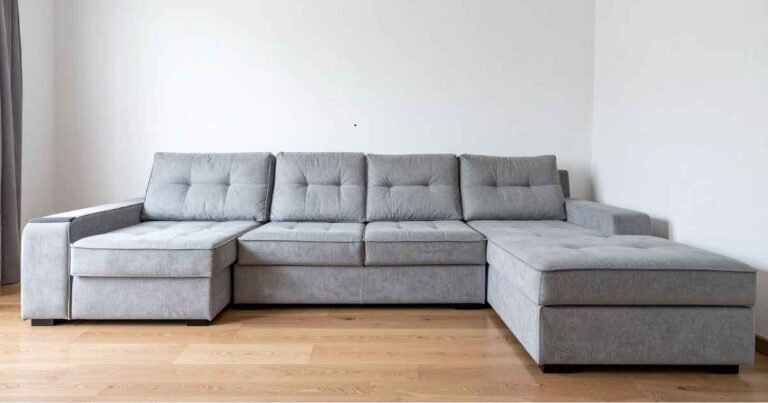
A sectional in a 300-square-foot studio is almost always a mistake, even with built-in storage. Its footprint eliminates the traffic flow that makes a room feel livable, regardless of how many compartments it has. Scale to room size first, function second. Studios under 350 square feet rarely support a sofa longer than 72 inches; an 88-inch sectional in that space doesn’t just fill the room, it removes the sense of openness entirely.
Leaving vertical space empty
Nearly every multipurpose furniture strategy works horizontally. But wall space from 60 inches to ceiling height is consistently the most underused area in studios. Wall-mounted shelving from 60 inches up adds 15–25 linear feet of storage without touching the floor plan. Loft beds, overhead cabinets, and wall-mounted fold-down desks use the same logic and are worth prioritizing before adding more floor-level furniture.
Two objections, answered honestly
Won’t a sofa bed still be uncomfortable for regular sleeping? It depends on the model. The metal-bar problem in older pull-out designs was real, and it still shows up in low-end models. Current foam-core and gel-foam pull-outs are genuinely comfortable for regular use, especially with a 4-inch memory foam topper added. The honest trade-off: they’re slightly firmer than a dedicated mattress and take a bit longer to make each morning. For sleeping on it seven nights a week, a daybed or wall bed is a better primary solution. A sleeper sofa earns its place when it’s used for sleeping fewer than five nights weekly.
Isn’t multipurpose furniture more expensive than buying two separate pieces? Upfront, yes, for some categories. A wall bed costs more than a bed frame alone. But a storage ottoman at $200 replaces both a coffee table and a storage chest. A daybed with drawers at $450 replaces a bed frame and a dresser. In most cases, the multipurpose piece costs 20–40% more than the primary piece alone and eliminates a second purchase entirely. Over a full furnishing budget, the math almost always comes out ahead.
FAQs
What is the best multipurpose furniture for a studio apartment under 300 square feet? For very small studios, focus on three pieces: a daybed with storage drawers (replaces a bed frame and dresser), a storage ottoman (replaces a coffee table and adds storage), and a wall-mounted fold-down desk (adds workspace without using floor space). Together they cover sleeping, seating, storage, and work functions while keeping the center of the room open and walkable.
How do you divide a studio apartment into zones without walls? Furniture placement and area rugs do most of the work. A sofa positioned with its back to the sleeping area creates a visual boundary between zones. A low open bookcase placed perpendicular to a wall acts as a partial divider without blocking natural light. A distinct rug anchoring each zone’s main furniture reinforces the separation without adding visual weight above ankle height.
Can a murphy bed work in a rented apartment? Yes, if you choose a freestanding unit. Freestanding murphy beds use their own cabinetry weight for stability and require no wall anchoring. Wall-mounted systems need drilling and landlord approval. Confirm which type you’re buying before purchasing; the term “wall bed” doesn’t automatically mean it must be drilled in, but many are.
What sofa length works best in a studio apartment? For studios between 300 and 500 square feet, aim for a sofa between 60 and 78 inches long. Anything over 80 inches starts to dominate the room unless it’s at least 14 feet wide. Measure the wall section you have in mind, subtract 24 inches for clearance on each end, and treat that figure as your upper length limit.
Is a sofa bed worth buying if I rarely have overnight guests? Probably not. If you sleep on a separate bed and guests stay fewer than 10 nights a year, a standard sofa plus a fold-out floor mattress stored in the closet is usually more comfortable and cheaper. A sofa bed earns its cost when it functions as the primary or near-primary sleeping surface regularly, not as an occasional-guest-only solution.
Conclusion
Multipurpose furniture for studio apartments works when each piece genuinely serves two functions at once and the room isn’t loaded with more convertible pieces than you’ll actually use. Start with the sleeping zone: that’s where the largest floor areas are tied up. Work outward to seating, then dining and workspace from there.
Apply the three-function rule, tape out footprints before ordering, and prioritize mechanism ease over feature count. Studios don’t fail at furnishing because the pieces are wrong — they fail because too many pieces require too many steps to unlock their second function.
HomeDecorIdeas covers studio layouts and small-space furnishing across the full room planning process. If you’re setting up a floor plan from scratch, the room-by-room guides there are a solid next step.
Explore fresh content that brings value—start reading and feel the difference from day one.