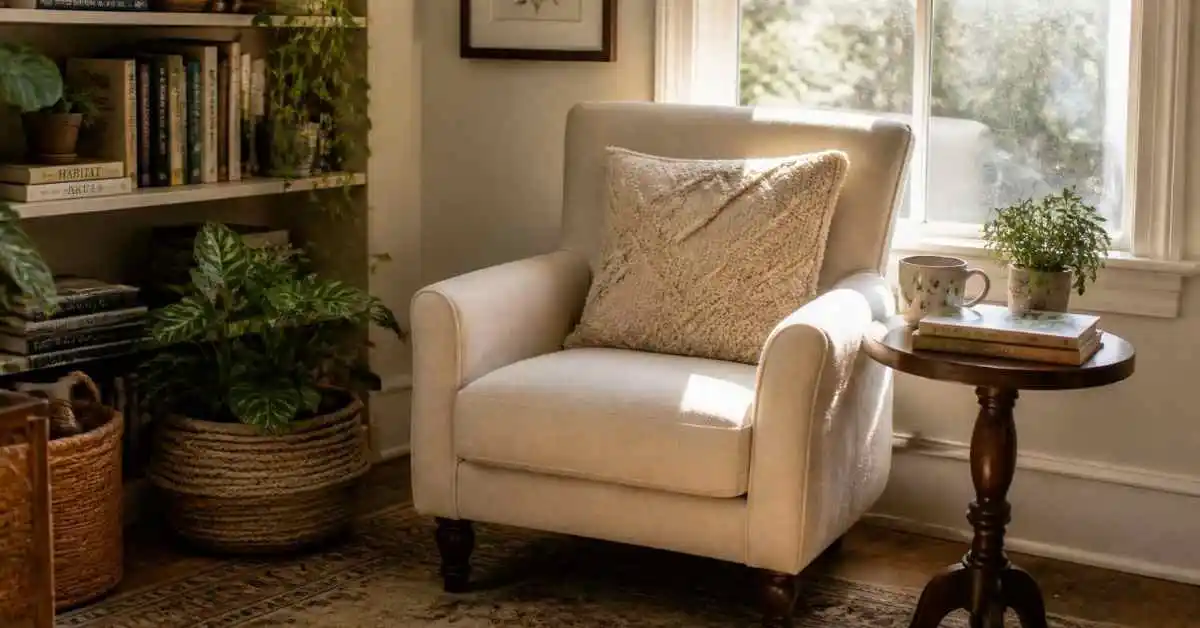
Choosing an accent chair ideas for reading book sounds simple. It rarely is. Most people pick for looks first, then discover the seat is too shallow, the back too low, or the light angle all wrong — and after twenty minutes they’ve migrated back to the sofa.
Accent chair ideas for reading need to satisfy a harder brief than a purely decorative chair: they have to hold your posture for an hour, sit at the right height, and still look like they belong in the room.
This guide covers 11 chair types that genuinely work for reading, a sizing table so you buy right the first time, and one simple framework that ties comfort, lighting, and placement together. The mistake in the last section is the one I see in almost every home.
Key takeaways:
- A seat depth of 18–22 inches suits most adults for extended reading
- Wingback and barrel chairs consistently outperform slipper chairs for sessions over an hour
- Seat height between 17–19 inches keeps your feet flat and reduces lower-back tension
- Position your light source over your non-dominant shoulder, not directly above your head
- Bouclé and velvet trap heat over time; linen and performance fabrics breathe better for long sessions
- A side table and floor lamp within arm’s reach complete any reading setup
What makes an accent chair work for reading
A good reading chair does three things at once: it supports your spine, fits your body proportions, and anchors a specific spot in the room without making you want to leave it after thirty pages. Decorative chairs that miss any one of these factors feel like work no matter how good they look in the corner.
Seat depth and back support
Seat depth is the most overlooked spec when buying a chair. For reading, 18–22 inches of depth lets you sit fully back against the cushion without your knees jutting over the edge, and keeps the seat from tipping you into a forward-tilting slouch. Back height matters just as much — you want at least 28 inches from seat to the top of the backrest, so the neck has somewhere to rest during longer sessions.
Armrest height and reading posture
Armrests should sit roughly at elbow height when you’re seated, about 7–9 inches above the seat cushion. Too high, and your shoulders creep up toward your ears. Too low, and you end up bracing your arms on the seat itself. Both patterns push fatigue into the neck and shoulders faster than most readers notice at first.
11 accent chair ideas for reading
These chair types span a wide range of styles, budgets, and room sizes. Each one is included because it has a real application for reading — not just a well-lit product photo.
1. Wingback chair
The wingback is the definitive reading chair. Those side panels were originally designed to trap heat from a fireplace, but for modern readers they create a subtle enclosure that cuts peripheral distraction. Back height typically reaches 40–44 inches, and seat depth usually runs 20–22 inches. In a matte linen or a textured bouclé, a wingback suits traditional rooms easily; with tapered legs and a restrained silhouette, it holds its own in a contemporary space too.
2. Barrel chair
A barrel chair has a continuous curved back that wraps around the sitter. That wrap provides lateral support flat-backed chairs can’t match, which matters when you shift positions mid-chapter. Barrel chairs work well in tighter corners because their profile is compact without feeling boxy. Seat depth usually runs 19–21 inches. A warm greige linen upholstery is a dependable choice — it doesn’t date quickly and suits most room palettes.
3. Swivel accent chair
A swivel base sounds like a gimmick until you use one. Being able to rotate toward changing natural light without scraping the chair across the floor is genuinely practical. Swivel chairs also let you face a bookshelf or a window without repositioning the whole setup. Look for one with a solid upholstered back rather than a sling-style back; sling backs offer little lumbar support and aren’t built for long sessions.
4. Channel-back chair
Channel-back chairs have vertical padded channels running down the back. Those channels add subtle lumbar contouring without the formality of a separate cushion. They suit mid-century and contemporary rooms equally well and photograph cleanly. One honest limitation: the channels concentrate pressure on fewer contact points along the spine, which makes them comfortable up to about an hour but less suited to marathon reading weekends.
5. Chaise lounge
If you read lying down — and many people genuinely do — a chaise lounge is the honest answer rather than a compromise. It gives you a flat surface for your legs and a raised end for your torso, which is more ergonomically sound than forcing a standard chair to accommodate recumbent reading. Chaises run 55–65 inches long, so they read as a focal piece in any room. Choose one with a 30–45 degree angled backrest rather than a flat one; you want that incline for comfortable page-turning without craning your neck.
6. Slipper chair
Slipper chairs are low-armed, low-slung, and compact — built close to the ground for ease of movement, which explains the name. They look elegant and work well in bedrooms and smaller rooms. For dedicated reading, they’re a compromise. A low seat height (usually 15–16 inches) means your knees sit high relative to your hips, creating lower-back tension after about 30–40 minutes. Better for occasional reading than a designated reading corner.
7. Tub chair
A tub chair has a rounded back and continuous low arms — shaped like a bathtub cross-section, which is where the name comes from. The wraparound form is cosy for shorter reading sessions, and the compact width (usually under 30 inches) makes tub chairs a practical choice for small rooms. In a velvet or performance fabric, they add a deliberate colour accent without dominating the space.
8. Contemporary recliner accent chair
The recliner accent chair of now is nothing like older models. Cleaner lines, more refined upholstery options, tighter recline mechanisms. The reading advantage is adjustable angle: your posture can shift throughout the session without you leaving the chair. These tend to sit at a mid-range to premium price point. If back pain is a recurring factor in your reading experience, that investment usually pays back quickly in sessions that don’t end early.
9. Accent chair with ottoman
This is a configuration rather than a chair type, but the ergonomic difference is significant enough to include. Elevating your legs reduces spinal compression. If you already own a chair you like but sessions end uncomfortably, adding an ottoman or upholstered stool at seat height often solves the problem without replacing the chair entirely.
Pro tip: When pairing an ottoman, match its height to the seat cushion height, not the chair leg height. A two-inch mismatch changes your body angle enough to create hip discomfort over long sessions — something most buyers only discover once they’re already settled in.
10. Cane or rattan accent chair
Cane and rattan chairs bring a lighter, more textural quality to a reading corner. They’re not the most ergonomic option on their own — woven seats feel hard over time — but a thick seat cushion of at least 4 inches of firm foam, plus a lumbar pillow, brings them into a workable range. They’re also light enough to move toward the afternoon light without effort. In a natural finish with a cream cushion cover, a rattan chair suits coastal, bohemian, and Japandi-influenced rooms equally well.
11. High-back, low-arm accent chair
This isn’t a named style, but it’s the most useful specification to search for when nothing else on this list fits the room’s aesthetic. A back height of 36–42 inches with low, unobtrusive arms lets the body adopt a natural reading posture without the formality of a wingback. It exists in dozens of upholstery options and colour choices across most price ranges, making it the most flexible route to solid ergonomics.
Sizing and comfort: comparing the options
Before committing to a chair type, measuring seat depth, seat height, and back height against your body and your room saves more regret than any other step. This table maps the most common accent chair ideas for reading against the specs that actually determine comfort in practice.
| Chair type | Seat height | Seat depth | Suitable session length | Best room context |
| Wingback | 17–19 in | 20–22 in | 2+ hours | Living room, study |
| Barrel | 17–19 in | 19–21 in | 1–2 hours | Living room, bedroom |
| Swivel accent | 17–18 in | 18–20 in | 1–2 hours | Open-plan spaces |
| Channel-back | 17–18 in | 18–21 in | Up to 1 hour | Living room |
| Chaise lounge | N/A | 55–65 in total | 2+ hours | Living room, bedroom |
| Slipper | 15–16 in | 18–20 in | 30–40 min | Bedroom, dressing room |
| Tub chair | 16–18 in | 18–20 in | Up to 1 hour | Small rooms, bedroom |
| Contemporary recliner | Adjustable | 20–24 in | 2+ hours | Living room, study |
Reading chair shopping checklist:
- Seat depth between 18–22 inches (always confirm before buying online — many listings omit this spec)
- Seat height between 17–19 inches
- Back height minimum 28 inches
- Armrests at 7–9 inches above the seat cushion
- Light source position confirmed before placing the chair
- Side surface within arm’s reach of the seated position
- 30–36 inches of clear walkway on at least two sides of the chair
- Fabric suited to the room’s typical temperature
The Reading Triangle Method
Most people buy a reading chair and stop there. After a few weeks the chair sits unused — not because it’s the wrong chair, but because the setup around it never got finished. Three elements determine whether a reading spot actually gets used daily: the chair, the light source, and a visual rest point. Position all three intentionally and the setup holds. Miss one and even a perfect chair underperforms.
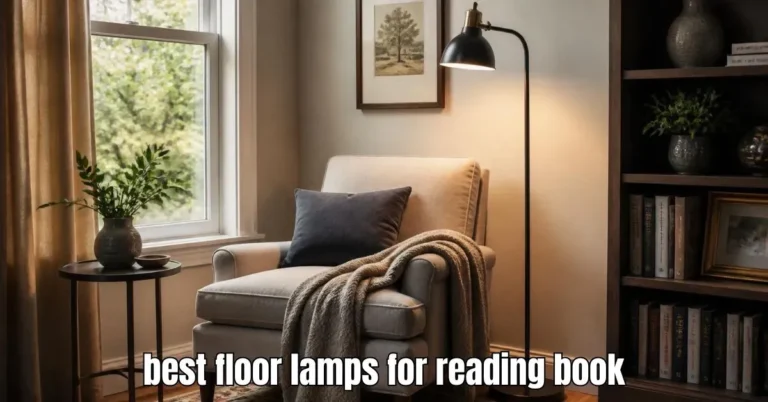
This is the Reading Triangle Method. Place the chair first. Then set a floor lamp or adjustable task lamp so light falls over your non-dominant shoulder — left shoulder if you’re right-handed — preventing your reading arm from casting a shadow across the page. Third, place a visual rest point: a small plant, a framed print, or a window view at roughly seated eye level within a natural side glance. After sustained close-focus reading, the eye needs a softer target to decompress. Without it, fatigue builds faster than most readers realise.
A real example: 9×11-foot bedroom corner, one afternoon
A wingback chair had been in the corner of a 9×11-foot bedroom for months, barely used. The chair itself was fine. Two problems: a ceiling fixture directly overhead cast a shadow from the reader’s head across the page, and the opposite wall was plain white with nothing to rest the eyes on between paragraphs. Two changes made in one afternoon changed the setup entirely. A floor lamp with a 2700K warm-white bulb replaced the overhead fixture as the primary light source, positioned at shoulder height to the left of the chair. A small botanical print went on the side wall at seated eye level. Reading sessions went from 20 minutes before eye strain set in to consistently over an hour. No new furniture purchased.
Budget tiers for a complete reading setup
| Setup tier | Chair | Lighting | Side table + cushion | Total approx. |
| Budget | Under $150 | Under $40 | Under $40 | Under $230 |
| Mid-range | $250–$500 | $60–$120 | $50–$120 | $360–$740 |
| Premium | $700–$1,500+ | $150–$300 | $100–$250 | $950–$2,050+ |
Mistakes that stop a reading chair from working
Most reading setups fall short for reasons that have nothing to do with the chair itself. A seat-depth mismatch, a poor light position, or a missing surface will undermine even a genuinely good chair within the first week. Here’s how each one plays out and what to do about it.
Prioritising looks over seat depth
A chair can be right in every other dimension, but if seat depth is under 18 inches you’ll be sitting on the front third of it within minutes. Seat depth doesn’t always appear in online product listings. If the spec is missing, contact the retailer before ordering. It’s the single measurement that most separates a decorative chair from one you’ll actually use for a full chapter.
Ignoring the light before placing the chair
Many reading setups fail because of light, not the chair. A seat placed directly under a ceiling fixture puts your head between the bulb and the page. A chair facing a window straight-on creates glare if the light source sits in your sightline. Decide on your light position before committing to where the chair goes, and placement follows naturally.
Skipping the side table
A reading chair without a nearby surface for a drink, a bookmark, or a pair of glasses becomes irritating within one session. A small side table, a drum stool, or a C-shaped table that slides under the armrest is one of the smallest additions with the largest daily payback.
Objection: “Can a good-looking chair actually be comfortable enough for reading?”
Yes, depending on the category. Wingback, barrel, and contemporary recliner chairs can be both visually strong and genuinely comfortable for long reading. Where looks and comfort conflict most is with chairs built around a deliberately low, streamlined silhouette — slipper chairs and some tub chairs — where seat and back height have been reduced for aesthetics. A lumbar cushion and a firm seat pad usually close most of that ergonomic gap without changing the chair’s visual character at all.
Objection: “Isn’t any armchair basically a reading chair?”
Not quite. Standard armchairs are built for conversations that last 20–30 minutes. They have lower backs, shallower seats, and armrests positioned for relaxed socialising rather than sustained reading posture. The best accent chair ideas for reading have ergonomics built in from the start — taller backs, deeper seats, armrests at the right height — rather than relying on the reader to compensate with cushions throughout the session.
FAQs
What is the most comfortable accent chair for reading?
A wingback chair is the most reliably comfortable option for extended reading. Its tall back and side panels support the head and neck, seat depth typically runs 20–22 inches, and the upright form holds posture without active effort on the reader’s part. For a more contemporary look with similar support, a barrel chair is the closest match.
How deep should a reading chair seat be?
Most adults are comfortable in a seat 18–22 inches deep. At that depth, you can sit fully back against the cushion without your legs dangling or your knees jutting forward. Below 18 inches, you end up perching on the front edge of the seat, which creates lower-back fatigue within 30–40 minutes.
Where should I place an accent chair for reading?
A corner or a spot beside a window, angled at about 45 degrees rather than flat against a wall, works best. That angle creates a sense of enclosure that aids focus while keeping the chair from blocking traffic flow through the room. Leave 30–36 inches of clear space on the walkway sides.
What fabric is best for a reading chair?
Linen and performance fabrics breathe and stay comfortable during longer sessions. Bouclé and velvet trap heat and can feel clingy after an hour. That said, if your reading room stays cool, velvet and bouclé add warmth and texture that linen can’t replicate — the room’s typical temperature matters as much as the visual.
Do I need an ottoman with a reading chair?
Not always, but an ottoman at seat height reduces spinal compression by letting you elevate your legs slightly. If your current chair leaves you with lower-back stiffness at the end of a session, an ottoman is often the simplest fix before replacing the chair itself.
Conclusion
A reading chair is one of the few pieces of furniture you use exactly the way it was designed, every single time. Getting it right pays back in sessions that last the length of a chapter rather than ending early because of a sore back or tired eyes.
Start with the chair type that matches your natural reading posture — upright readers do well with a wingback or barrel chair; recumbent readers need a chaise — then apply the Reading Triangle Method to settle the lighting and the visual rest point. That combination does more than any single chair style can on its own.
At Home Decor Ideas, comfort and function sit alongside style in every buying decision. Browse the reading nook and accent chair sections for more ideas on building a corner that actually pulls you back to it.