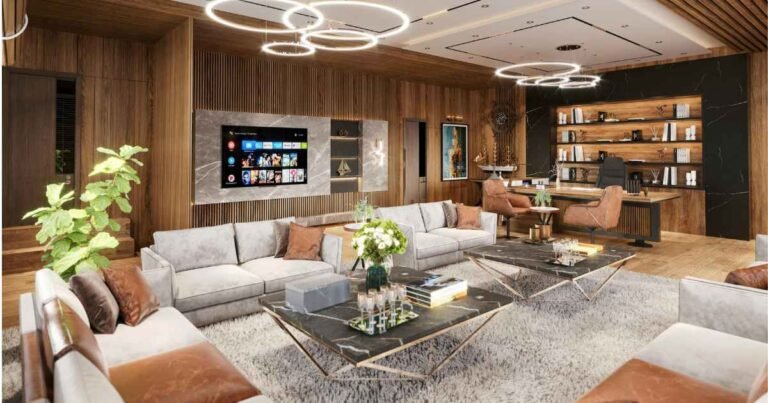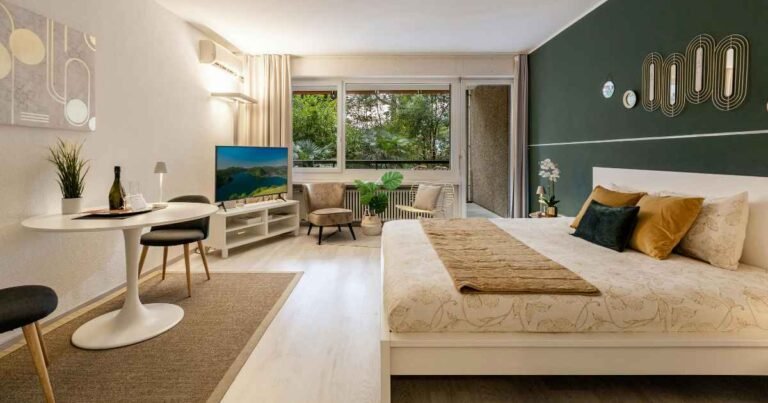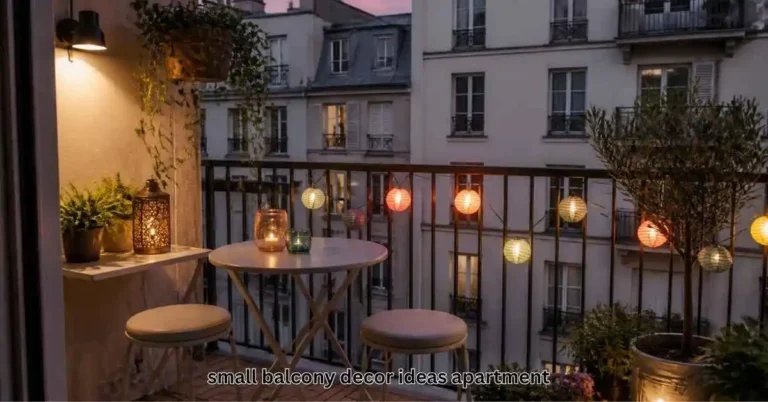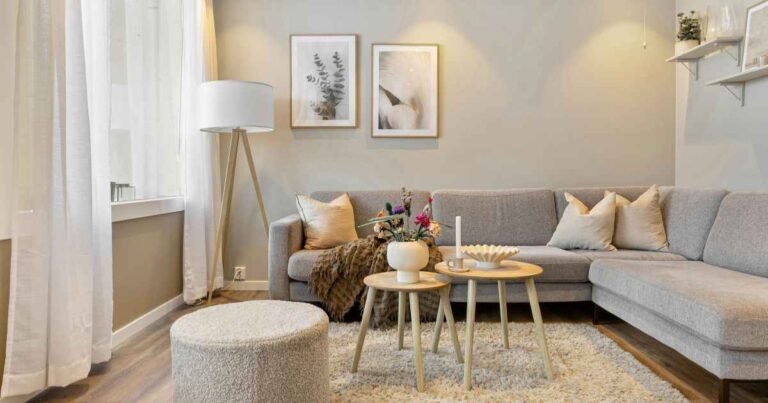
Blank walls, one harsh ceiling light, a room that just feels off, and about $100 to spend. The best home decor ideas on a budget under $100 all share one trait: they shift the room’s light, floor, or scale rather than adding small objects on top of what’s already there. Warm bulbs, one large rug, or one oversized mirror reset a space in under an hour. Spread the same money across ten trinkets, and the room still reads as unfinished. This page covers 11 upgrades that actually work, a dollar split that holds across any room, an original method for allocating those dollars, and the mistake most careful decorators still make.
Key takeaways:
- The single biggest fix under $100 is almost always lighting: swap cool-white bulbs for 2,700K warm-white ones.
- One large rug beats three small changes for reshaping how a room reads.
- Texture (linen, jute, rattan, wool) does more for warmth than any single color.
- Allocate roughly 60% to one anchor swap, 30% to texture and textiles, and 10% to styling.
What actually moves the needle in a room for under $100
The changes with the highest visible payoff under $100 are the ones that alter a room’s light, floor plane, or scale. A warm bulb, a large rug, or one oversized piece will shift a space. Small decor objects rarely do the same, no matter how nice each one looks in isolation.
Rooms read as unfinished for three reasons: cool-white overhead light flattens every surface, there is nothing on the floor to soften traffic, and the eye has no dominant object to land on. Fix one and the room shifts. Fix two, and it feels styled.
| Change | Typical cost | Visible impact | Time |
|---|---|---|---|
| Warm bulb swap (2,700K) | $8-$12 | Very high | 2 min |
| Cabinet hardware update | $30-$60 | High | 30 min |
| Large area rug (jute/cotton) | $60-$100 | Very high | 5 min |
| Sheer curtains hung wide | $40-$70 | High | 20 min |
| Fresh paint on one wall | $25-$40 | Very high | 3 hours |
| Textured throw pillow covers (2-3) | $25-$40 | Medium-high | 1 min |
| One 30-inch round mirror | $50-$85 | High | 15 min |
| Two live plants + ceramic planter | $35-$70 | Medium-high | 5 min |
11 home decor ideas on a budget under $100
Every idea below is a genuine upgrade you can finish under $100 in mid-range pricing, in a weekend or less. Pick one or two per room rather than trying to do all eleven at once.
1. Swap harsh overhead bulbs for warm 2,700K light
Overhead lights that read cool white (4,000K and up) flatten a room and drain color from wood, textiles, and skin. Replace them with 2,700K warm-white bulbs, or kill the ceiling light entirely and use two plug-in lamps at different heights. Budget: $10-$40 for bulbs, $60-$85 for a lamp.
Pro tip: Look for bulbs with a color rendering index (CRI) of 90 or higher. That number matters more than the brand name.
2. Anchor the room with one large area rug
An undersized rug is the most common visual mistake in most living rooms. The front legs of every seating piece need to sit on the rug, not float around it. A 5×7 works only for a chair, not a full sofa. Aim for at least 6×9 in a small room and 8×10 in a standard living room. Jute and flatweave cotton often come in generous sizes under $100.
3. Layer 2-3 textured throw pillow covers
Matching pillow sets flatten the eye. Mix three textures: a woven boucle, a slubby linen, and a smooth cotton. Sizes work best with one 20×20, one 18×18, and one 12×20 lumbar rather than three matched squares. Buy covers, not inserts, and reuse what you already own.
Pro tip: Wash new linen covers once before use to soften the hand and remove sizing.
4. Hang one oversized round mirror
A single large round mirror does two jobs. It doubles ambient light, and it breaks up rectangles in a room full of rectangles. Hang it opposite the main window, not on the same wall as the window. Aim for 28-32 inches across so it reads as an anchor, not an accessory. Matte black and brushed brass framing both run $45-$85.
5. Update cabinet or drawer hardware
Swapping outdated pulls on kitchen cabinets, bathroom vanities, or dressers is the fastest visible change in the house. A 12-cabinet kitchen refresh runs $28-$40 in basic bar or knob pulls. Measure existing hole spacing (usually 3 inches or 96mm) before buying. Matte black, aged brass, and unlacquered brass all age better than shiny gold, because the edges do not scratch back to raw metal.
6. Bring in real plants and one ceramic planter
Rooms need one thing pointing to the sky. Choose a snake plant, ZZ plant, or pothos if you tend to kill things. All three tolerate low light and rare watering. Skip the plastic nursery pot for one matte ceramic planter (8-10 inches) around $25-$40. The plant itself runs $12-$30.
7. Build a small gallery wall with mixed frames
A three-to-five-piece gallery wall over a sofa or bed anchors that whole zone. Mix frame sizes: one 16×20 as the center, two 8×10s flanking, one smaller. Combine free art printables with one thrifted painting, or use three black-and-white printed photos from your phone. Frame budget: $30-$45 for four at a discount retailer. Lay everything on the floor and photograph it before hanging.
8. Repaint a single accent wall or interior door
A quart of paint ($16-$22) plus a roller kit ($10-$15) covers most single walls and every interior door. Skip greige. Try a saturated color you would not normally reach for: warm terracotta, deep olive, or dusty navy read as intentional at any price point. Prime first if going over dark or glossy surfaces.
9. Hang sheer linen curtains high and wide
Curtain rod placement fools the eye more than curtain length. Mount the rod 6-8 inches above the window frame and extend it 8-12 inches wider on each side. That fakes a taller window and lets more natural light through when the curtains are open. Sheer linen or cotton-linen blends run $30-$60 per panel. Two panels per window is the minimum on anything over 36 inches wide.
10. Style open shelves with the 60-30-10 rule
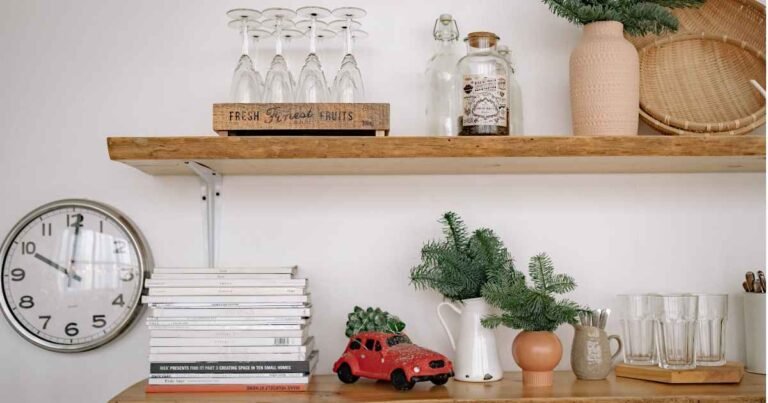
Every shelf reads better when 60% is books (mostly horizontal, some vertical), 30% is objects (ceramics, a small plant, a bowl), and 10% is negative space. Leave real gaps. Overcrowded shelves read as clutter; empty ones read as unfinished. Start with what you own. If you buy anything, one matte off-white ceramic vase ($15-$25) slots into almost any style.
11. Swap the shower curtain, rings, and bath mat
Small bathrooms are the easiest under-$100 win in the house. Replace the plastic liner with a waffle-weave cotton curtain ($22-$35), switch to matte black or brushed nickel rings ($8-$14), and add a chunky cotton bath mat ($18-$28). Full reset around $55. Add one framed 8×10 print on the open wall and the whole room reads styled.
How to allocate $100 across one room
Split any $100 room budget into three tiers: 60% on one anchor swap, 30% on texture (rugs, pillows, curtains, plants), and 10% on styling accents. That split forces one dominant change per room rather than spreading dollars thin across items nobody notices.
| Room | Anchor (~$55) | Texture (~$30) | Styling (~$15) |
|---|---|---|---|
| Living room | Warm-white floor lamp | Linen throw + one pillow cover | Small ceramic vase |
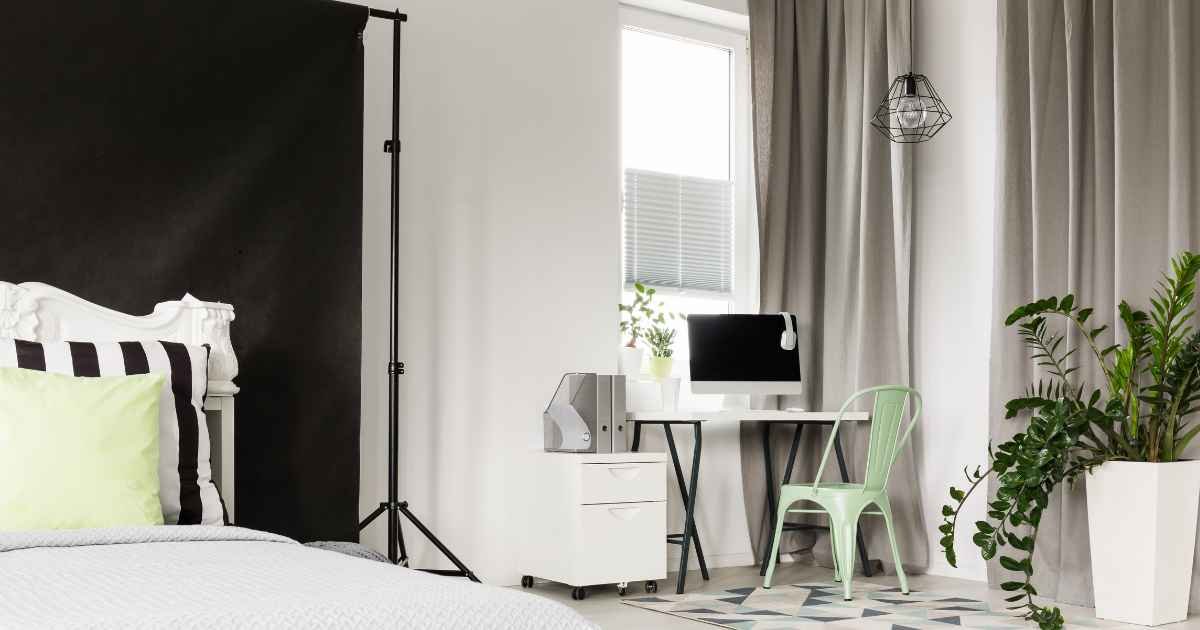
| Bedroom | Duvet cover set | Jute floor mat under bed | Two matte-black closet pulls |
| Small bathroom | Cotton shower curtain | Chunky bath mat + hand towels | Framed 8×10 print + brass rings |
| Entryway | 30-inch round mirror | Runner rug | Wall hooks + catchall tray |
| Home office | Task lamp + warm bulb | Sheepskin over chair back | Small brass desk tray |
The 3-Layer $100 Method (and how it works in practice)
The 3-Layer $100 Method is a formula for spending small budgets in the order that actually shifts a room. Anchor first, then Layer, then Sparkle. Each layer only works if the one under it is in place, which is why most $100 refreshes fall flat without it.
Anchor ($50-$60): The single largest visible change. Almost always lighting, floor covering, or one oversized piece.
Layer ($25-$35): Texture and softness. Textiles, plants, natural materials that break up hard surfaces.
Sparkle ($10-$15): Small styling touches. Hardware, one styled vase, a framed print.
Case study: In a 10×12 rental bedroom, I ran the whole method on $92 over one weekend. The Anchor was a $48 warm-white plug-in floor lamp plus $9 in 2,700K bulbs to replace the harsh overhead. The Layer was a $25 jute floor mat under the bed and one $10 linen pillow cover. The Sparkle was $8 in matte black knob pulls on the closet doors. Two hours of actual work. The new bedding I had been saving another $150 for suddenly did not need replacing. The room read as styled the moment the overhead light went off for good.
Weekend under-$100 refresh checklist:
- Measure the room (length × width) before buying anything.
- Kill any 4,000K+ overhead bulbs and replace with 2,700K.
- Choose one Anchor item (~$55) in lighting, rug, or oversized piece.
- Add texture at two heights (floor + eye-level pillow, throw, or curtain).
- Leave 10-15% of the budget unspent for one small styling touch.
- Photograph the room before and after. Phone cameras reveal contrasts the eye misses.
The method stops working in rooms under 8 feet wide, where any anchor piece will dominate. In tight spaces, treat the biggest textile (rug or curtain) as the anchor instead.
Common budget decorating mistakes to avoid
Three mistakes waste more $100 budgets than anything else: buying too many small items, ignoring lighting, and using a rug that is too small. Any of the three keeps a room looking unfinished no matter how much taste went into the individual pieces.
Buying five small things instead of one big one
Filling a coffee table with $12 trinkets never resets a room. The eye needs one dominant anchor and space around it. If you have $80, buy one $75 rug remnant instead of six $13 vases.
The fix: Pick one item that would take at least 30 seconds to notice from the doorway.
Ignoring lighting entirely
Most under-$100 decor plans skip lighting because bulbs feel unglamorous next to a new throw. Cool-white overhead light will make even the best rug and pillows read as flat.
The fix: Spend the first $15 of any budget on 2,700K bulbs, then decorate. This alone is worth more than the last three ideas on most decor lists.
Using a rug that is too small
Objection: “Won’t a big rug look wrong in a small room?” Almost never. A room-filling rug tricks the eye into reading the space as larger, not smaller. The real mistake is a 5×7 rug floating in the middle of a 12×14 living room, which visually shrinks the room.
The fix: The front legs of the sofa and any chairs must sit on the rug. If they cannot, the rug is too small.
Assuming thrifted or peel-and-stick looks cheap
Objection: “Isn’t peel-and-stick or thrifted decor going to look obviously fake?” Not with the right pieces. Solid-color peel-and-stick tile in a bathroom nook, or a heavy thrifted mirror, both read as intentional. Cheap-looking peel-and-stick is almost always the busy patterned kind trying to imitate marble.
The fix: Stick to solid colors and natural textures.
FAQs
How much can I really change a room with $100?
More than most people expect if the money goes to one high-impact swap. A $75 warm-toned lamp plus $22 for two 2,700K bulbs and a linen pillow cover often makes a bigger visible difference than a $400 sofa upgrade. Spread across ten small items, the same $100 does almost nothing.
What is the fastest under-$100 change to make first?
Lighting. Replace any cool-white bulbs (4,000K and up) with 2,700K warm-white ones, then add a plug-in lamp so light comes from at least two levels rather than just the overhead. Total spend under $50 in most homes.
Are peel-and-stick and rental-friendly options worth it?
Yes, for solid colors and natural finishes. Peel-and-stick knobs on existing furniture, tension rods for curtains, and adhesive picture hooks all read as intentional. Avoid patterned peel-and-stick trying to imitate marble or wood grain. Those look plastic under real light.
What decor ideas on a budget work best in small rentals?
Anything reversible in an hour: warm-toned bulbs, plug-in lamps, area rugs, tension-rod curtains, adhesive picture hooks, and framed prints leaning on a shelf. All shift the feel of a rental without a single hole in the wall.
Do I need to match all the decor for the room to look pulled together?
No. Matching sets usually make a room feel less designed, not more. Aim for repeated materials (two brass finishes, three linen textures) rather than matched items. That is how rooms in design magazines feel unified without looking staged.
Bringing it all together
Start with lighting. Add one anchor. Layer texture around it. Skip the ten small things. Every idea on this page has a real budget, a real time investment, and a real reason it works. Pick one room, allocate the $100 using the 60-30-10 split, and give it a weekend. The result almost always outperforms the receipt.
For more room-by-room breakdowns, HomeDecorIdeas keeps its guides free of sponsored bias.