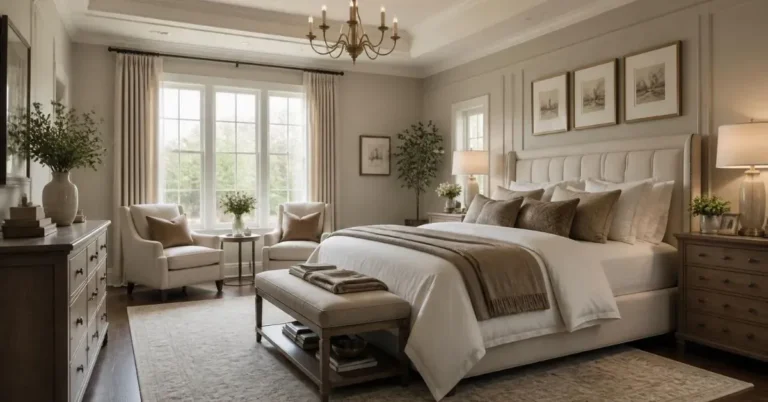

Two people, two styles, one home. Most couples’ homes turn into either a stalemate (nothing gets decorated because you can’t agree) or a takeover (one partner’s taste wins and the other quietly resents the sofa). Home decor ideas for couples that actually work start with three moves: agree on a neutral base you both can live with, split the “must-have” decisions fairly across rooms instead of fighting them out in each one, and give each partner at least one small space that’s fully theirs. The rest is easier than most couples realize.
This guide walks through 13 tested picks, a fair-split framework called the 60-30-10 couples decor split, room-by-room application, and the one compromise-fatigue mistake in the last section that quietly ruins the most well-intentioned shared homes.
Key takeaways:
- Couples’ decor works when both partners feel represented, not when both compromise to a beige middle
- Start with a shared neutral base (walls, floor, sofa, bed) that neither partner hates
- Split styling authority by room, not by every single object decision
- Give each partner at least one visible “just mine” area in the home
- Mix vintage and modern, warm and cool, in intentional pairings instead of forced matching
- The 60-30-10 couples decor split (below) removes most daily decor arguments
What makes couples’ decor actually work
A couples’ home works when both partners see themselves in it. This doesn’t mean 50/50 in every single room. It means the neutral base is mutual, the styling authority alternates by space, and both partners have at least one visible corner that’s completely their own. Fairness reads more clearly than perfect balance.
A shared neutral base
Five anchor pieces set the tone for every shared home: walls, floors, sofa, bed, dining table. Agree on these together with warm neutrals (cream, oat, warm greige, wood tones) that neither partner actively dislikes. Bold decisions come later through accessories. Get the base right and both styles have room to layer without clashing.
Style authority alternates by room
Instead of splitting every object 50/50, hand each main room to one partner as the styling lead. Her taste leads the bedroom; his leads the office. The other partner still weighs in on major purchases but doesn’t fight every accent decision. Room-level authority removes daily friction that per-object negotiation creates.
Each partner needs “just mine” space
A reading nook, a plant corner, a small desk area, a workshop. Each partner should have one visible space where their taste runs unopposed. This isn’t selfish; it’s necessary. Couples who skip this step start feeling erased from their own home, and that quietly damages both the room and the relationship.
Blend styles through overlap, not veto
Find the material or color both of you already like and start there. Both like leather? Add it in multiple rooms. Both like brass? Extend to hardware, lighting, and frames. Overlap is easier to find than most couples realize, and it produces a genuinely blended home instead of a compromise-flattened one.
13 home decor ideas for couples
These 13 ideas focus on how to make decisions together (and separately) so both partners actually enjoy living in the result. Every one has been tested by couples I know or worked with. Skip any that don’t fit your relationship. Use six or seven that do.
Common couples’ style pairings and how to bridge them
| Partner A style | Partner B style | Common bridge |
|---|---|---|
| Modern minimalist | Boho / eclectic | Neutral base with structured furniture, plants and textiles as boho accents |
| Traditional | Contemporary | Warm wood anchors, modern lighting, mixed art |
| Industrial | Farmhouse | Black metal plus reclaimed wood, warm bulbs, leather and linen |
| Maximalist | Minimalist | One “loud” wall or room, rest simplified; maximalist takes their office |
| Mid-century | Coastal | Warm woods, cream and sand palette, brass and rattan mix |
| Rustic | Glam | Wood beams plus brass hardware, velvet and linen mix |
1. Start with a neutral base you both can live with
Walls, floors, sofa, bed, dining table. These five anchor pieces set the tone for every room. Pick them together with warm neutrals (cream, oat, warm greige, wood tones) that neither partner actively dislikes. Bold decisions come later through accessories that cost far less to swap when tastes evolve. Get the base right and both styles have room to layer on top without clashing.
2. Alternate whose taste leads each room
Instead of splitting every object 50/50, hand one room to each partner as the styling lead. Her style leads the bedroom, his leads the office. One person’s art, one person’s palette, one person’s picks. The other partner still uses veto power on major purchases but doesn’t fight every accent decision. Room-level authority removes about 70% of daily decor friction.
3. Build a shared gallery wall (each partner picks half)
Gallery walls are the fastest way to make both partners feel present in a shared space. Each of you picks half the frames: her travel photo, his favorite print, her botanical, his concert poster. Frame everything in matching neutral wood or matte black for visual cohesion. The eye reads unity from the frames; personality reads from the contents inside them.
4. Use the “no-veto” rule for one big item each
Each partner gets one major decor decision the other agrees not to veto, even if they wouldn’t have chosen it. Her leather chair. His neon sign in the office. This rule prevents the “everything got vetoed” resentment that quietly poisons shared homes. The rest of the home stays collaborative. Just one no-veto piece each, tops, and rotate which room it lives in.
5. Blend styles through material overlap
Find the material both of you already like and start there. Both like leather? Add it anywhere it can go (chair, ottoman, pillow, tray). Both like brass? Extend it to lighting, hardware, and frames. Overlap is easier to find than most couples realize once you look at shared preferences instead of style labels. Materials bridge styles more effectively than colors do.
6. Divide the bookshelf 50/50
The bookshelf is a compressed style negotiation. Give each partner exactly half by shelf or by side. Her novels, his design books. Her ceramics, his vinyl. Style each half independently; don’t force a unified aesthetic. Visible fairness matters more than perfect visual symmetry. This tiny compromise reads as fair to both partners, and guests barely notice the split at all.
7. Choose one warm-neutral palette both can live with
Bold colors are where couples fight most. Solve it once by agreeing on one warm neutral palette (cream, oat, warm greige, wood tones plus one or two accent colors) both of you can accept. Use it as the base everywhere. Accent colors come from accessories (pillows, art, throws), which are cheaper to swap when one of you tires of a shade.
8. Create one “just mine” corner per partner
A reading nook, a plant wall, a small home office desk, a gym setup, a craft table. Each partner gets one visible space where their taste is 100% respected, no compromises. This isn’t selfishness. It’s essential mental territory. Couples who skip this step start feeling erased from their own home, which slowly damages both the space and the partnership.
9. Mix vintage and modern intentionally
Usually one partner leans vintage and the other leans modern. Instead of choosing one, pair them: a mid-century sideboard next to a modern sofa, a vintage rug under a contemporary coffee table, an antique lamp on a clean-lined side table. Mixed eras always look richer than single-era rooms. Aim for at least one vintage and one modern piece visible in every main room.
10. Compromise on statement lighting
Lighting is often the biggest decor argument. One partner wants dramatic (chandelier, sculptural pendant); the other wants understated (recessed, simple flush mount). Compromise: pick one statement fixture per home (usually the dining room or entryway) and keep the rest quiet. The dramatic partner gets the wow moment; the understated partner gets restraint everywhere else. Both feel heard without either winning outright.
11. Display one shared object per room
Pick a piece of art, a travel find, a wedding gift, or a jointly-collected object and display it visibly in each main room. This shared piece reminds both partners of your shared history inside the space. It doesn’t have to be sentimental; it just has to be genuinely both. One shared object per room does more emotional work than a whole wall of matching frames.
12. Style closets and dressers as intentional zones
Split shared storage aesthetically, not just physically. Her side stays her aesthetic (open shelving, exposed clothes rods, favorite bags visible). His side stays his (drawer organizers, folded neutral). Neither of you has to conform to the other’s system inside your own zone. Fairness inside cabinets and closets matters as much as fairness on walls, and it’s often what quietly frays first.
13. Save divisive pieces for less-visible spots
Some pieces one partner loves and the other actively can’t stand. Don’t discard them, and don’t fight over them. Move them to less-visible spaces (garage workshop, hallway closet interior, laundry room, home office corner). Both partners keep their sentimental favorites without the daily friction of seeing them in the main living space. Compromise is easier when nothing is thrown away.
How to apply couples’ decor by room and budget
Every shared room reads differently. Living rooms need mutual anchor pieces (sofa, coffee table, rug) both partners chose. Bedrooms benefit from split styling authority (one partner on bedding, the other on side lamps). Kitchens work through material overlap. Dedicated personal spaces matter more than most guides suggest.
Living room
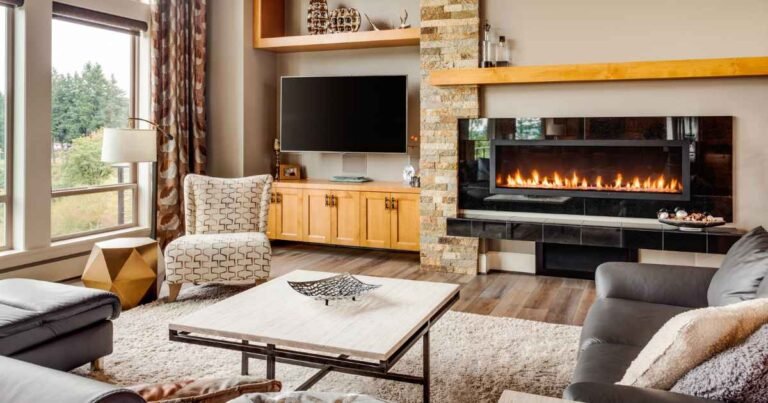
Choose the sofa, rug, and coffee table together as shared decisions. Then split styling: one partner picks the pillows and throws, the other picks the art and lamps. A shared gallery wall or one joint travel find on the mantel ties both tastes into the room.
Bedroom
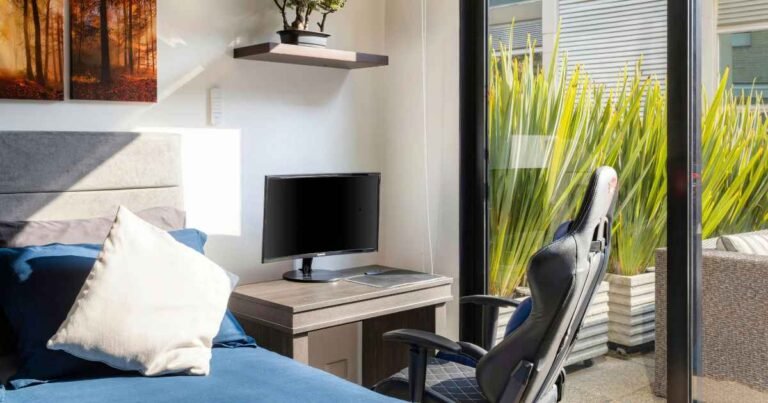
Base pieces (headboard, bedding, primary lamps) are shared. Each nightstand gets 100% personal styling authority: her books, her small vase, her reading lamp on her side; his items on his. Small personal fairness matters more than perfect symmetry when you both sleep there every night.
Kitchen and dining
Shared spaces work through material overlap. Both like brass? Add brass hardware. Both like wooden cutting boards? Leave two out. Dining tables should be jointly chosen. Chairs can be intentionally mismatched (a common bridge between different tastes). Statement lighting is often the one compromise moment for the whole shared home.
Home office and personal spaces
This is where the 10% rule shines. Each partner takes one dedicated space: her craft corner, his office desk, her plant wall, his workshop. Full styling authority, no compromise, no veto. Even a small shelf or corner counts, as long as it’s visibly one person’s territory.
Couples’ shared decor budget by room
| Room | Entry ($100-$300) | Mid-range ($500-$1200) | Premium ($1500+) |
|---|---|---|---|
| Living room | Neutral rug, matched lamps, shared gallery wall | Sofa upgrade, layered rugs, statement lighting | Custom sectional, mixed art, integrated shelving |
| Bedroom | Warm bulbs, shared linens, one vintage anchor | Upholstered headboard, wool rug, mixed side tables | Custom headboard, mixed dressers, premium bedding |
| Dining | Warm bulbs, mismatched chairs, one wooden table | Statement lighting, chair upholstery swap | Custom table, mixed seating, sideboard |
| Home office | Basic desk, one shared piece | Split-zone office, one style per side | Custom builtins, mixed workspaces |
| Entryway | Bench, hooks, mirror both agree on | Console table, layered lighting | Custom console, gallery arrangement |
Pro tip: Buy anchor furniture together, style separately. If both partners weigh in on the sofa, the bed, and the dining table, you own those rooms together. Then each of you takes styling authority over 40% of the accessories and art. This ratio removes about 80% of decor arguments because you’re not fighting over each pillow; you’re pre-negotiating who gets to pick which category.
Couples’ shared decor decision check
Before finalizing any major decor decision, both partners should ask:
- [ ] Have we agreed on the neutral base first (walls, floor, sofa, bed)?
- [ ] Has each partner been given styling authority over at least one room?
- [ ] Does each of us have a visible “just mine” corner or shelf?
- [ ] Are we blending styles through overlap (shared materials, shared colors)?
- [ ] Have we picked the anchor pieces together, not separately?
- [ ] Is either partner secretly hating a decision (silent resentment kills over time)?
- [ ] Have we avoided compromising to beige boredom instead of choosing shared bold?
Five or more yeses means you’re on track. Silence on the sixth question is the red flag.
The 60-30-10 couples decor split
The 60-30-10 couples decor split handles most shared home decisions in advance. Sixty percent is fully shared (walls, floors, big furniture, both partners weigh in equally). Thirty percent is authority-split by room (one partner leads each space’s styling). Ten percent is fully individual (a corner, shelf, or workspace that’s 100% one person’s taste). Set this ratio first and the daily arguments almost disappear.
The 60%: shared anchor decisions
Walls (paint or wallpaper), floors (rugs, hardwood, tile), major upholstery (sofa, bed, dining chairs), major wood furniture (dining table, dresser, media console), and lighting fixtures in main rooms. Both partners have equal veto power. Decide together, buy together. If both partners can’t agree, don’t buy it. Live without until you can align.
The 30%: room-level styling authority
Assign each main room a styling lead. She leads bedroom styling (bedding, art, accessories, side lamps); he leads office styling. Living and dining rooms can go to either partner or split by category (he picks art, she picks textiles). The lead partner gets styling authority; the other partner still holds veto on anything genuinely offensive.
The 10%: fully individual space
Each partner gets one visible space that’s 100% theirs. A desk corner with their books and art, a reading nook, a plant wall, a craft shelf, a workshop. The other partner doesn’t style this area, doesn’t veto it, doesn’t complain about it. This 10% keeps individual identity alive inside the shared home.
A real case study: 11 by 13 shared bedroom, three weekends, $320
I watched a friend and her partner restyle their 11 by 13 bedroom after months of stalemate over the headboard. He wanted a leather-tufted one ($400+). She wanted an upholstered linen one ($350+). They compromised on a natural cane headboard neither had originally considered ($180 secondhand). Total three-weekend spend: $320. Changes: cane headboard ($180), warm-toned linen bedding both agreed on ($60), two mismatched vintage side lamps they each brought from previous homes (free), and a small wool rug ($80). Both of them liked the final room more than they’d liked the versions they’d originally fought for. The compromise piece became the room’s best feature.
Common couples’ decor mistakes and how to fix them
Most shared homes fail for the same handful of reasons. One partner dominates decisions, both partners force perfect style matching, the neutral base gets skipped, or (most commonly) both partners settle for what they can tolerate instead of what they’d both love. Each mistake has a specific fix.
Letting one partner “win” every decision
The dominant partner styles the home; the quieter partner defers and later resents it. Fix: use the 60-30-10 split above and enforce styling-authority-by-room rules even when the dominant partner pushes back. The quieter partner has to claim their 30% actively, not wait to be invited into decisions.
Trying to make both styles match perfectly
Attempting perfect visual harmony usually ends in beige mush: both partners’ bold tastes get compromised into safe neutrality neither loves. Fix: aim for intentional contrast, not seamless blending. A modern sofa with a vintage rug reads richer than any matched set. Blend by pairing pieces, never by averaging tastes.
Skipping the neutral base
Some couples start decorating with bold accessories and never anchor the room. The result reads chaotic and looks dated within a season. Fix: agree on the base first (walls, floor, sofa, bed) with warm neutrals both can live with. Bold moves come from accessories only, which are cheaper to change later.
Ignoring dedicated personal spaces
Couples who skip the 10% individual zones start feeling erased from their own home. Every room becomes a compromise, and neither partner has a place to be fully themselves. Fix: dedicate at least one visible corner per partner. A shelf, a chair, a desk. Small but visible matters more than large but hidden.
Compromise fatigue (the mistake I see most often)
Here’s the one that quietly ruins the most shared homes. After enough negotiations, couples start choosing “whatever we can both tolerate” instead of “what would we both love.” The result is a home that feels beige and slightly sad, and neither partner can put their finger on why. Fix: raise the bar on shared decisions. Ask “do we both love this?” rather than “can we both live with this?” If the answer is only “live with,” keep looking. Tolerated-compromise homes drain both partners over time.
What if our styles are completely opposite?
Opposite styles often blend better than similar ones. A pure minimalist and a pure maximalist can create a warm mixed-style home using the 60-30-10 split: neutral base in shared zones, one partner’s aesthetic per room, and one fully personal space each. Similar-style couples sometimes struggle more because they compete for the same aesthetic territory.
Isn’t compromise just watering down both of our tastes?
Only if you compromise wrong. Watering down happens when both partners accept beige mush to avoid conflict. Real couples’ decor works through pairing rather than averaging tastes. Your leather chair sits next to her linen sofa; his abstract print hangs next to her botanical study. Both tastes stay bold and visible. The tension between them creates the room’s actual character.
FAQs
How do couples decide on home decor? The most effective approach is the 60-30-10 couples decor split. Sixty percent of decisions (walls, floors, major furniture) are fully shared with equal veto power. Thirty percent are room-level styling authority (each partner leads specific rooms). Ten percent are fully individual zones. This ratio removes most daily arguments and keeps both partners feeling represented.
What are the best colors for a couple’s home? Warm neutrals both partners can live with make the strongest base: cream, oat, warm greige, soft ivory, plus wood tones. Then two or three accent colors both can accept for pillows, art, and throws. Skip trying to compromise on bold main colors. Move disagreement to accent territory, which is cheaper to swap as tastes evolve.
How can we blend two different styles? Blend through material overlap first, not through style matching. Find one or two materials both of you like (leather, linen, brass, walnut) and use them across both partners’ preferred styles. Pair intentionally: modern sofa with vintage rug, contemporary art with traditional frame. Intentional contrast reads richer than uniform matching every time.
Should couples decorate separately or together? Both, in specific ratios. Decorate the base together (walls, floors, major furniture). Assign styling authority by room to individual partners. Keep one small personal space per partner fully individual. Trying to decorate everything together produces arguments; trying to decorate everything separately produces visual chaos. Roughly 60% shared, 30% split, 10% individual works.
How do you decorate a bedroom that suits both partners? Focus on the base first: a headboard style both can live with, warm-neutral bedding, warm 2700K bulbs. Then split the styling authority. If she chooses art and side tables, he chooses lamps and the rug. Each side of the bed gets 100% personal styling on the nightstand. Small personal fairness matters more than perfect symmetry.
Bringing it all together
Couples’ decor works when both partners feel represented, not when both compromise to beige. Agree on a warm-neutral base, split styling authority by room, and give each partner at least one visible corner that’s fully theirs. The 60-30-10 split above handles most of the rest.
Start with the base this weekend. Pick a warm-neutral wall color and one anchor piece together (usually the sofa or bed). Then divide styling authority for the other rooms and dedicate a corner to each of you. For more room-by-room shared-home styling guides, plus our guide to home decor ideas for your first apartment, HomeDecorIdeas covers blending styles across every space in the house.